कमजोर और पतले हाथों का कारण: Hirayama Disease में कब सतर्क हों?
Автор: Dr. Amit Mittal Hand Surgeon
Загружено: 2025-04-28
Просмотров: 8500
Описание:
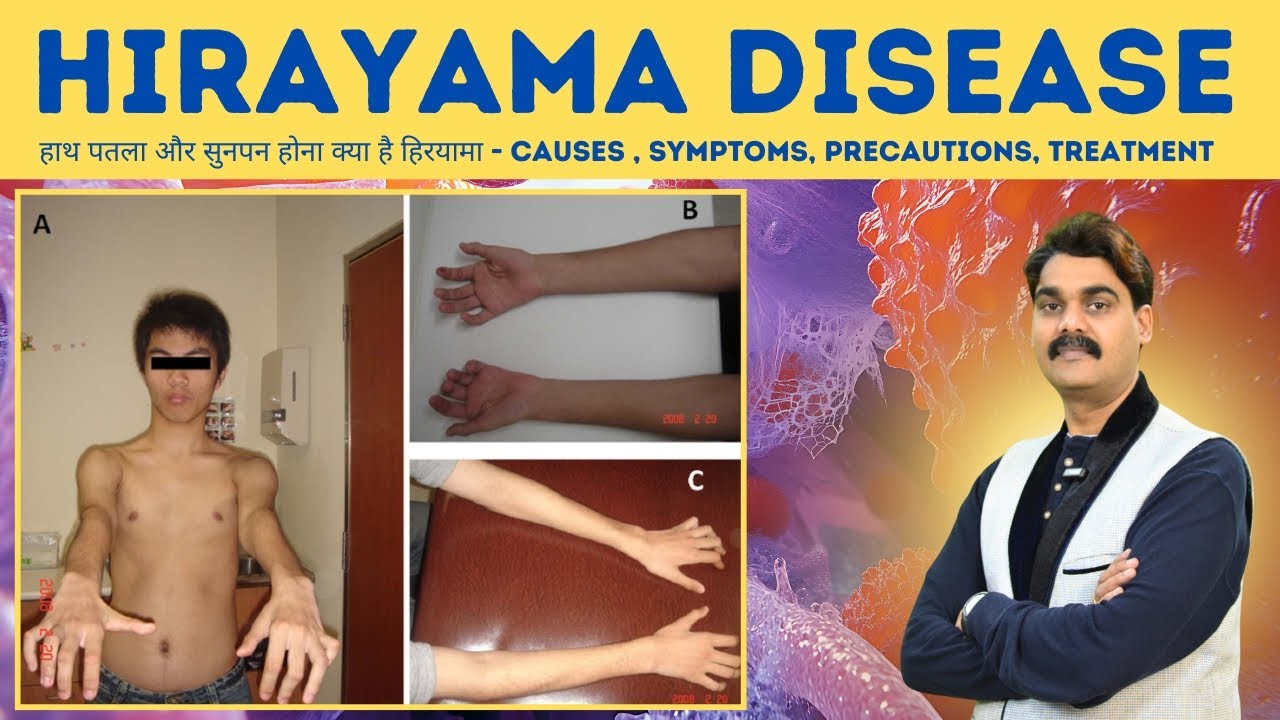
Hirayama disease, also known as juvenile muscular atrophy of the distal upper extremity, is a rare neurological condition predominantly affecting young males. It is characterized by progressive muscle weakness and atrophy in the hands and forearms. Here’s a detailed overview of Hirayama disease:
Clinical Features
1. **Demographics**:
Primarily affects males aged between 15 and 25 years.
Rarely seen in females.
2. **Symptoms**:
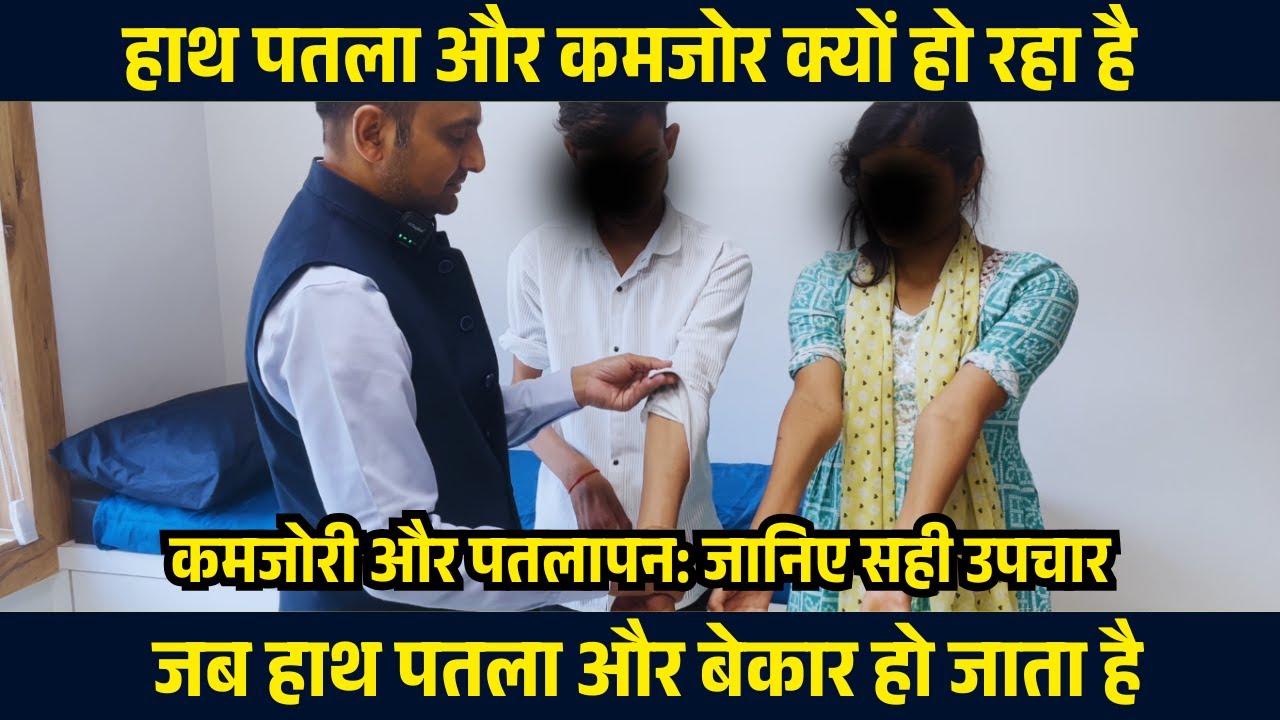
Insidious onset of unilateral or asymmetric bilateral muscle weakness and atrophy in the forearms and hands.
Muscle fasciculations (twitches) may be present.
Cold-induced muscle cramps and weakness.
Typically, the condition progresses for a few years and then stabilizes.
3. **Distribution**:
Preferential involvement of the C7, C8, and T1 myotomes (lower cervical spinal segments).
Sparing of the proximal muscles and lower limbs.
Pathophysiology
The exact cause of Hirayama disease is not completely understood, but it is thought to be related to a dynamic compression of the cervical spinal cord during neck flexion. This leads to localized ischemia and subsequent anterior horn cell death. Key factors include:
**Flexion-induced myelopathy**: When the neck is flexed, the posterior dura mater becomes lax and can lead to anterior displacement, compressing the spinal cord.
**Ischemic changes**: Repeated and prolonged compression causes chronic ischemic changes and damage to the anterior horn cells of the spinal cord.
Diagnosis
1. **Clinical Examination**:
Detailed neurological examination focusing on muscle strength and atrophy patterns.
Observation of the neck flexion movement and associated symptoms.
2. **Imaging**:
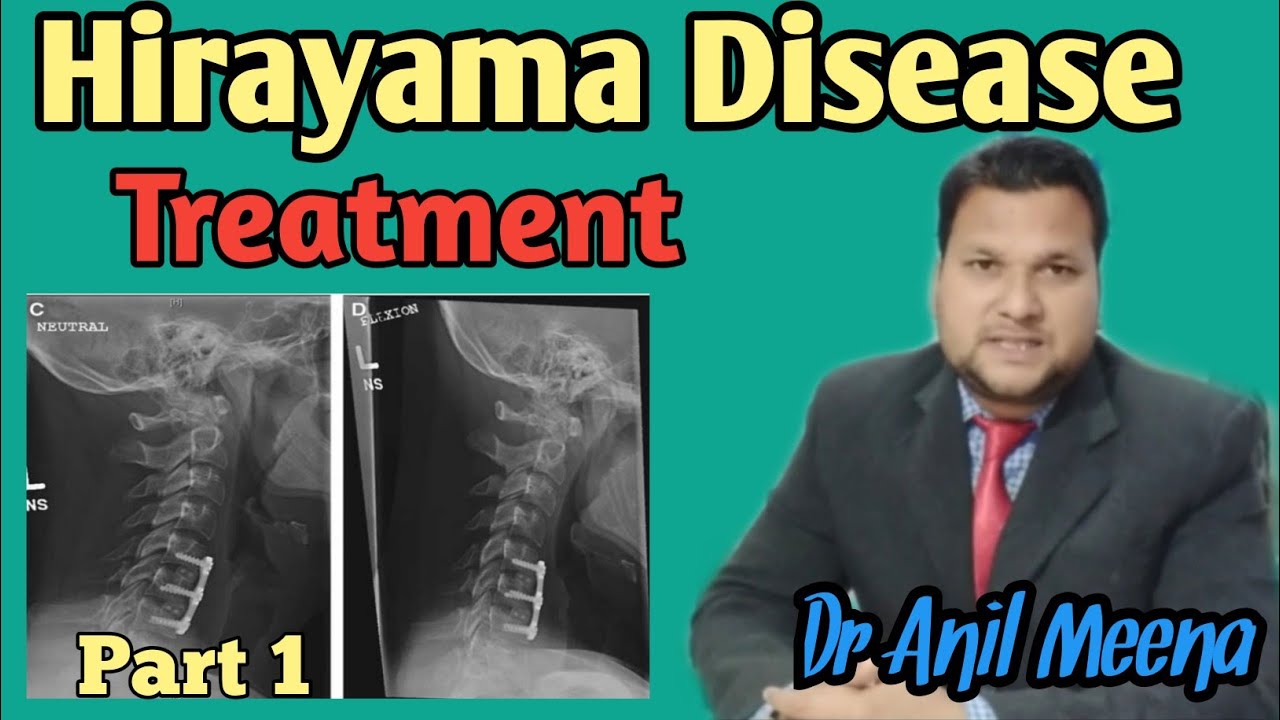
**MRI (Magnetic Resonance Imaging)**: Key diagnostic tool. Dynamic MRI with the neck in flexion can show forward displacement of the posterior dura mater and sometimes a crescent-shaped mass compressing the spinal cord.
**Electromyography (EMG)**: Can show denervation and reinnervation in affected muscles.
Treatment
There is no cure for Hirayama disease, but treatment focuses on managing symptoms and preventing progression. Approaches include:
1. **Conservative Management**:
Use of a cervical collar to prevent neck flexion and reduce dynamic spinal cord compression.
Physiotherapy to maintain muscle strength and function.
2. **Surgical Intervention**:
Indicated in cases with significant or progressive neurological deficits despite conservative measures.
Options include anterior cervical decompression and fusion or duraplasty.
Prognosis
Hirayama disease typically has a self-limiting course, where active progression occurs over 3 to 5 years, followed by a plateau phase.
Functional prognosis is generally good, though some patients may be left with residual weakness and muscle atrophy.
Hirayama Disease
Hirayama Disease Causes
hirayama Disease Treatment
Hirayama Disease Exercise
Hirayama Disease in hindi
Hirayama Disease Detail
हीरायामा रोग
Medicines for Hirayama Diseases
हिरयामा रोग का कारण
हिरयामा रोग अनुवांशिक
हिरयामा रोग के लक्षण
हिरयामा रोग का निदान
Hand weakness
Tendon transfer
Hand not working
hand ka patla hona
Summary
Hirayama disease is a rare but distinct form of juvenile muscular atrophy affecting the distal upper limbs. Early diagnosis and management are crucial to preventing significant disability. Awareness of this condition among neurologists and orthopedic specialists can aid in timely intervention and better patient outcomes.
Повторяем попытку...
Доступные форматы для скачивания:
Скачать видео
-
Информация по загрузке: