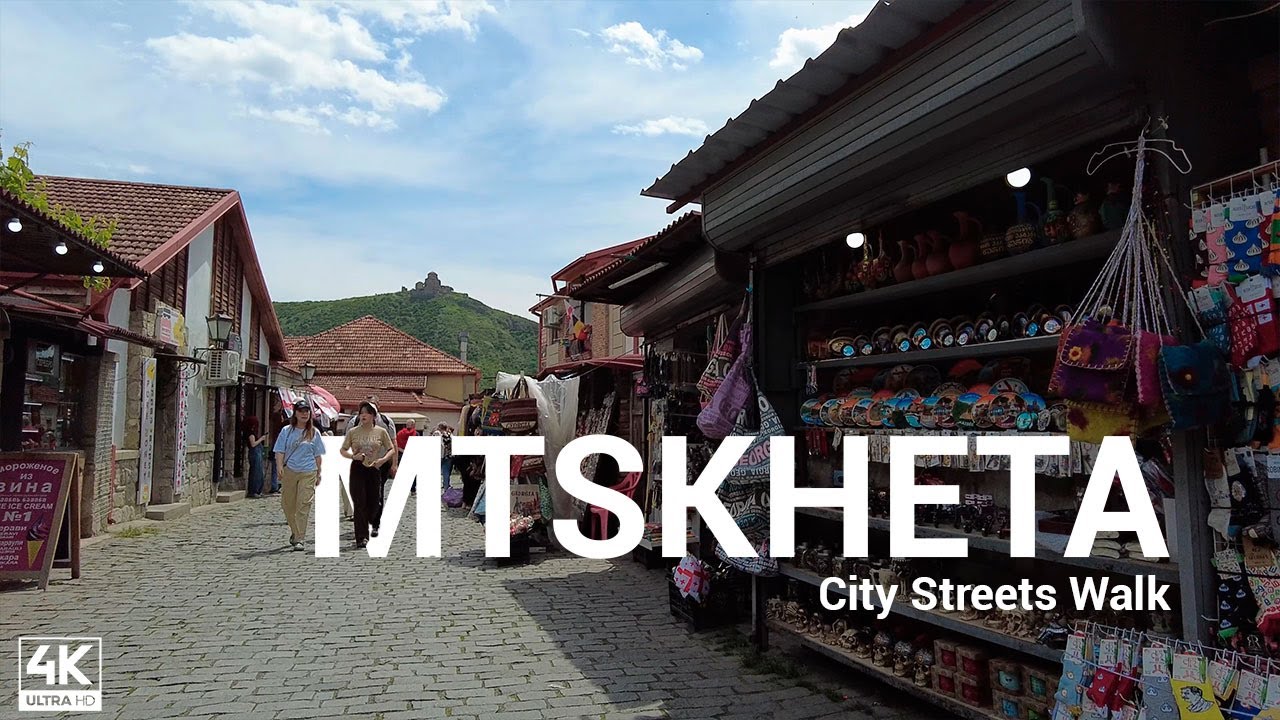
Old City Center 4K walk, Mtskheta, Saqartvelo (Georgia)
Автор: Scanny's Itchy Feet
Загружено: 2026-01-27
Просмотров: 76
Описание:
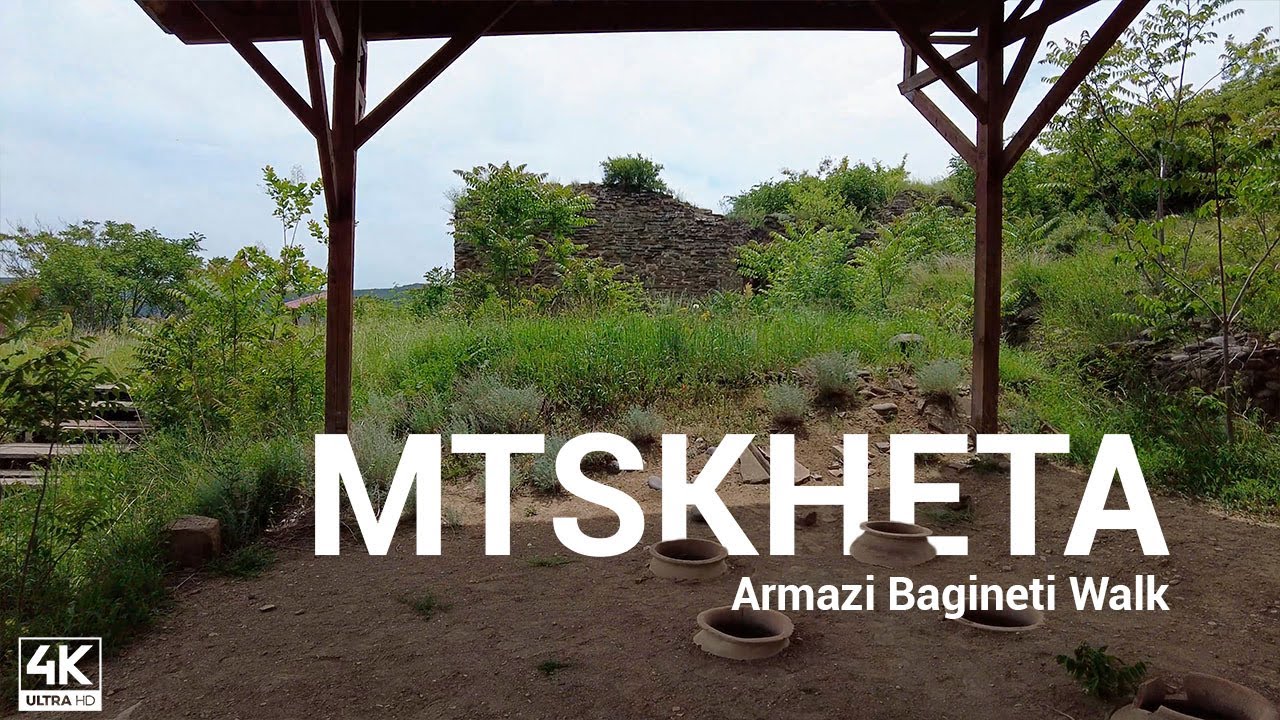
The history of the city of Mtskheta spans more than 2,000 years. X century chroniclers wrote that the city of Armazi was built first, and Mtskheta was founded second. Leonti Mroveli wrote about that semi-mythical era as follows: "This Kartlos first came to the place where the Aragvi flows into the Kura, and ascended that mountain which is called Armazi. And he first built fortresses upon it and erected a house for himself and gave that mountain his own name — Kartli. And before a pagan temple was built upon it, that mountain was called Kartli, which is why all of Kartli came to be called Kartli. Kartlos passed away and they buried him in the center of Kartli, which is now called Armazi. And to Mtskhethos, who was first among his brothers, fell the dwelling place of his father Kartlos, which is now called Armazi. He built a city at the confluence of the Kura and Aragvi and named it after himself — Mtskheta."
From those days until the Soviet era, the city stood on a narrow promontory that dropped in rocky cliffs down to the Kura floodplain and the Aragvi floodplain. These two mountain rivers merged beneath its cliffs and truly, as in Lermontov's poem, "merging, they roared," "embracing like two sisters." In the IV century, between 320 and 324, Saint Nino came to Mtskheta from the west, from Urbnisi, and here all the events associated with the Christianization of Georgia took place.
In 447, Vakhtang Gorgasali became king of Iberia, with his main palace located in Mtskheta. His first deed is considered to be a campaign against the Huns, and he assembled his army for the campaign on the meadows north of the city, on the banks of the Aragvi. In the early VI century the capital moved to Tbilisi, and Mtskheta ceased to be the center of the Iberian world in a political sense. It remained exclusively a Christian center, the residence of the Catholicos and bishop.
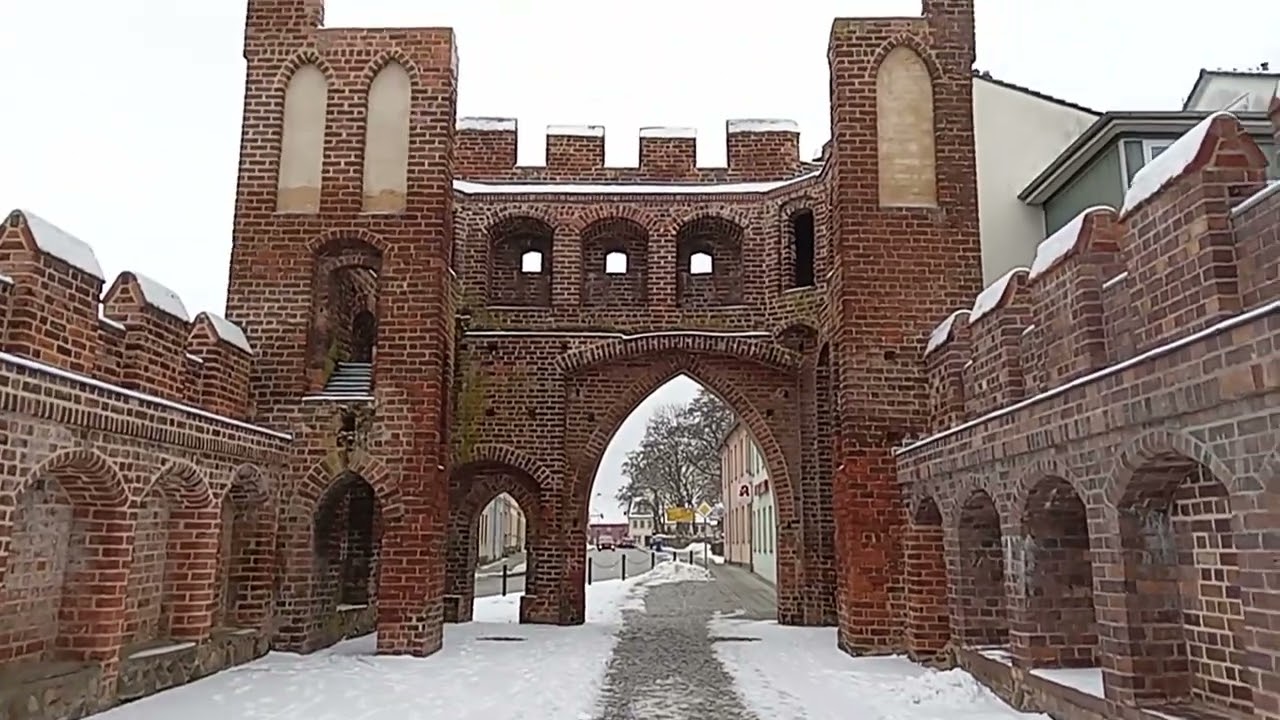
In Soviet times the city changed beyond recognition. The gravelly floodplain of the Aragvi River was filled in, creating a vast meadow — now occupied by a parking lot and the police station. In the 1930s construction of the Zemo-Avchala hydroelectric station was completed, raising the level of the Kura and Aragvi by several meters. Mtskheta's cliffs and Pompey's Bridge disappeared underwater. The city on the cliffs became a city on the low shore of a lake. By 2006 the houses in the center had been rebuilt with state funding, the square in front of the cathedral was redesigned, an information center building was constructed, and the streets were paved with tiles.
Enjoy the walk, please like, subscribe, comment - that means a lot to me!
🩵 Like my videos? Please support my channel here:
https://www.buymeacoffee.com/scanny3 🩵
Повторяем попытку...
Доступные форматы для скачивания:
Скачать видео
-
Информация по загрузке:








![12 ЛУЧШИХ МЕСТ В ГРУЗИИ [РЕЙТИНГ] - ГРУЗИЯ 2025 - не только Тбилиси и Батуми](https://imager.clipsaver.ru/92iJlmVOFgo/max.jpg)