Bruhns: Praeludium in E Minor — The Sound of Struggle | Baroque Organ in Meantone
Автор: The Singing Organist
Загружено: 2026-03-06
Просмотров: 83
Описание:
Part of the series “The Sound of Grief: A Musical Journey Toward Transcendence”, exploring how composers across centuries expressed sorrow, struggle, and hope through organ music.
Nicolaus Bruhns (1665–1697) — Praeludium in E minor (Great)
Prologue: Frescobaldi — Toccata cromatica per l’Elevatione (from Fiori musicali)
Struggle: Bruhns — Praeludium in E minor
This recording forms the second stage of a musical exploration of grief, suffering, contemplation of mortality, and ultimately hope across centuries of organ music.
In the previous piece, Girolamo Frescobaldi’s Toccata cromatica per l’Elevatione, grief appeared as inward contemplation: quiet, suspended, and prayerful. Bruhns’ monumental Praeludium in E minor represents the moment when that inward reflection erupts into confrontation and struggle.
The work stands firmly within the great North German Stylus Phantasticus tradition, alternating freely between toccata writing, fugue, virtuoso passagework, and dramatic contrasts of texture and character. Beneath the virtuosity lies a powerful expressive language rooted in the Baroque doctrine of musical affect. In this performance I hear the emotional arc of the five stages of grief: denial, anger, bargaining, depression, and acceptance.
At the center of the piece lies the descending chromatic tetrachord — a musical gesture long associated with lament. Heard earlier in the Frescobaldi work, this figure becomes the structural DNA of Bruhns’ composition. The opening fugue subject unfolds as a slow chromatic descent spanning a fourth, echoing this ancient lament formula. The falling half-step gesture appears throughout the piece in many forms: compressed, expanded, hidden in inner voices, or stretched across entire phrases. Often it is answered by sudden upward leaps, as if the music repeatedly gathers strength only to fall again. The result is a musical tug-of-war between descent and resistance.
Bruhns’ background as a virtuoso violinist also leaves a clear imprint on the work. In the famous Harpeggio section, violinistic bowing patterns are transformed into sweeping keyboard figurations that surge forward in restless motion. For a moment it seems the music may escape the struggle — until the pedal enters and pulls everything back down. Later passages intensify the tension through long suspensions, chromatic pedal writing, and harmonies that dissolve into silence, leaving the listener suspended in uncertainty.
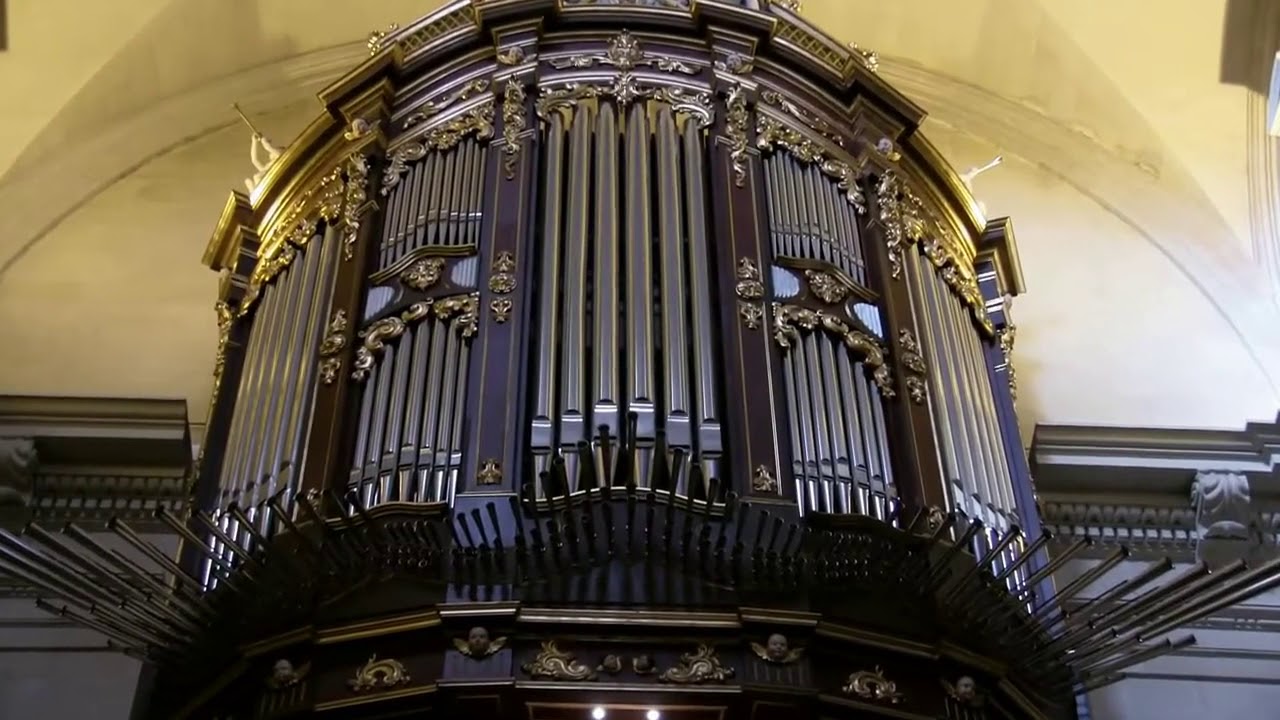
For this performance I chose the historical sound world of the organ of St. Marienkirche, built by Friedrich Stellwagen in the 17th century, heard here in its original meantone temperament. This tuning system dramatically heightens the expressive impact of Bruhns’ harmonic language. Intervals such as the leading tone D♯ resolving to E create striking tension before finally releasing into consonance. What sounds smooth in modern equal temperament becomes vivid and biting here, allowing the music’s rhetorical dissonances to speak with visceral clarity.
My interpretation also embraces the resonance of the space. Broader tempos allow the acoustic to interact with the music, while contrasting registrations highlight the dramatic architecture of the piece: full principal choruses for the declamatory passages, a single singing principal for the lamenting fugue (connecting intentionally back to the earlier Frescobaldi recording), brighter textures for the violin-inspired Harpeggio, and darker gravitas for the chromatic pedal writing that precedes the final fugue.
Despite its dance-like meter, the concluding “gigue” fugue never truly becomes light. Its insistent rhythms and powerful pedal entries maintain a granite-like weight until the final coda, where the long struggle in E minor resolves in a decisive affirmation of the tonic.
Within the broader arc of this program, Bruhns’ Praeludium represents the moment when grief becomes struggle: a powerful musical depiction of humanity wrestling with suffering.
00:00 Opening Toccata – The Sound of Struggle
01:28 Chromatic Fugue
05:04 Free Stylus Phantasticus Passagework
06:08 Harpeggio (Violin-Inspired Section)
06:59 Chromatic Harmonies
07:47 Chromatic Pedal Descent
08:13 Final Fugue
10:10 Coda – Resolution in E Major
This video is part of a larger musical journey exploring grief and transcendence across centuries of organ music -- Sound of Grief: -- • The Sound of Grief: A Musical Journey Towa...
Other selections in this series include:
Frescobaldi: The Sound of Consolation -- • Frescobaldi: Toccata Cromatica — The Sound...
Brahms: The Sound of Resignation -- • Brahms: Herzlich tut mich verlangen -- The...
If you enjoy historically informed organ performances and musical storytelling, consider subscribing to The Singing Organist.
Повторяем попытку...

Доступные форматы для скачивания:
Скачать видео
-
Информация по загрузке: