"When A Blonde Makes Up Her Mind to Do You Good" Jack Gardner's Orchestra (Okeh, 1925) Dallas
Автор: Desdemona202
Загружено: 2025-12-12
Просмотров: 208
Описание:
Jack Gardner, p, dir: Lou Harris and another c / Stanton Crocker, tb / Robert 'Bob' Harris as, cl / poss. Herman Waldman, as, ss , vl / Robert 'Bob' Dean ts, cl / poss. Earl McMahon, bj / Ralph Brown, bb / Bob Blassingame, d. Prob. Crocker and another, grunt vocal.
Recorded by General Phonograph Company (field recording unit).
Dallas, Texas ca. Oct. 1925
9357-B “When A Blonde Makes Up Her Mind To Do You Good” (Sammy Fain–Willie Raskin–Irving Mills) - vSC OK40501
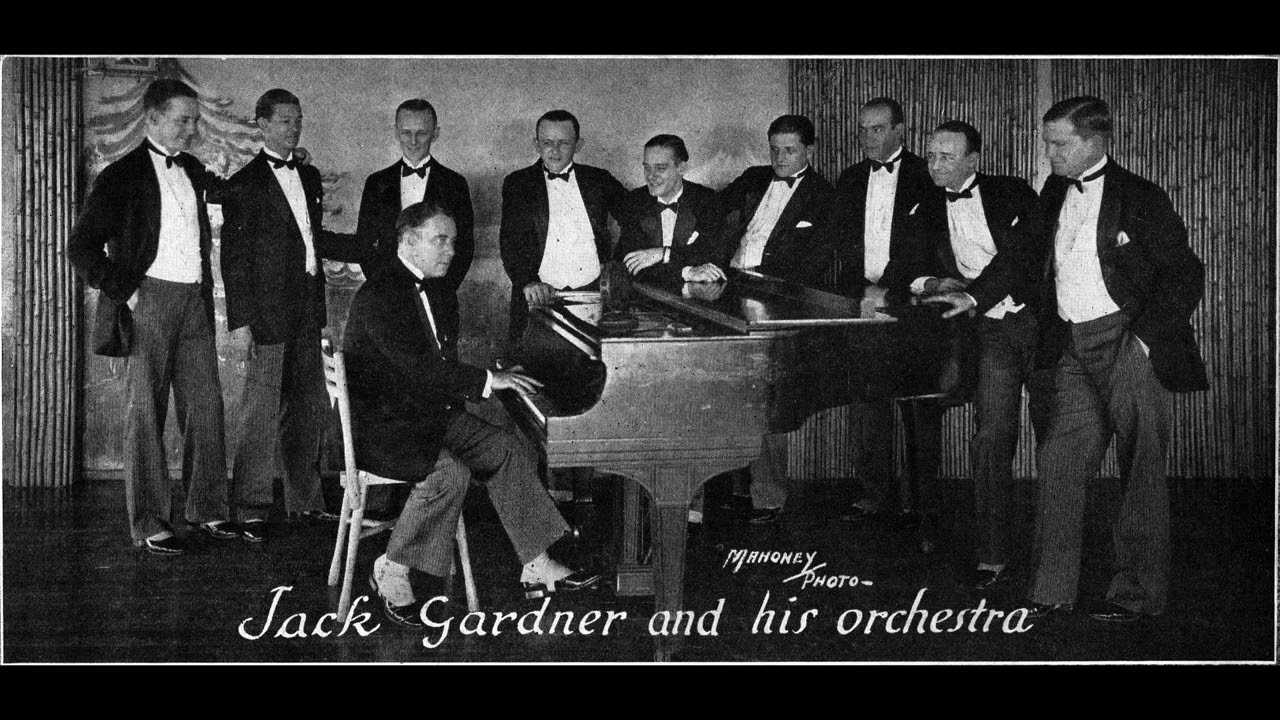
Transferred with 2.3ET lateral stylii via VM95SP cartridge in an Audiotechnica AT-LP120 Turntable. Declicked and given light EQ by Colin Hancock. Discs from Colin Hancock Collection. Discographical Information from Kevin Coffey, Jack Harris, Colin Hancock, Rust’s “Jazz Records,” Jazz Oracle 8021, Jazz Oracle 8067, and DAHR. Photo from R. Conner Montgomery collection.
Here is a red hot recording by Jack Gardner’s Orchestra of the Adolphos Hotel in Dallas, Texas. “When A Blonde Makes Up Her Mind to Do You Good” was the sixth song cut at the band’s second and final session for Okeh Records in October of 1925 and features the group’s wonderful trombonist Stanton Crocker on vocals.
The Jack Gardner band was one of the most popular bands in the Southwest and Midwest during the early and mid 1920s. His band was made up of some of the finest (white) musicians in the Dallas music scene, and their regular broadcasts from the Adolphus Hotel and phonograph records for Okeh ensured them much success. Gardner himself was no great musician: accordionist Ted Parrino recalled him as being just a “fair” pianist; Reedman Gib O’Shaughnessey remembered him as just an “ordinary pianist” and “no stylist.” Meanwhile, drummer Earl Hatch remembered him as someone who, “messed things up.” Pianist Lynn Harrell provided a little more insight on Gardner’s playing when he described him as the, “Thunder King,” in reference to his incessant use of the loud pedal to both generate excitement and, as some remember, to cover up mistakes! Similarly, banjoist (and brother of vocalist Smith) Charlie Bob Ballew was slightly more forgiving, described Gardner’s style of playing as, “like a freight train coming down the tracks,” which “people went nuts about.” It should be noted that many of these musicians were members of Jimmie Joy’s orchestra, the Gardner band’s rival. What is for certain is that Gardner’s band won the public appeal, and I personally find them to be a tight and interesting ensemble with a great southwestern stomp.
Jack Gardner was born in Toronto, Canada as John Robert ‘Jack’ Gardiner III to John Gardiner II and Rachel Gardiner (nee Auger). Information on his birth is spotty, as he gave a possible 1885 date in the 1917 draft, and a possible September 22, 1886 in other places. According to his obituary, he was born in 1886. The family of three chose to immigrate to the United States in 1891, moving to the Kalamazoo, Michigan area. The family also changed their name to Garnder during immigration. In Kalamazoo Jack’s father worked as a salesman of pianos, an instrument Jack would play throughout his life. Jack moved to Dallas in 1909, though he may have spent time in Denver before moving to Dallas, as he was working for the Captiol Life Insurance Co. prior to the Dallas move, which was based out of that city during those years. By 1911, he was listed in the Dallas City Directory as living at 2108 ½ Live Oak St., employed as a pianist at Meyer Cohen’s Dancing School, on 2021 ½ Main St. The drummer Robbert C. Blassingame joined him there a few years later in 1915, and would stay on with him for the next decade. Sometime in the late 1910s, Jack Garnder met the trombonist Larry Conley and with Blassingame formed a trio which toured a territory from Mississippi to New Mexico (crossing Louisiana, Arkansas, Oklahoma, and of course Texas in between). This group grew in popularity and size, augmenting to five by 1923 and eight by 1924 when they had their first recording session in Dallas for Okeh. The following year, they’d grown again, replacing their previous cornetist with a young Lou Harris of Harris Brothers Texans’ fame, and adding another cornetist as well. In October of 1925 they had another session for Okeh which produced several great recordings including this one. By 1927, the band disbanded and Gardner retired to work a chicken farm. He later got back into music as well as insurance, but eventually settled in Orlando, FL with his wife where he passed away in 1953.
Повторяем попытку...
Доступные форматы для скачивания:
Скачать видео
-
Информация по загрузке: