Monitoring the shelf-life and oxidative stability of olive oils by microESR forced oxidation assay
Автор: AOCS American Oil Chemists' Society
Загружено: 2019-10-14
Просмотров: 1358
Описание:
Find out more at aocs.org/webinar
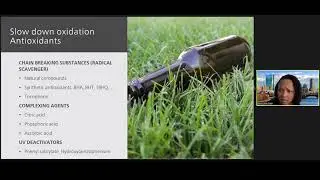
The webinar will focus on the oxidation process in olive oils, with particular attention on primary and secondary oxidation parameters. The challenge is to investigate the correlations of these parameters (in particular, peroxide values, OSI Time, and UV spectrophotometric extinction coefficients) with the data collected by microESR analysis. The speakers will present a standard operating procedure used for the microESR analysis of olive oils and explain the use of the instrument. Thanks to forced oxidation kinetics conducted by this instrument, it is possible to obtain several parameters, each of which can be useful in evaluating the oxidative state and the resistance to oxidation of vegetable oils. The speakers will present graphs obtained on virgin olive oils to explain these parameters in detail, and they will show a video of the analysis performed in a lab.
Learning Objectives
Learn how to apply microESR forced oxidation assay for the quality control of olive oils, particularly the oxidation process.
Gain knowledge of the standard operating procedure useful for monitoring the oxidative status of olive oils by microESR forced oxidation assay.
Build understanding of the data obtained from microESR by hearing explanation and interpretation of such data.
Presenters:
Tullia Gallina Toschi, Full Professor, Department of Agricultural and Food Sciences, Alma Mater Studiorum – University of Bologna
David Barr, Product manager – AIC (Applied, Industrial & Clinical MR Market Division – Bruker BioSpin. Corp.)
Presenter Bios:
Professor Tullia Gallina Toschi coordinates the research group of instrumental and sensory food analyses in the Department of Agricultural and Food Sciences, Alma Mater Studiorum-University of Bologna. Her research activities focus on innovative analytical methods for verifying the authenticity of foods, with a particular interest in oils and fats, including extra virgin olive oils.
Dr. David Barr earned a Ph.D. in the Department of Chemistry and Biochemistry from Utah State University in 1994. From there, he moved to North Carolina to work at NIEHS in the laboratory of Dr. Ronald Mason and specialized on studies of free radical chemistry using Electron Spin Resonance (ESR). He joined Bruker BioSpin in 1996 as an ESR application scientist and has remained with Bruker since. He now is the benchtop ESR product manager (Applied, Industrial and Clinical Division of Bruker BioSpin). His main focus is on product development and the transfer of ESR methods to industrial application.
Повторяем попытку...

Доступные форматы для скачивания:
Скачать видео
-
Информация по загрузке:







![Как сжимаются изображения? [46 МБ ↘↘ 4,07 МБ] JPEG в деталях](https://image.4k-video.ru/id-video/Kv1Hiv3ox8I)

