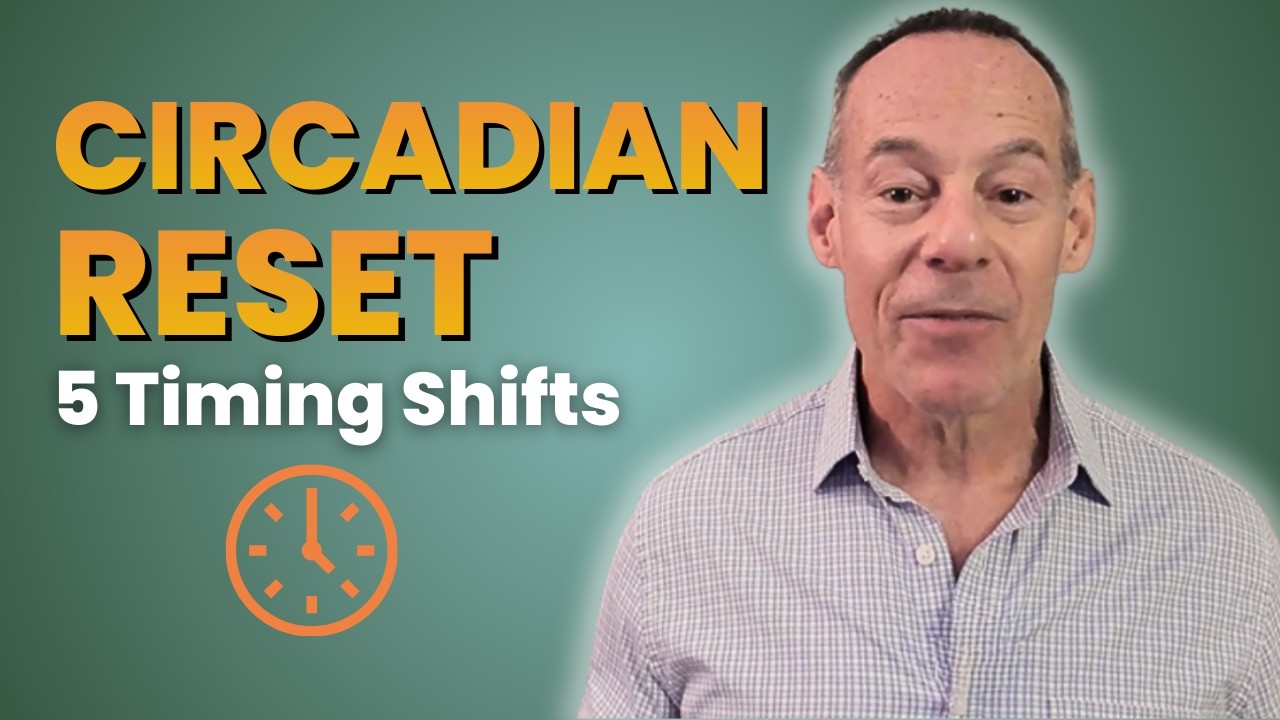
Why Your Body Runs on a Schedule (Circadian Rhythm Explained) | Dr. Bill Berkowitz
Автор: Metabolic Resilience
Загружено: 2026-02-13
Просмотров: 15
Описание:
Your body runs on a circadian rhythm, which is a 24 hour internal clock that coordinates sleep, hormones, metabolism, digestion, and brain function. This biological clock is primarily controlled by light and darkness. When light exposure and daily timing are consistent, the circadian clock stays aligned. When light, sleep, and activity are irregular, the system becomes disrupted and performance declines.
Circadian rhythm problems often affect people who feel tired, foggy, or wired at night but cannot sleep. Many assume this is caused only by stress or aging. In many cases, the real issue is circadian misalignment. The body expects bright light in the morning, activity during the day, and darkness at night. Indoor lighting, screens, inconsistent sleep timing, and late evening stimulation can confuse the biological clock and delay melatonin release.
The circadian rhythm explained simply is timing and sequence. Morning light signals the brain to lower melatonin and raise cortisol for alertness. As light fades, melatonin rises to prepare the body for sleep. When this rhythm is shifted, metabolism, mood, and energy regulation can suffer. A circadian rhythm reset usually begins with consistent wake times, early daylight exposure, reduced evening light, and predictable sleep timing.
In this video, you will learn:
How the circadian rhythm controls sleep, hormones, and energy regulation.
Why common daily habits disrupt the biological clock.
5 time shifts that reset your circadian rhythm naturally.
Dr. Bill Berkowitz, Chiropractor & Functional Medicine Practitioner
FAQs
What is the circadian rhythm?
The circadian rhythm is the body’s internal 24 hour clock that regulates sleep, hormones, metabolism, and alertness based on light and darkness.
How does light affect the biological clock?
Morning light signals the brain to increase alertness hormones, while darkness allows melatonin to rise and prepare the body for sleep.
What causes circadian rhythm disruption?
Irregular sleep schedules, late night screen exposure, indoor lighting, shift work, and inconsistent daily routines can all disrupt the circadian clock.
How do you reset your circadian rhythm?
A circadian rhythm reset typically involves consistent wake times, early morning sunlight exposure, reduced evening light, and regular sleep timing.
How long does it take to fix a disrupted circadian rhythm?
In many cases, noticeable improvements can occur within several days to a few weeks if light exposure and sleep timing are consistent.
Leave a comment.
Brought to you by Dr. Bill Berkowitz
https://metabolicresilience.com
SUBSCRIBE to my channel:
/ @metabolicresilience
CHAPTERS:
00:00 - INTRO
02:19 - What Circadian Rhythm Is and Why It Runs Everything
04:04 - How Light Sets the Body’s Internal Clock
05:47 - Melatonin, Cortisol, and the Daily Hormonal Rhythm
07:30 - How Modern Life Pushes the Clock Out of Sync
09:04 - The Circadian Alignment Plan. Five Timing Shifts That Matter
09:20 - 1. Morning Light
09:34 - 2. Brighter During The Day
09:48 - 3. Better Indoor Lighting When Needed
10:13 - 4. Reducing Blue Light At Night
10:46 - What Happens When Timing Is Restored
12:01 - OUTRO
Channel/Videos Disclaimer
Information provided on this channel is for educational purposes only and does not constitute medical, chiropractic, or professional advice. Viewing this content does not establish any advisory relationship. You apply this information at your own risk. This content is not intended to diagnose or treat any condition and should not replace professional medical advice. Consult your healthcare provider regarding your health. Information may contain errors, be outdated, or not suit individual needs. The creator has no liability for any loss or damage, direct or indirect, related to this channel's content or its application.
Повторяем попытку...
Доступные форматы для скачивания:
Скачать видео
-
Информация по загрузке:










![Почему взрываются батарейки и аккумуляторы? [Veritasium]](https://imager.clipsaver.ru/a3-3R9zwyGY/max.jpg)