CH322 - Alzheimer’s Disease Part 3: ApoE, Lipid Metabolism, Microglia, and TREM2
Автор: Patricia Flatt
Загружено: 2026-03-08
Просмотров: 36
Описание:
In this lecture, we examine how lipid metabolism and immune signaling contribute to Alzheimer’s disease progression.
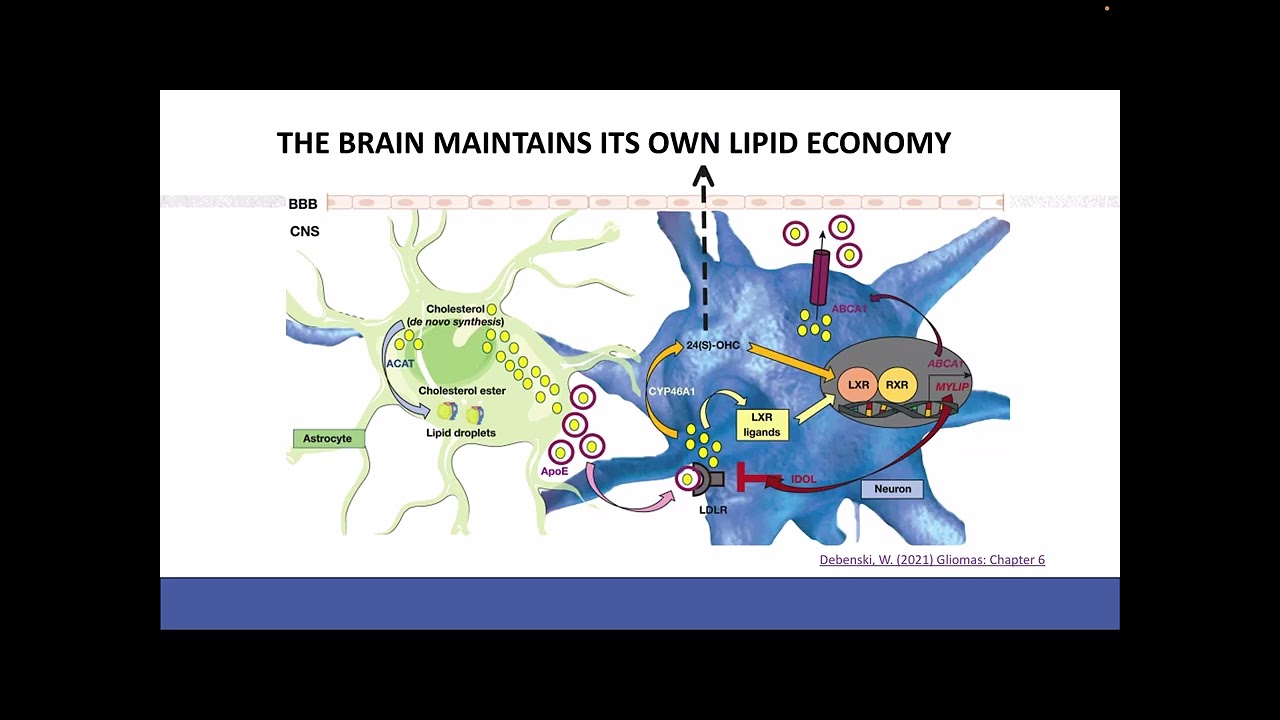
Unlike most tissues in the body, the brain must maintain its own independent lipid economy because cholesterol and many lipids cannot cross the blood–brain barrier efficiently. Lipid transport in the brain is largely regulated by Apolipoprotein E (ApoE), the dominant apolipoprotein in the central nervous system.
Genetic studies have shown that the ApoE4 variant is the strongest genetic risk factor for late-onset Alzheimer’s disease, influencing lipid transport, amyloid aggregation, and neuronal repair processes.
We also explore the role of microglia, the brain’s resident immune cells. Microglia constantly monitor the neuronal environment and respond to damaged proteins, lipid debris, and cellular stress.
A key receptor involved in this response is TREM2 (Triggering Receptor Expressed on Myeloid Cells 2). TREM2 allows microglia to detect lipid particles, ApoE-containing lipoproteins, and amyloid aggregates. Activation of this receptor promotes microglial migration, phagocytosis, and inflammatory signaling.
However, recent research shows that microglial responses can act as a double-edged sword: early immune activation may help clear damaged proteins, while chronic activation can contribute to neuroinflammation and neuronal damage.
Topics covered in this lecture include:
• The brain’s independent lipid metabolism
• Structure and function of Apolipoprotein E (ApoE)
• Why the ApoE4 allele increases Alzheimer’s disease risk
• Interactions between ApoE and amyloid-forming proteins
• The role of microglia as the brain’s immune cells
• TREM2 signaling and microglial activation
• Genetic variants of TREM2 associated with Alzheimer’s disease
• The dual protective and damaging roles of neuroinflammation
These mechanisms illustrate how Alzheimer’s disease emerges from interacting failures in protein homeostasis, lipid metabolism, and immune regulation, rather than a single molecular defect.
This lecture is part of a medicinal chemistry and biochemistry series exploring the molecular mechanisms of neurodegenerative disease and emerging therapeutic strategies.
Повторяем попытку...
Доступные форматы для скачивания:
Скачать видео
-
Информация по загрузке: