The Evolution of Iran-Israel Relations |From "Secret Allies" to "Existential Foes." | UPSC Lecture
Автор: OUR GOAL UPSC
Загружено: 2026-03-01
Просмотров: 61
Описание:
I. Introduction: The Flashpoint of March 2026
On the morning of March 1, 2026, the world woke up to a transformed geopolitical landscape. The reported death of Ayatollah Ali Khamenei during a joint U.S.-Israeli precision strike on his compound in Tehran has shattered the decades-old "Shadow War." This event, dubbed "Operation Epic Fury" by the Pentagon, marks the first time the U.S. has directly targeted the head of state of a major regional power since the Iraq War.
II. The Evolutionary Arc: How We Got Here
To understand 2026, we must look at the three-phase evolution of these relations:
The Strategic Partnership (1953–1979):
Under the Pahlavi dynasty, Iran was the "policeman of the Gulf." The U.S. provided F-14 Tomcats and nuclear technology, while Israel maintained a "Periphery Doctrine" alliance with Tehran to counter hostile Arab neighbors.
The Ideological Rupture (1979–2010):
The Islamic Revolution transformed Iran into a revisionist power. The 1979 Hostage Crisis created a permanent scar in U.S. diplomacy, while Iran's support for groups like Hezbollah turned Israel into its existential enemy.
The Proxy & Nuclear Age (2011–2025):
The conflict moved to third-party soil (Syria, Lebanon, Yemen). The failure of the JCPOA (Nuclear Deal) and the 2020 assassination of Qassem Soleimani set the stage for the current direct confrontation.
III. The 2026 Escalation: Military & Strategic Analysis
The current crisis is not just a border skirmish; it is a multi-domain war.
The Strike Mechanism: Reports suggest the use of advanced stealth UAVs and cyber-attacks that blinded Iranian air defenses for 45 minutes, allowing Israeli F-35s and U.S. B-2 bombers to penetrate the most hardened sites in Tehran and Isfahan.
The Iranian Retaliation: Within six hours, the Islamic Revolutionary Guard Corps (IRGC) launched over 400 ballistic missiles. Unlike previous strikes, these targeted non-military infrastructure in Tel Aviv and U.S. Naval assets in the Persian Gulf.
The Regional Domino Effect: Countries like Jordan, Saudi Arabia, and Iraq face an impossible choice: defend their airspace against Iranian missiles (risking Iranian wrath) or allow the U.S./Israel to operate (risking internal domestic uprisings).
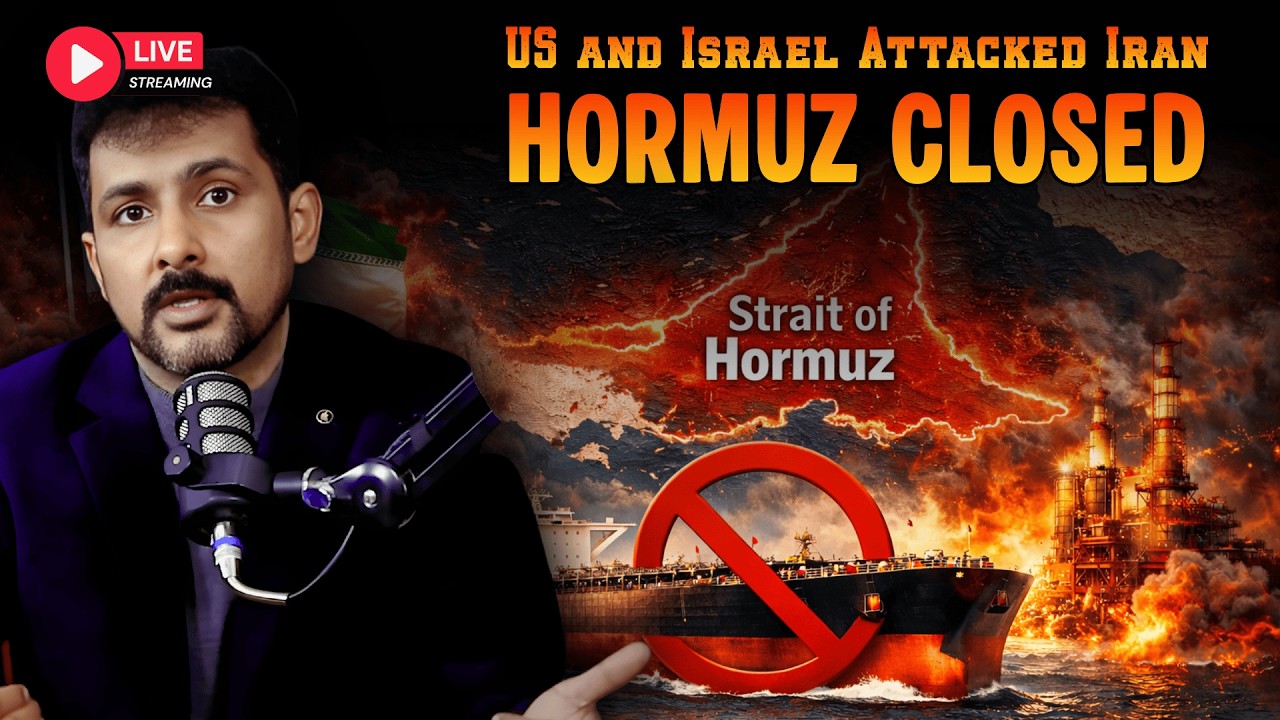
IV. Economic Implications: The "Strait of Hormuz" Factor
The Strait of Hormuz is the world's most important oil transit point.
Energy Security: Crude oil prices have surged past $150 per barrel. A total closure of the Strait would remove 20% of global oil supply overnight.
Supply Chains: Global shipping insurance rates have increased by 500%, effectively halting trade through the Persian Gulf.#IranIsraelWar #history #currentaffairs #UPSC #KhameneiDead #OperationEpicFury #WestAsiaCrisis #USAirStrikes #TehranBurning #StraitOfHormuz #Geopolitics2026 #WorldWar3 #OilPriceShock #UPSC2026 #InternationalRelations #NuclearBrinkmanship #Trump2026 #MiddleEastConflict
Повторяем попытку...

Доступные форматы для скачивания:
Скачать видео
-
Информация по загрузке: