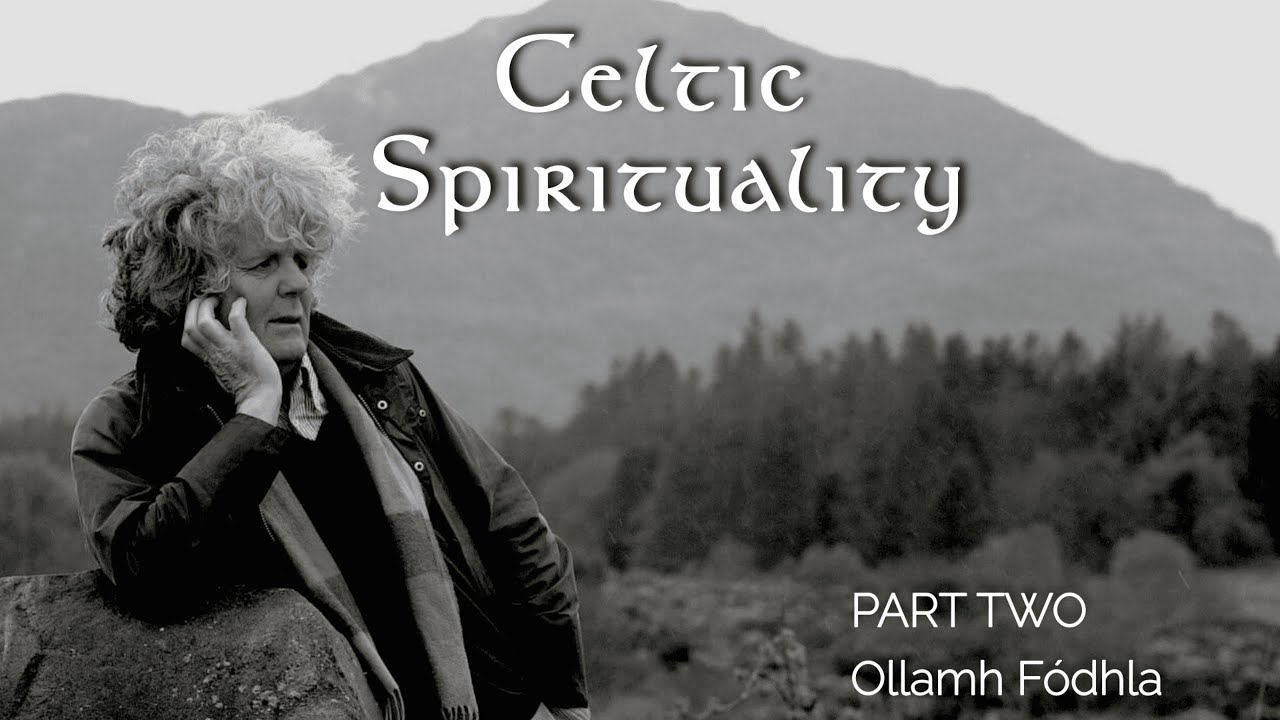
Celtic Spirituality: Part 2 (Ollamh Fódhla)
Автор: kinogael
Загружено: 2025-03-10
Просмотров: 342
Описание:
Ollamh Fódhla is a richly textured narrative about personal transformation. The text reflects on the nature of wisdom, conveyed through the symbolism of the sacred hazel tree and Nectan’s Well (aka Connla’s Well or the Well of Segais). The narrator, 'ollamh' (Irish word for great teacher) contemplates his role as a spiritual guide. He reflects on the river Boann, which mirrors his soul and connects him to the divine wisdom of Nectan’s Well. He retreats to higher ground, reflecting on the rites and wisdom of his forefathers. When this wisdom reveals the connection between his dreams and the sacred rivers, he accepts he must become Ollamh Fódhla to his people. Moriarty invites the audience to reflect: If a modern ollamh walked among us, what could they teach us? The text is read in segments with analysis and commentary interwoven throughout.
0:00:00 - Introduction
Moriarty sets out to guide the audience through his prose piece Ollamh Fódhla. The idea of a great teacher among us begs the question, what is it he or she would know, what could they teach us? Ireland is imagined as a land of three dimensions represented by the Goddess of Irish sovereignty in her three different forms (Éire, Fódla and Banba). To understand the great teacher among us, we must leave "Ireland dot com" and return to Fódhla.
0:05:00 - Source
Nectans well: An Otherworld well. The rivers of Ireland are said to have their sources in it. A hazel grows over it. The nuts that fall into the well have wisdom in them. Eaten by salmon, this wisdom is carried downstream to all parts of the country. The narrator, as Ollamh Fódhla, says that learning to speak is an act of acknowledging this Otherworldly source. The sacred river Boann is symbolized as the moon-white cow, representing both vision and identity, defining the people as a "river people.".
0:29:30 - Vision
The Ollamh recounts a series of dreams in which he struggles to reach an ideal future version of himself, only to realize that the gap is not physical but a matter of mindset. Unable to bridge this divide, he returns to tradition, leading his cattle to the high pastures of the Paps of Morrigu. His father reassures him that this journey is not merely practical but a sacred, ancestral rite—one that carries deeper significance beyond simple necessity.
0:37:50 - Doubt
The Ollamh reflects on summers spent in the highlands, a mysterious rock, said to transform into an old woman with a cow every seven years at Samhain, challenges his understanding of the world. His father’s wisdom teaches him that true understanding requires embracing "wonder", even at the cost of societal embarrassment.
0:56:05 - Retreat
The Ollamh describes his spiritual homelessness in the highlands between the Paps of Morrigu, where he experiences the raw, untamed divinity of the battle goddess Morrigu. Each summer, he undergoes a ritual of spiritual struggle. However, by summer’s end, unable to endure the intensity, he retreats to the river valley, where the goddess takes her gentler form as Boann, the gleaming river, uniting his people in shared reflection.
1:05:10 - Epiphany
The Ollamh says his house is reflected in Linn Feic, symbolizing a deep connection between his dreams and the sacred waters. He imagines himself as a salmon, swimming upstream into the Otherworld each night, reaching Nectan’s Well, the source of wisdom. At this deepest level of being, he suggests that the shadows of the Otherworld hazel tree cast their presence over all, allowing wisdom and wonder to flow into human consciousness.
1:08:30 - Reflection
Moriarty reflects on the profound significance of his words, he tells the audience that he will tell them who they are at a deeper level prior to who they think they are sociologically. That perhaps, like the Ollamh, unknown to their conscious inspection they are a salmon in Linn Feic consuming the hazelnuts of wisdom and wonder. He appeals to them to live as though they know this about themselves so that they may liberate themselves from the corrupted identities modern society has imposed on them. He recites the poem "The Song of Wandering Aengus" by W.B. Yeats.
1:15:55 - Transcendence
The Ollamh reflects on the relationship between spiritual depths and heights, questioning whether true safety in transcendence requires first feeling secure in one's inner depths. Years later, by Linn Feic, he understands that this Divine Ground both anchors and empowers one's spiritual journey. Returning from the heights of the Paps, he finally accepts his role as Ollamh Fódhla, mirrored by the sacred river and guided by the wisdom of the Otherworld.
Повторяем попытку...
Доступные форматы для скачивания:
Скачать видео
-
Информация по загрузке: