Aux quatre coins (1949) Jacques Rivette
Автор: youtube user 1
Загружено: 2022-10-11
Просмотров: 2009
Описание:
Aux quatre coins (1949) Jacques Rivette
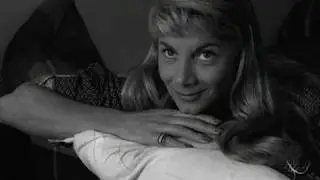
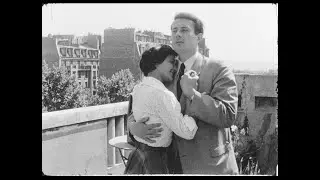
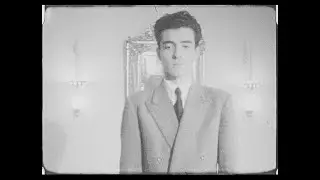
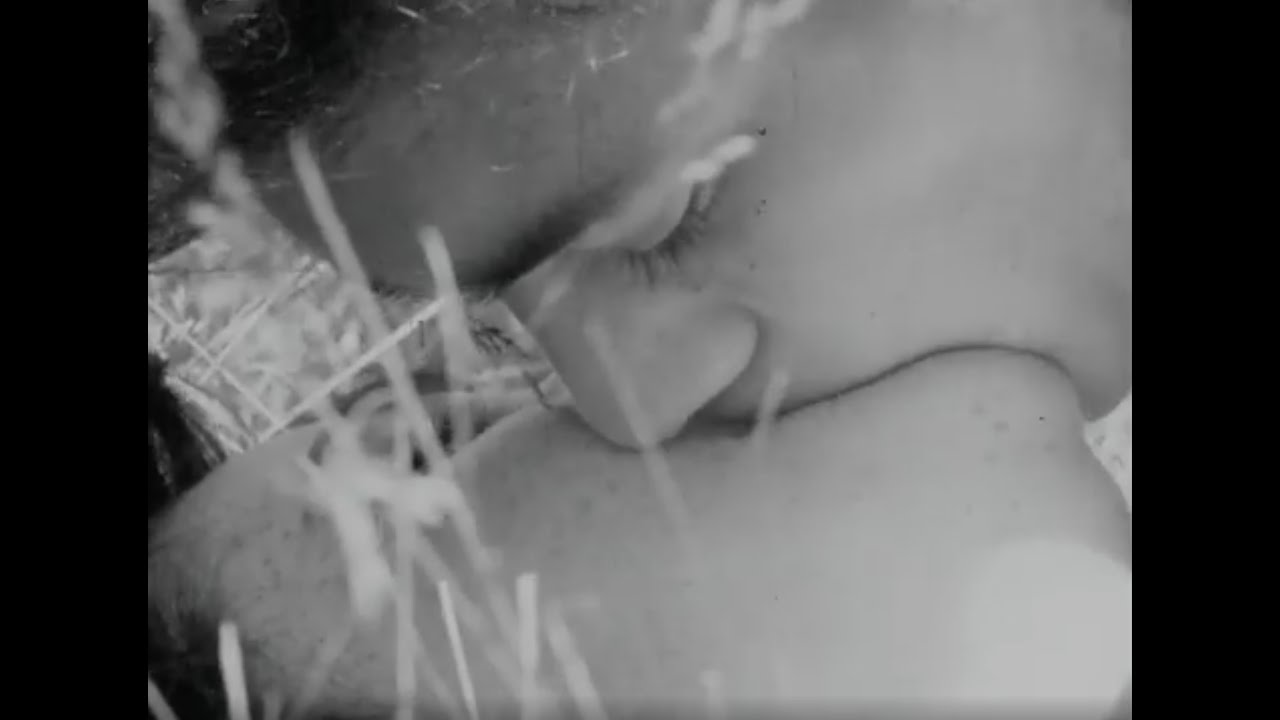
Considered by Jacques Rivette as “practice films”, these early images offer us a view of the beginning of his artistic journey. Aux quatre coins includes an original device that immediately sets itself apart from any other classic narrative form. These first experiments were silent films with intertitles. Aux quatre coins does not have any intertitles but black images between a few shots. Rivette offers the viewer intriguing visual forms, encouraging him to imagine his own story.
-Hervé Pichard
Rivette’s very first film is strikingly fantastic. Though set in a bohemian milieu of amorous and petulant romances one associates with much of the New Wave, Au quarte coins has more in common with Jean Cocteau’s mythopoetic cinema of the time. A roundelay fable of conflated and crossed desires among a fivesome of unspeaking youths shot near Rivette’s hometown of Rouen, the film is giddily full of the evocative, non-literal symbology common to the director’s more wonderfully fanciful films. Mirrors, candles, knives, and a pistol are all dream objects that make an appearance in a compacted and confounding story that seems to have two couples imagine or fantasize other combinations and collisions between the participants. A woman raises her hand to cover her face and the film cuts to a man performing the same action elsewhere—Rivette conjuring cinema’s most basic, pleasurable magic. The dramatic feeling is of a ritual enacted—or a playacted, everyone in poses and with arch postures, the women constantly falling backwards into a kiss or supplication or a dreaming faint as the men variously manhandle them, confront each other, or stalk the frame ominously. The youths face off in a barren landscape like the battling goddesses of Duelle (1976), and black leader briefly separates nearly every cut, suggesting that each following image could be but one possible strand of fate. A couple kiss in their dark room and—blink—they’re re-seen, re-configured, as a different couple kissing in a field, transported to Renoir's A Day in the Country. A rhyme, rebirth, or re-imagination? We are in Cocteau’s world for sure—or that of David Lynch to follow. Rivette is already speaking the playful language of cinema’s dreams.
Daniel Kasman
In 1949, he packed a copy of his first 16 mm short film, Aux quatre coins (1949), and left his native town determined to pursue a filmmaking career. The afternoon that Rivette arrived in Paris, he made his first contact, the young actor Jean Gruault, who was at the time managing a bookshop not far from Place St. Sulpice. Gruault invited Rivette to a screening that same evening of Robert Bresson’s Les dames du Bois de Boulogne (1945), which was being introduced by a film critic, Maurice Schérer, who would later adopt the pseudonym “Éric Rohmer.” In the months that followed, Rivette frequented the Cinémathèque on Avenue de Messine and the Latin Quarter ciné-club , where he became acquainted with Gruault’s circle of friends, which included Suzanne Schiffman, François Truffaut, and Jean-Luc Godard.
Mary M. Wiles
Повторяем попытку...
Доступные форматы для скачивания:
Скачать видео
-
Информация по загрузке: