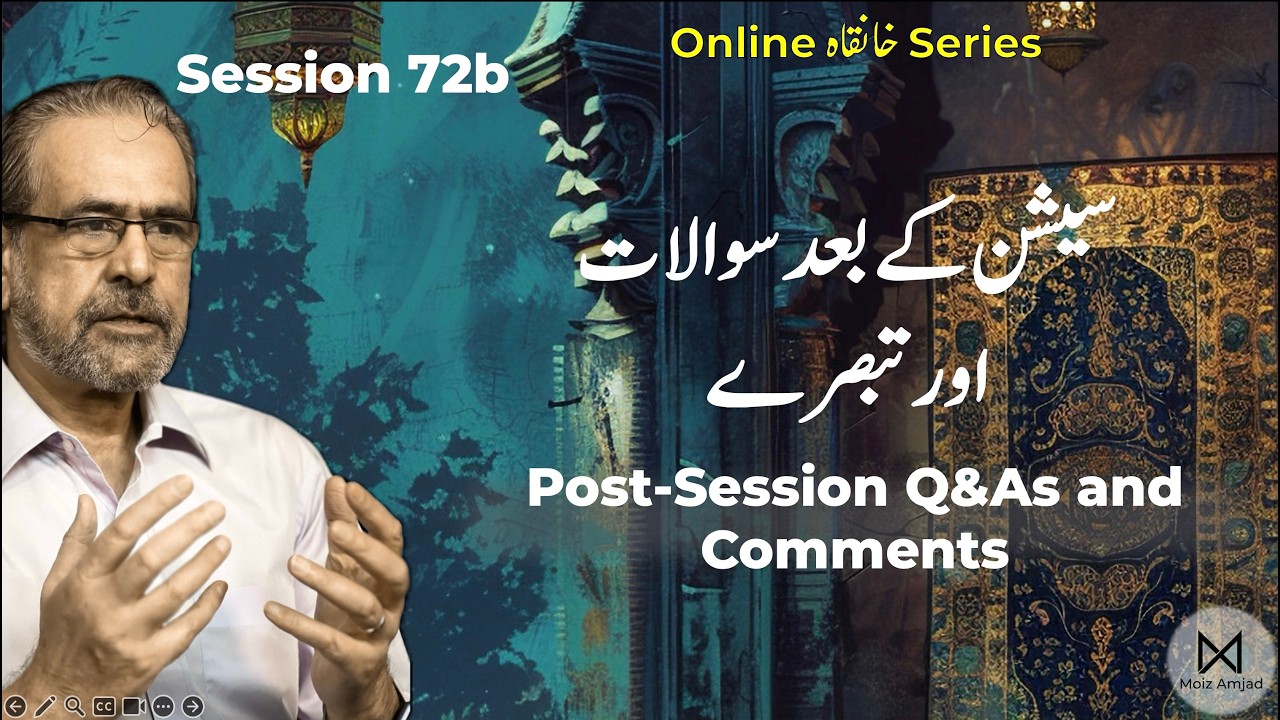
Khanqah 73(b): Post-Session Q&As & Comments | سیشن کے بعد سوال اور تبصرے
Автор: Moiz Amjad
Загружено: 2026-02-19
Просмотров: 126
Описание:
"behtari ki rah main aik ahem rukawat" ke baad sawal aur tabsare
بہتری کی راہ میں ایک اہم رکاوٹ کے بعد سوال اور تبصرے
Questions and Comments after "An Important Barrier on the Path to Improvement"
#moizamjad #khanqah #selfimprovement
To Join the WhatsApp Group for Getting Timely Announcements of the Khanqah session, Click the Following Link:
https://chat.whatsapp.com/LDKQW92nyR1...
To Join the WhatsApp Group to get information about all of Moiz Amjad's sessions and Media posts, Click the Following Link:
https://chat.whatsapp.com/IF8VMisfCnW...
To give your feedback on the Khanqah session, please click the following link:
https://forms.gle/Jxio5g32jmcrRsPx6
Character Growth Circle is a community initiative, where members share their practices on "Character Development and Moral Uplifting", in weekly live sessions held every Saturday at 8:30 AM PST.
To join the community, please subscribe to …
https://chat.whatsapp.com/JAIUWaAUfeP...
AI-Generated Description:
A participant shared when a discussion feels like the other person is blaming her, she often stays quiet, later responds more calmly, and can show patience—but she is still left with an inner, lingering hurt.
The Facilitator explained that hurt can have different causes. Sometimes it comes from sensing that the criticism contains some truth, or from feeling discouraged that despite effort, the same point is still being raised. He then explored another common reason: not feeling “heard” or given any weight—especially in close relationships (husband, daughter). When the other side dismisses her view outright, she shuts down, even if she can partly understand their standpoint.
The key is to shift the focus from proving one’s opinion to understanding the other person’s basis: treat disagreement as a learning opportunity. Instead of two opinions colliding, cultivate curiosity: “How did you reach this view?” Ask about their reasoning, then evaluate it. If the basis seems weak or unfair, question the basis rather than pushing your own stance. The Facilitator acknowledged that harsh, dismissive sentences are genuinely hurtful—and sometimes all one can do is accept the pain and empathize with oneself—but he emphasized working on what remains within one’s control: one’s own approach inside the interaction.
The participant noted progress: she reacts less impulsively now, takes a longer pause, and when she returns to the conversation she rephrases her words, which often makes the other person more ready to listen.
The Facilitator reinforced a broader frame: the goal of self-improvement is not to “fix” relationships, but to refine oneself as preparation for meeting God. Some interactions will improve; others may not. The work is to keep learning from situations—ask what exactly hurt, what triggers the harshness, and what you can adjust—because the aim is not a problem-free life, but learning how to live with problems while growing morally.
Participants shared feedback they collected from family: common themes were impatience, impulsive reactions, and overthinking. One participant described a plan centered on the circle of control (thoughts, emotions, actions), plus pauses, breathing, and meditation. The Facilitator advised tracking specific triggers (when and where impulsiveness shows up), choosing a clear response rule (e.g., understand the other’s reasoning before replying), and moving through stages: awareness → deliberate practice → gradual ease and trust, like learning any skill.
Another participant received feedback about sounding overly apologetic or over-qualifying opinions. The Facilitator clarified: if this style does not cause inner discomfort or prevent assertiveness when needed, it may not be a real problem. The real issue is when you want to say “no” or be assertive but cannot. He distinguished genuine humility and accuracy from “projecting” confidence; real confidence is an inner steadiness and willingness to listen and revise, not loud certainty.
A participant discussed taking long pauses with a short-tempered spouse, then returning to talk. The Facilitator reframed this as progress, not failure, and emphasized asking for feedback in a restricted way: request only “one thing” that would most positively impact life, then focus on one goal at a time (especially through Ramadan).
Contents:
00:00 Feeling hurt at others' reactions
09:37 Ms. Shaheen's comments
15:27 Ms. Malik shares her experience
22:13 Ali's comment
32:34 Ms. Shaheen's comments
37:37 Ms. Rizwan shares her experience
Moiz Amjad
معز امجد
Повторяем попытку...

Доступные форматы для скачивания:
Скачать видео
-
Информация по загрузке: