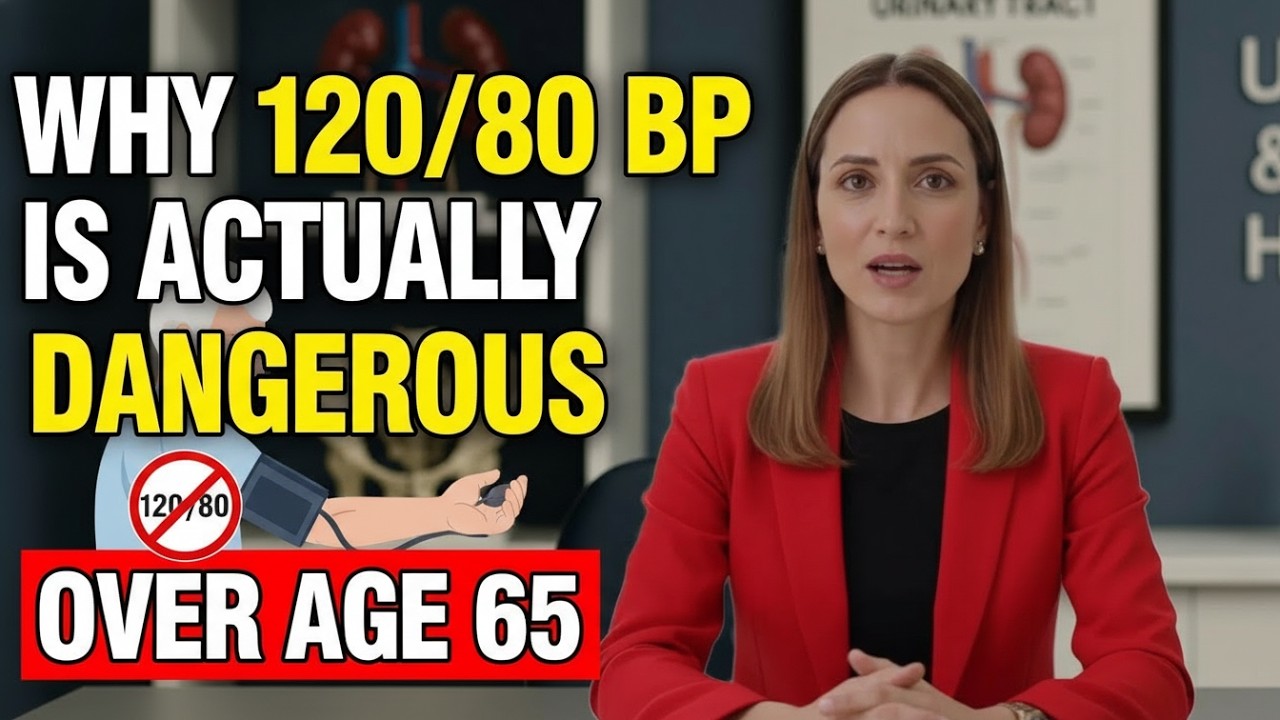
SENIORS: Your 'Normal' 120/80 Might Be a Trap (New 2026 Age Guidelines)
Автор: Claire Whitmore Senior's Health Tips
Загружено: 2026-02-12
Просмотров: 8364
Описание:
Join our Newsletter: https://www.seniorhealthlifedaily.vip...
If your blood pressure looks perfect in the doctor's office at 9:00 AM, but you feel dizzy or exhausted after lunch, you might be suffering from "Post-Prandial Hypotension."
In this video, we reveal why a single blood pressure reading is never enough to tell the whole story. We break down the "Arterial Stiffness Trap"—how stiff arteries in seniors cause dangerous pressure drops after eating and during sleep—and why standard medication often misses this completely.
PLUS: We share the "3-Step Stabilization Protocol"—including the specific mineral combination (Magnesium + Potassium) and the post-meal walking habit that keeps your pressure steady all day long.
In this video, you will discover:
The "Food Coma" Danger: Why a large carbohydrate meal diverts blood to your gut, leaving your brain starved of oxygen (and how to stop it).
The "10-Minute" Walk: How a gentle walk immediately after eating acts as a "secondary pump" to prevent blood pooling.
The "Non-Dipping" Nightmare: Why poor sleep prevents your arteries from recovering at night, and the mineral (Magnesium Glycinate) that restores the natural dip.
The "Missing" Measurement: Why you must check your blood pressure while standing up, not just sitting down.
The "Potassium" Switch: How balancing sodium with foods like avocados and white beans relaxes arterial walls naturally.
Disclaimer: The content in this video is for educational purposes only and is not intended to be a substitute for professional medical advice, diagnosis, or treatment. Always seek the advice of your physician regarding your medical condition. Never change your diet or medication dosage without consulting your doctor.
Scientific References & Research
The following peer-reviewed journals and studies support the findings regarding post-prandial hypotension, mineral intake, and blood pressure variability discussed in this video:
1. Post-Prandial Hypotension in the Elderly
Journal: Journal of the American College of Cardiology (JACC)
Study: Postprandial Hypotension: Epidemiology, Pathophysiology, and Clinical Management
Key Finding: Post-prandial hypotension (low BP after eating) is highly prevalent in seniors due to arterial stiffness and autonomic dysfunction, significantly increasing the risk of falls, syncope, and stroke.
2. Magnesium & Blood Pressure Regulation
Journal: Hypertension (American Heart Association)
Study: Effects of Magnesium Supplementation on Blood Pressure: A Meta-Analysis
Key Finding: Magnesium supplementation acts as a natural calcium channel blocker, significantly lowering systolic and diastolic blood pressure and improving sleep quality.
3. Potassium Intake & Stroke Risk
Journal: Stroke
Study: Potassium Intake, Stroke, and Cardiovascular Disease
Key Finding: Higher potassium intake is associated with a lower risk of stroke and relaxes blood vessel walls, counteracting the negative effects of sodium.
4. Post-Meal Walking & Glycemic/Vascular Control
Journal: Diabetologia
Study: The advice to 'sit less' is more effective than the advice to 'exercise more' for glycemic control
Key Finding: Light physical activity (walking) post-meal reduces glucose excursions and improves hemodynamic stability by utilizing the skeletal muscle pump to aid venous return.
Повторяем попытку...

Доступные форматы для скачивания:
Скачать видео
-
Информация по загрузке: