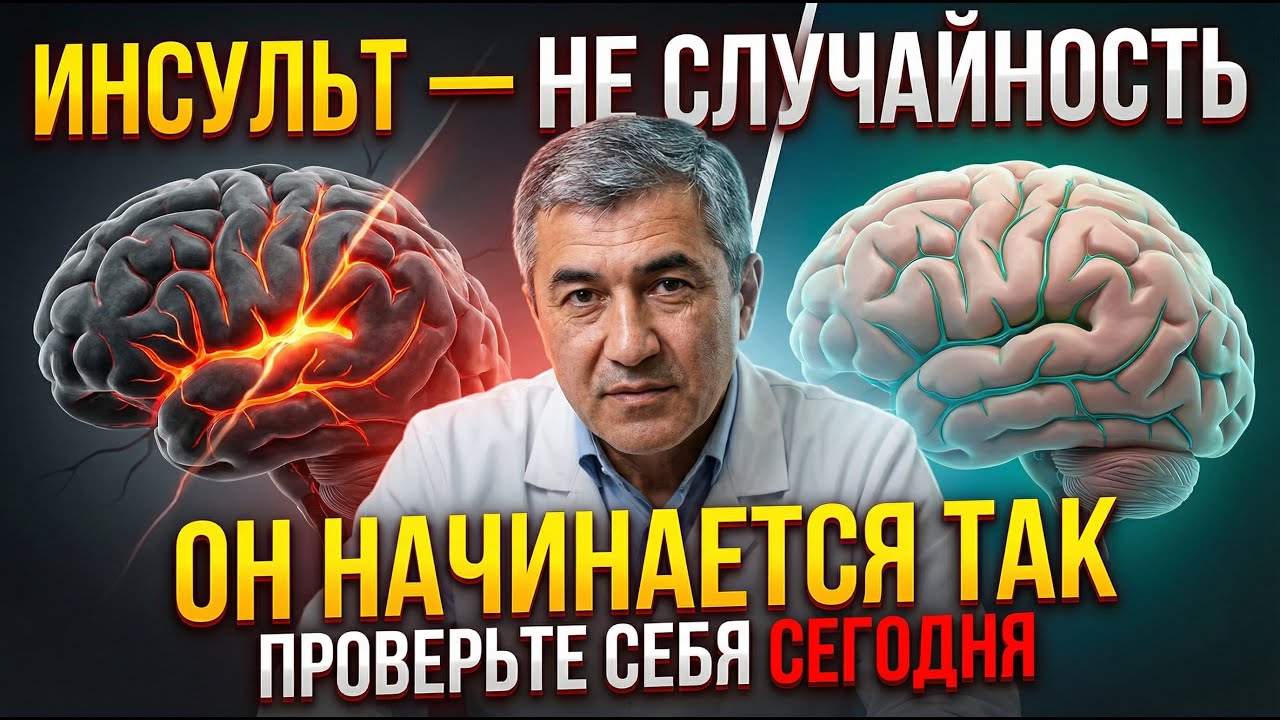
SENIORS, He Died In His Sleep DOING THIS! I'm Begging you, Don't Do IT!
Автор: Claire Whitmore Senior's Health Tips
Загружено: 2026-02-27
Просмотров: 3312
Описание:
Complete Protocol: https://seniorhealthlife.gumroad.com/...
Join our Newsletter:
https://www.seniorhealthlifedaily.vip...
If you stop drinking water early in the evening to avoid waking up at night, you might be creating a lethal trap inside your bloodstream while you sleep.
In this video, we reveal why the hours between 2 AM and 6 AM are the most dangerous cardiovascular window of the day for seniors. We break down the "Overnight Hemoconcentration" danger—how evening dehydration turns your blood into a thick suspension exactly when your body's natural clot-busting system shuts off.
PLUS: We share the "4-Step Nighttime Protocol"—including the simple "legs up" habit and a 30-second morning routine that safely hydrates your cells and prevents the sudden blood pressure spikes that cause the dreaded "6 AM Stroke."
In this video, you will discover:
The "Thick Blood" Trap: How "Insensible Fluid Loss" while you sleep dramatically increases your hematocrit, forcing your heart to pump sludge instead of liquid.
The "PAI-1" Clotting Window: Why your body's natural clot-dissolving enzymes turn off right before you wake up (and why dehydration makes this deadly).
The "CPAP" Danger: Why sleep apnea machines double your overnight fluid loss, quietly stealing the magnesium your heart needs to stay in rhythm.
The "Leg Elevation" Fix: Why putting your legs up at 6:00 PM prevents a massive volume of fluid from rushing back to your heart at 2:00 AM.
The "30-Second" Morning Rule: Why you must perform 10 seated calf raises before standing up to prevent an adrenaline surge that can crack arterial plaque.
Disclaimer: The content in this video is for educational purposes only and is not intended to be a substitute for professional medical advice, diagnosis, or treatment. Always seek the advice of your physician regarding your medical condition. Never change your fluid intake or medication dosage without consulting your doctor, especially if you are on diuretics or blood pressure medication.
Scientific References & Research
The following peer-reviewed journals and studies support the findings regarding nocturnal hemoconcentration, PAI-1 circadian rhythms, and cardiovascular events discussed in this video:
1. Circadian Rhythm of Cardiovascular Events
Journal: Circulation
Study: Circadian Variation in the Frequency of Onset of Acute Myocardial Infarction
Key Finding: Acute myocardial infarction and ischemic stroke exhibit a significant circadian peak in the early morning hours (typically 6 AM to 10 AM), aligning with awakening and arising.
2. PAI-1 and Fibrinolysis
Journal: Blood
Study: Circadian Fluctuation of Plasminogen Activator Inhibitor 1 (PAI-1) Antigen
Key Finding: PAI-1 levels peak in the early morning (around 4 AM to 6 AM), significantly reducing endogenous fibrinolytic (clot-dissolving) activity exactly when cardiovascular events are most likely to occur.
3. Nocturnal Hemoconcentration & Dehydration
Journal: American Journal of Physiology-Heart and Circulatory Physiology
Study: Fluid shifts and hemoconcentration during sleep
Key Finding: Insensible fluid loss during sleep without fluid intake leads to increased blood viscosity and hemoconcentration (elevated hematocrit), increasing resistance to blood flow and the risk of thrombosis.
4. Orthostatic Stress and Plaque Rupture
Journal: Journal of the American College of Cardiology
Study: Triggers of Acute Coronary Syndromes
Key Finding: The sudden sympathetic nervous system surge (release of catecholamines) and blood pressure spike associated with assuming an upright posture in the morning increases mechanical shear stress on vulnerable atherosclerotic plaques, precipitating rupture.
Повторяем попытку...

Доступные форматы для скачивания:
Скачать видео
-
Информация по загрузке: