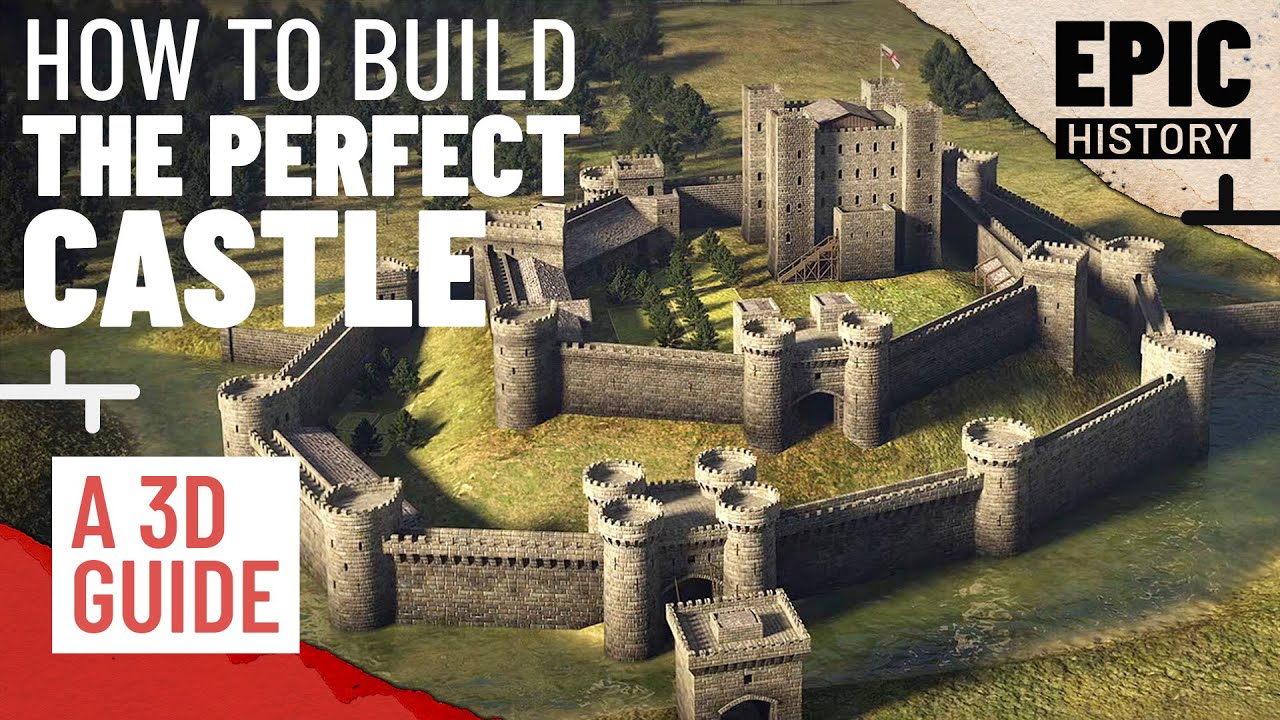
Amazing Facts About MEDIEVAL Castles You Didn’t Know!
Автор: Metatron
Загружено: 2024-06-17
Просмотров: 57301
Описание:
Use 55METATRON to get 55% off your first month at Scentbird https://sbird.co/3yUkggw
This month I received...
Pour Homme EDT by Versace https://sbird.co/4b3ik2Z
Light Blue Pour Homme by Dolce&Gabbana https://sbird.co/45bbKWH
Yellowstone Ride by Tru Western https://sbird.co/4bMadIY
Moss+ Bold by COMMODITY https://sbird.co/4bFexd4
Also, please remember to include the CTA as a pinned comment:
Use 55METATRON to get 55% off your first month at Scentbird https://sbird.co/3yUkggw
To answer the question of when and where the first castles originated, it is imperative to first define what exactly a castle is. This is due to the fact that defensive structures constructed from materials such as earth, wood, and stone have a long and ancient history, with archaeological evidence suggesting their existence dating back to at least the Bronze Age, and potentially even the Chalcolithic period.
The etymological roots of the term "Castle" can be traced back to the Late Latin word "Castellum," which was employed to refer to small, fortified towers or strongholds constructed from and integrated into the broader fortification systems of the Roman Limes.
In order to provide a comprehensive and accurate response it is necessary to engage in the examination of the distinction between architectural, archaeological, and historical evidence pertaining to the development and evolution of fortified structures throughout history.
Furthermore, it is important to consider the semantic distinction between the term "castle" and other related terms such as "fortress," "citadel," or "palace." to define their specific architectural features, defensive capabilities, and societal roles that define the castle specifically as a distinct type of fortified structure.
In order to develop a more nuanced and comprehensive understanding of the origins and evolution of castles as a unique form of defensive architecture in light on the complex interplay between warfare, politics, society, and technology.
Castellum di Biricana, sul Limes reto-germanico
The substantial difference between a proper castle and the defensive works of previous centuries, including
The fundamental distinction between a castle in the proper sense and the defensive apparatus of preceding centuries, including the late Roman Castella from which the term originates, lies in its inherent nature as a private fortified structure.
The emergence of castles can be attributed to the fragmentation of the Carolingian Empire following the demise of Charlemagne, with the dual function of protecting the inhabitants of the fiefs of Central-Western Europe from the raids of the "new Barbarians" (the incursions of Hungarians, Vikings, and Saracens) and at the same time bolstering the social position of local nobles towards their sovereign.
The castle functioned as both an instrument of defense and a manifestation of power and relative autonomy of the feudal lords in relation to the central authority. This is exemplified by the edict of Charles the Bald, King of the Western Franks, in 864 AD, prohibiting his nobles from constructing new castles without his explicit authorization.
The feudal lord who owned a castle could withdraw with his army and the population subject to him within its walls, not only to defend himself from foreign raiders but also to escape the vengeance of the sovereign if he refused for any reason to obey his orders.
Castles will also be an instrument of territorial penetration and control, as shown by their extensive construction by the Normans in England following the Battle of Hastings.
The earliest castles typically featured walls constructed from timber, essentially an evolution of the palisade, but gradually, after the turn of the first millennium, stone and masonry structures began to appear with increasing frequency, adhering to pre-established architectural canons. The evolution of castle architecture, from wooden palisades to stone fortifications, underscores the technological and military advancements of the period.
The proliferation of castles as private fortifications marked a significant shift in the sociopolitical landscape of medieval Europe, reflecting the decentralization of power and the rise of the feudal system.
The castle became a symbol of the feudal lord's authority and a focal point for the administration of his fiefdom. The architectural evolution of castles, from wooden palisades to stone fortifications, mirrors the technological advancements and changing military strategies of the era.
The study of castles and their roles in medieval society has been a subject of extensive research in the fields of archaeology, history, and architectural history. Scholars have employed various methodologies, including excavation, structural analysis, and historical documentation, to gain a comprehensive understanding of their design, construction, and function.
#medievalcastle #japanesecastle #medievalhistory
Повторяем попытку...
Доступные форматы для скачивания:
Скачать видео
-
Информация по загрузке: