The Fed15 Podcast: RIF “Bump and Retreat” Explained + 2026 HSA & FSA Updates
Автор: FedLife
Загружено: 2026-01-08
Просмотров: 60
Описание:
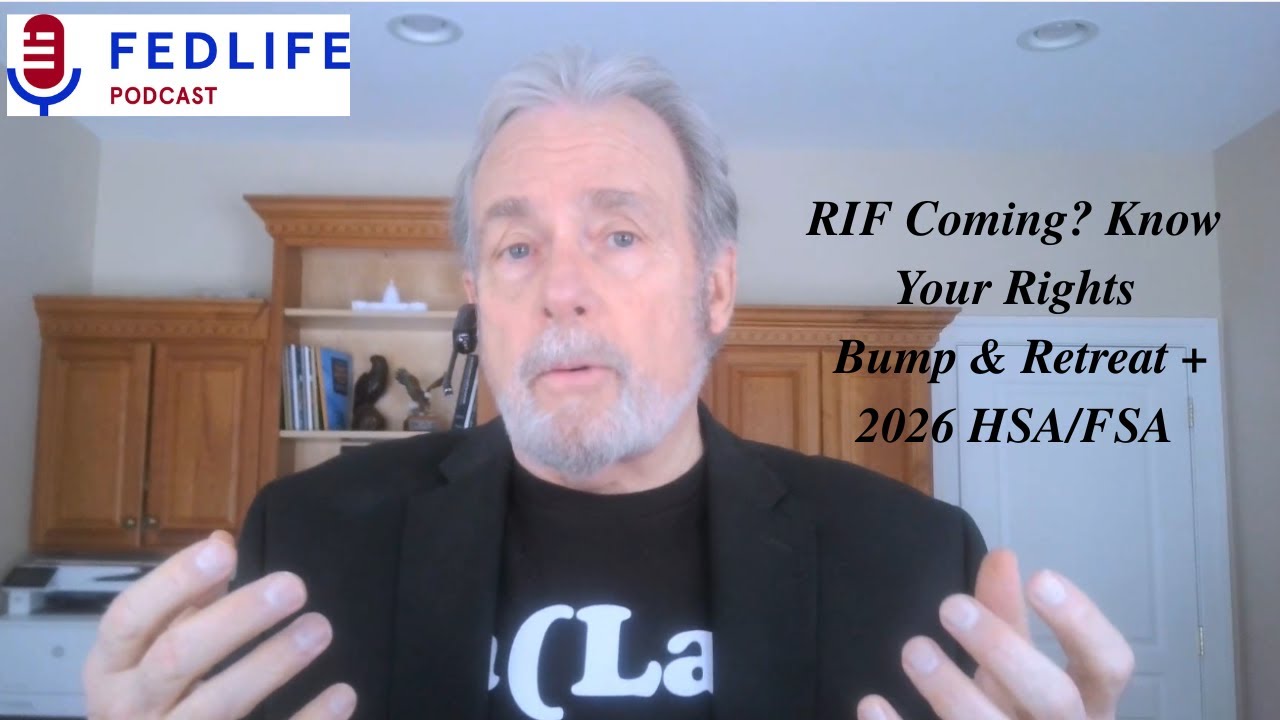
Dan and Katelyn break down how “bump and retreat” works in a RIF, covering key terms, potential outcomes, and steps federal employees can take if a RIF is possible. They also review 2026 HSA and FSA updates, including tax advantages, ACA-related changes, Direct Primary Care and telehealth expenses, and key differences among FSA options for federal employees.
• https://stwserve.com/bump-and-retreat...
• https://stwserve.com/hsa-and-fsa-enha...
•
https://www.stwserve.com/blog
If you’d like to meet with an STWS advisor, pick a spot on our calendar here:
https://stwserve.com/meet-with-us/
Register for Webinars:
https://stwserve.com/register
Dan breaks down “bump and retreat” in the context of RIFs, starting with key concepts such as competitive area and level, the retention register, and possible outcomes. He then explains how bump and retreat works, what factors may affect an employee’s position on the list, and practical steps to take if a RIF becomes a possibility.
Katelyn covers HSA and FSA enhancements taking effect in 2026, including how HSAs can deliver significant tax advantages when used strategically. She reviews new changes affecting individuals on Bronze and catastrophic ACA plans, updates to Direct Primary Care and telehealth expenses, and then walks through the different types of FSAs available to federal employees, along with important considerations for managing these accounts effectively.
**DISCLAIMER – THIS IS NOT FINANCIAL ADVICE**
The Fed15 podcast is presented by Serving Those Who Serve, a financial planning practice serving federal government employees and retirees all over the country.
This podcast is presented for information and entertainment only and is not intended to be taken as financial advice. All listeners should consult their personal advisors before taking any action. The opinions expressed therein are not the opinions of Raymond James or Serving Those Who Serve.
Any information is not a complete summary or statement of all available data necessary for making an investment decision and does not constitute a recommendation. There is no assurance any of the trends mentioned will continue or forecasts will occur. Investing involves risk and you may incur a profit or loss regardless of strategy selected.
Raymond James and its advisors do not offer tax or legal advice. You should discuss any tax or legal matters with the appropriate professional.
Investing involves risk and you may incur a profit or loss regardless of strategy selected, including diversification and asset allocation. Every investor's situation is unique and you should consider your investment goals, risk tolerance and time horizon before making any investment. Prior to making an investment decision, please consult with your financial advisor about your individual situation.
The foregoing information has been obtained from sources considered to be reliable, but we do not guarantee that it is accurate or complete, it is not a statement of all available data necessary for making an investment decision, and it does not constitute a recommendation. Any opinions are those of Dan Sipe, and Katelyn Murray and not necessarily those of Raymond James.
Prior to making an investment decision, please consult with your financial advisor about your individual situation.
The Thrift Savings Plan (TSP) is a retirement savings and investment plan for Federal employees and members of the uniformed services, including the Ready Reserve. The TSP is a defined contribution plan, meaning that the retirement income you receive from your TSP account will depend on how much you (and your agency or service, if you're eligible to receive agency or service contributions) put into your account during your working years and the earnings accumulated over that time. The Federal Retirement Thrift Investment Board (FRTIB) administers the TSP. Contributions to a traditional IRA may be tax-deductible depending on the taxpayer’s income, tax-filing status, and other factors. Withdrawal of pre-tax contributions and/or earnings will be subject to ordinary income tax and, if taken prior to age 59 1/2, may be subject to a 10% federal tax penalty. Like Traditional IRAs, contribution limits apply to Roth IRAs. In addition, with a Roth IRA, your allowable contribution may be reduced or eliminated if your annual income exceeds certain limits. Contributions to a Roth IRA are never tax deductible, but if certain conditions are met, distributions will be completely income tax free. Roth IRA owners must be 59½ or older and have held the IRA for five years before tax-free withdrawals are permitted.
Повторяем попытку...
Доступные форматы для скачивания:
Скачать видео
-
Информация по загрузке: