Stony Coral Tissue Loss Disease in The Bahamas
Автор: Perry Institute for Marine Science
Загружено: 2020-06-10
Просмотров: 474
Описание:
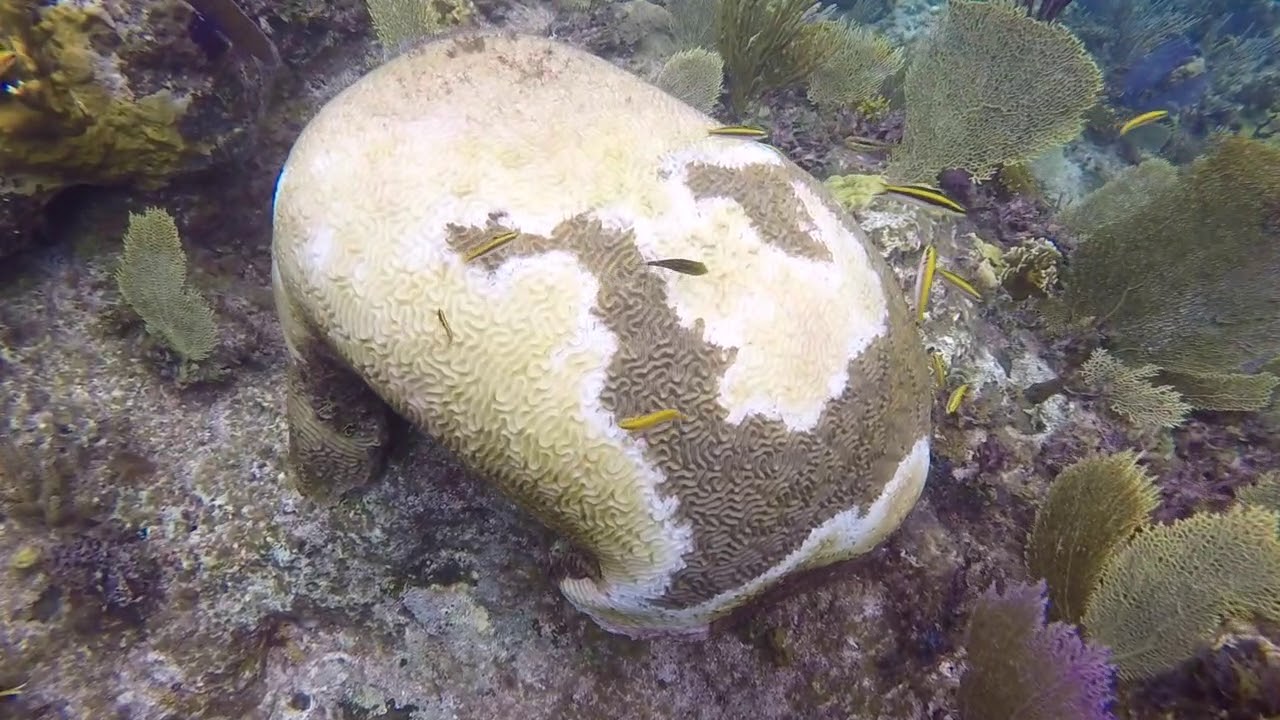
The newly emergent Stony Coral Tissue Loss Disease (SCTLD) poses what may be the greatest threat (along with climate change) to Caribbean reefs.
STLD was first discovered off of Miami’s coast in 2014. Since then, it has spread throughout Florida’s reefs and over the past 2-3 years, SCTLD has spread across the northern part of the Caribbean from Mexico and Belize to Puerto Rico, the Dominican Republic, Turks and Caicos, The Virgin Islands, Saint Martin and Saint Eustacius. Now in 2020 we can confirm its presence off the coast of Grand Bahama and New Providence in The Bahamas.
SCTLD is a rapidly spreading epidemic like COVID-19, but one that is even more devastating to our reefs in a myriad of ways.
We know that COVID-19 is about twice as contagious as the flu and kills about 1-2% of those infected at present. By comparison, SCTLD doesn’t just infect one species. The disease can infect over 20 different species, which is about half of the reef building coral species found in The Bahamas. Furthermore, in Florida, SCTLD killed 30-95% of some species of corals at monitoring sites over a 2-3 year period. To make matters worse, scientists have yet to determine what the exact pathogen(s) are that are causing this disease. It appears to be caused—at least in part—by bacteria. SCLTD can be spread through the water without requiring direct contact between corals or transmission by fish or other animals that move about the reef.
While not a risk to human health, SCTLD can have a similar impact to COVID-19 on the economy of The Bahamas and other places where it has spread through its effect on coral reef ecosystem function. SCTLD infects and kills some of the most important reef building corals, and poses the risk of negatively altering the balance of coral reef ecosystems. It therefore compromises the ecosystem services they provide, including fisheries, dive tourism and coastal protection of beaches and infrastructure.
The Perry Institute for Marine Science is currently working with government agencies in The Bahamas and international partners to develop strategies to prevent the spread of this disease. Like COVID-19, we don’t have a cure or vaccine for the disease, so we must work on slowing or preventing its spread. Stony Coral Tissue Loss Disease is a waterborne disease, so we cannot prevent its spread in water currents.
So, what can we do to stop the spread of SCTLD and protect our reefs?
1. Limit how the disease is transported by humans by disinfecting bilge water and dive/snorkel gear between dive sites using a mild bleach solution of hydrogen peroxide-based disinfectant.
2. Commercial ships must properly exchange ballast water by to prevent spreading the disease.
3. Report new locations where corals are showing signs of the disease. If we catch it early on a reef, we can prevent its spread to other corals on the reef. Visit this link to report sightings: http://www.perryinstitute.org/reports...
Video filmed by Hayley-Jo Carr (Perry Institute for Marine Science) along the north coast of New Providence, The Bahamas in June 2020.
Повторяем попытку...
Доступные форматы для скачивания:
Скачать видео
-
Информация по загрузке:


![[Webinar] ReefShape: Discover the Future of Coral Reef Monitoring](https://image.4k-video.ru/id-video/N4yzl1FFQcE)


