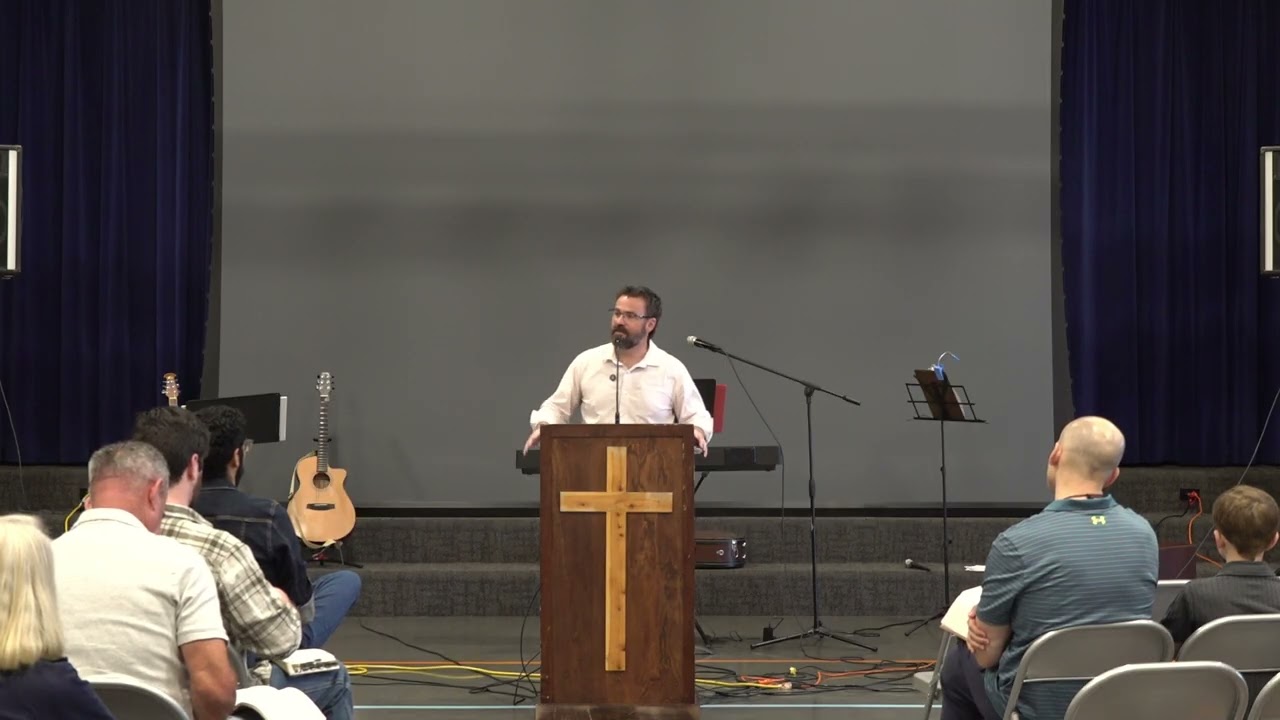
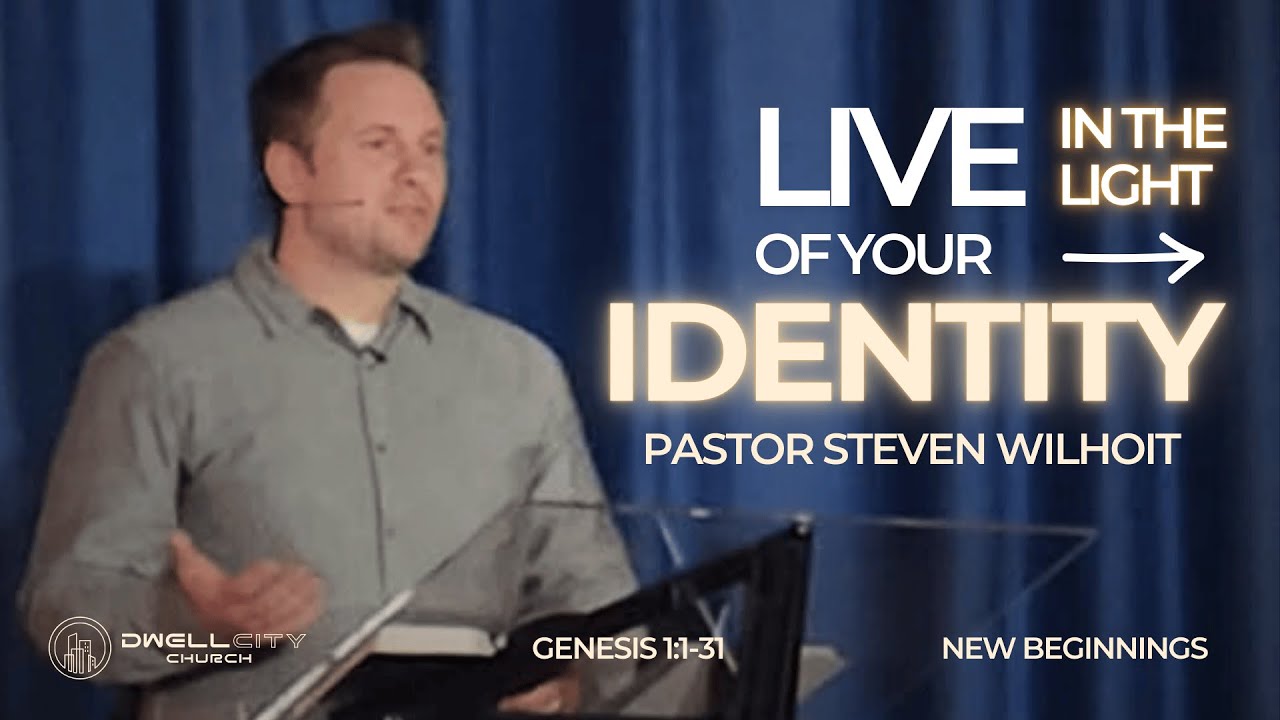
Identity: Living in the Light of Who You Are | Genesis 1 | Steven Wilhoit | 3/9/2025
Автор: Dwell City Church
Загружено: 2025-03-17
Просмотров: 30
Описание:
"Who am I and why am I here?" Your very existence is rooted in your God-given identity. You are here to be transformed by the power of His Spirit through faith in Jesus Christ for His glory, to reflect His divine nature—especially His grace, mercy, forgiveness, and patience—into the world and your community, and to gather together in authentic community, demonstrating love for God and for one another.
Three foundational aspects of your God-given identity:
1. You are an Agent of Transformation.
◦ Far from creating a perfect, finished world from the outset, God deliberately brought forth the Earth in a state described as "without form and void and darkness". This intentional choice highlights His profound delight in bringing about transformation—demonstrating His power to bring order out of chaos and light out of darkness. This foundational principle of progress and development is intrinsically woven into the very fabric of the universe. When we feel stagnant or "out of alignment" in our lives, it's often because our experience isn't syncing with this inherent, God-designed identity for progress.
◦ The method of creation itself reveals the nature of God: He speaks. This act of divine speech, repeated as "God said" throughout Genesis 1, is not merely functional but reveals the Trinitarian dynamic at play. As the New Testament identifies Jesus as the "Word of God" and the agent through whom all things were made, we see the Father acting "through the Son in or by the Spirit". The Spirit's posture, "hovering over the face of the waters," signifies a readiness, like a hen brooding over eggs or an athlete "locked and loaded," poised to bring the spoken word to fruition. This divine order ensures that the transformation God brings is not chaotic but a highly ordered process, moving from darkness to light and chaos to form.
◦ Crucially, God evaluates His work not just at completion, but after each step of transformation, declaring it "good". This insight challenges our tendency to devalue progress until a task is fully finished; instead, it encourages us to recognize and appreciate every incremental step of spiritual growth and development as inherently good, just as God does.
2. You are an Agent of Reflection.
◦ Central to human identity is our creation "in the image of God, after our likeness". This means we are designed to represent and reflect God to His creation.
◦ The profound shift in Genesis 1:26 from "let there be" to "Let us make man" signifies a moment of divine consultation within the Trinity. This "divine counsel" underscores the unparalleled significance and special nature of humanity's creation.
◦ Drawing a parallel to ancient kings who would distribute statues of themselves throughout their empires to signify their rule, God created living, breathing humans to fill the Earth as His "images". These human images were meant to embody God's character and dominion.
◦ Tragically, through sin, humanity has fallen short of this reflective purpose.This "corruption darkens our minds and eyes," leading to the very questions of identity we ponder. Yet, there is a redemptive twist: the Fall and subsequent Redemption are not merely a rescue plan but a "story within the story" that allows for an "even greater image of God" to emerge. Through experiences of God's mercy, grace, forgiveness, self-sacrifice, patience, and longsuffering—qualities demonstrated in His redemptive work—humans are now uniquely positioned to reflect the full breadth of God's heart in ways simply unattainable before the Fall. Our redeemed reflection becomes "even better".
3. You are an Agent of Community.
◦ As beings created to reflect God, our identity inherently involves being "other-oriented", mirroring the communal nature of the Trinity. The Father, Son, and Spirit exist in perfect, reciprocal love, and this intrinsic "other-orientedness" should define us as well.
◦ The "us" in "Let us make man" in Genesis 1:26 implies that the image God created is not a singular, isolated entity but a communal reflection of the divine "us". God's overarching plan for our transformation is to bring us into a profound community with Himself—a "full circle transformation" where the Father sends the Son, the Son and Father send the Spirit, and the Spirit indwells us, transforming us into the image of the Son, all for the glory of the Father. This journey culminates in a deep union and communion with God.
◦ Beyond our communion with God, He also purposes for us to have community with one another. If the goal was to fill the Earth with God's images, why start with just two people (Adam and Eve) instead of billions for efficiency? The answer lies in God's design to cultivate community and a sense of shared lineage among humanity. This shared history fosters mutual dependency and a collective desire for the good of others, enabling us to reflect God's other-oriented heart more fully.
Повторяем попытку...
Доступные форматы для скачивания:
Скачать видео
-
Информация по загрузке: