BREAKING: Musqueam Secures Aboriginal Title Over Lower Mainland with Dallas Brodie
Автор: Living In Vancouver - Vancouver Life Real Estate
Загружено: 2026-03-08
Просмотров: 7725
Описание:
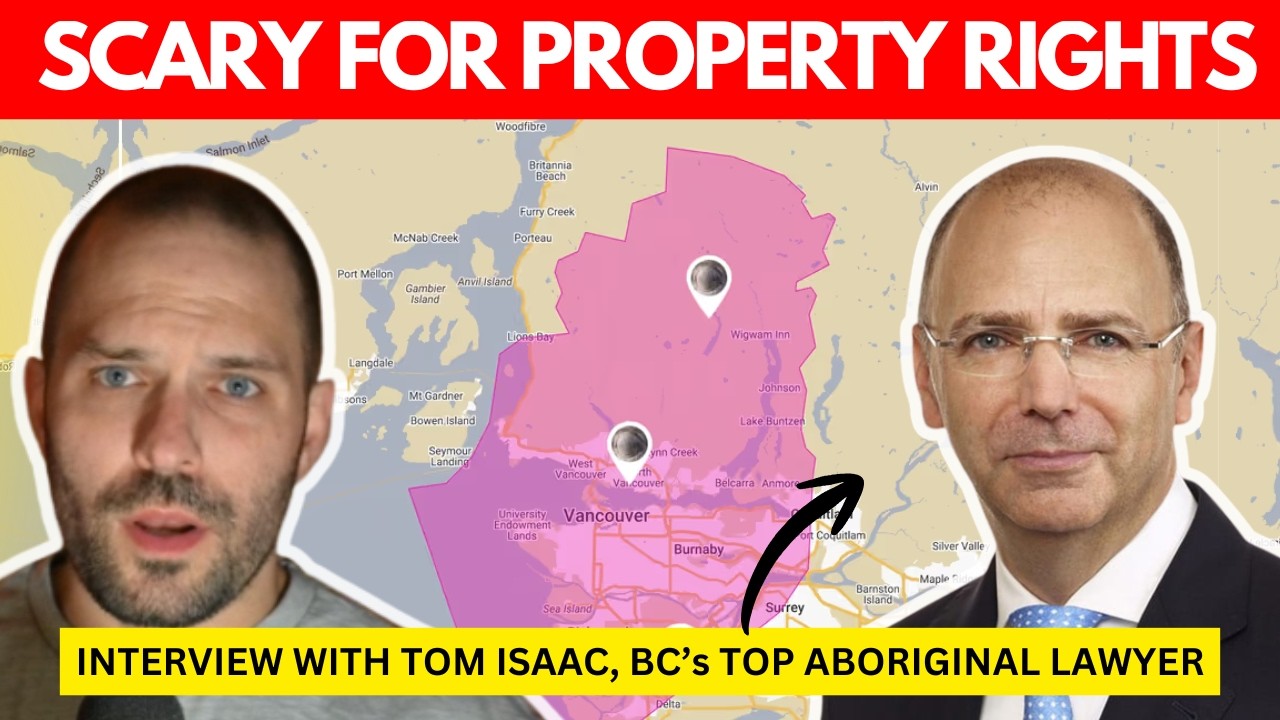
Recent developments around Indigenous land rights have quickly become one of the most consequential—and least understood—policy discussions unfolding in British Columbia today. At the center of the debate is a newly announced “Rights Recognition” agreement between the federal government and the Musqueam Nation, a framework that signals a shift in how Canada acknowledges Indigenous authority within traditional territories across the Lower Mainland.
For decades, governments typically treated Indigenous claims as unresolved legal disputes to be negotiated or settled through treaties. This agreement marks a notable evolution. Instead of simply acknowledging that claims exist, the federal government is formally recognizing that the Musqueam possess Aboriginal title within their traditional territory—an area that includes large portions of Metro Vancouver. While the agreement does not immediately alter land titles or the land registry, it establishes a framework for what officials describe as “incremental implementation,” meaning changes could unfold gradually through policy, negotiations, and future legal interpretations.
For many residents, the implications are difficult to interpret. Nearly two million homeowners live within the broader area referenced in Musqueam traditional territory, and questions have emerged about how this recognition might intersect with long-standing concepts of private property ownership. Legal experts emphasize that the agreement is not a treaty and does not directly override existing property rights. However, it acknowledges a legal “burden” on Crown sovereignty—essentially recognizing an underlying Indigenous interest in the land that could shape future governance, land management, and resource decisions.
Another key component of the framework is the principle of shared authority. The agreement outlines a pathway toward collaborative decision-making between governments and the Musqueam Nation regarding lands, waters, fisheries, and other resources within the territory. Supporters view this as an important step toward reconciliation and more inclusive governance. Critics worry it could introduce additional layers of bureaucracy and regulatory uncertainty in a region already facing complex approval processes for housing and infrastructure.
Adding to the complexity is the broader legal context. Canada’s commitment to aligning policy with the United Nations Declaration on the Rights of Indigenous Peoples (UNDRIP) establishes new standards for how governments consult and collaborate with Indigenous nations. Interpreting how these principles will apply in practice—particularly in densely populated urban regions—is a subject of growing debate among policymakers, lawyers, economists, and residents alike.
To explore the issue in greater depth, this episode features Dallas Brodie, MLA for Vancouver-Quilchena and interim leader of OneBC. A former defence lawyer and broadcaster, Brodie has been one of the most outspoken political figures commenting on the implications of Indigenous rights frameworks and land-title recognition. Her perspective reflects a growing conversation taking place across the province about how reconciliation, economic development, and private property rights intersect in the years ahead.
Throughout the discussion, we examine the legal mechanics of the Musqueam agreement, the role of federal and provincial governments, and how emerging court decisions recognizing Aboriginal title may influence future policy. We also explore questions surrounding transparency, the relationship between reconciliation initiatives and economic investment, and how governments can provide clarity for residents navigating these complex developments.
As British Columbia continues to evolve its approach to Indigenous relations and land governance, one thing is clear: the conversation around land rights, shared authority, and reconciliation is entering a new and pivotal phase. Understanding the legal, economic, and political dimensions of these changes will be essential for policymakers, homeowners, and investors alike.
One BC: https://1bc.ca/
_________________________________
Connect With Us:
📆 https://calendly.com/thevancouverlife
📧 [email protected]
Dan’s Channel: / @vancouverstoprealtor
Ryan’s Channel: / @ryan_thevancouverlife
⬇️ FREE RESOURCE FOR SELLERS
Wondering if now’s the right time to list your home?
Grab this free resource and find out how we help Sellers sell for More Money 👉 https://thevancouverlife.com/topdollar
⬇️ FREE RESOURCE FOR BUYERS
Thinking about buying a home?
Grab this free resource and find out how we help Buyers navigate this market 👉 https://thevancouverlife.com/buyersguide
The Vancouver Life Real Estate Group are licensed Real Estate Agents at eXp Realty Vancouver
🏆 Top 1% Presidents Club 2024 / 2025
🏆 Top 10% Medallion Club Members 2019 to 2025
🏆 Over $500,000,000 in sales
www.thevancouverlife.com
Повторяем попытку...

Доступные форматы для скачивания:
Скачать видео
-
Информация по загрузке: