Art Appreciation No 717 Madame Edouard Bernier — Pierre Auguste Renoir Metropolitan Museum of Art C
Автор: 美術品鑑賞・美術館・博物館・足跡
Загружено: 2025-05-31
Просмотров: 25
Описание:
Art Appreciation No. 717-Madame Edouard Bernier — Pierre-Auguste Renoir (Metropolitan Museum of Art Collection)
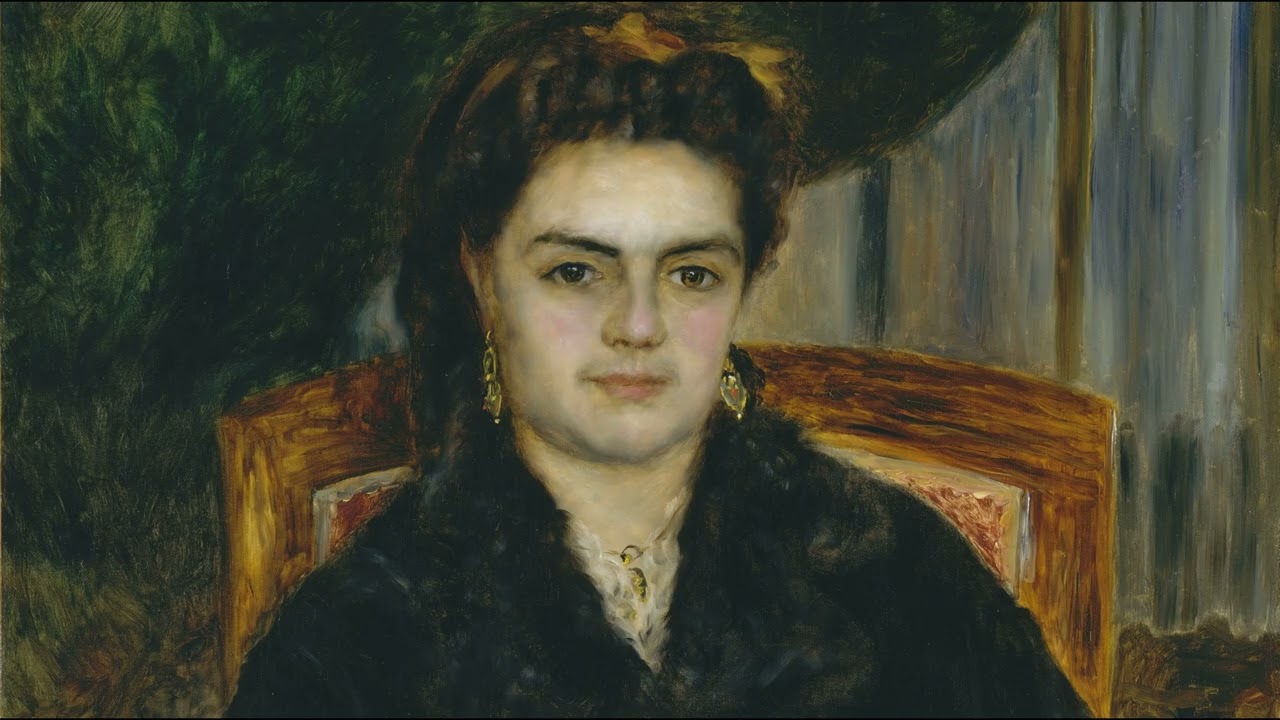
Painted in 1871 by Pierre-Auguste Renoir, Madame Edouard Bernier may appear at first glance to be merely a portrait of an elegant lady. However, beneath its calm surface lies a multilayered work, imbued with the context of war, the relationship between artist and subject, and the aesthetics of the painter himself. Within its serene demeanor is a hidden drama, an emotional interplay rendered with subtlety and depth.
The subject of this painting, Marie-Octavie Bernier, was the wife of Colonel Edouard Bernier, the commanding officer of the regiment in which Renoir served during the Franco-Prussian War. As the war drew to a close, Renoir spent two months with the Bernier family, later recalling this time as “days during which I was treated like a prince.” Madame Edouard Bernier was painted during this special period, imbued with gratitude and respect, and occupies a significant place within Renoir’s artistic development.
This painting is inextricably tied to Renoir’s wartime experience and his retreat to the Bernier residence in Tarbes, a town in southern France, following his illness and temporary return from the front. As Paris was plunged into the chaos of the Commune, Renoir took refuge in the Pyrenees, where he found shelter with Madame Bernier’s family.
For Renoir, life in the Tarbes estate during this time represented a calm after the storm. He discovered richness and tranquility, indulged in horseback riding, and even gave painting lessons to the Bernier daughter—days that resembled life among the upper class. This experience is reflected in the painting as an atmosphere of gentle elegance and affectionate warmth.
Marie-Octavie Stéphanie Rolland (later Madame Edouard Bernier), born in 1838, is believed to have come from a wealthy background. Her poised posture and composed expression convey the confidence and dignity of a woman of high society, while also emanating a sense of domestic warmth.
Renoir does not merely replicate her external appearance; rather, he paints with a sensitivity that communicates her personality, inner gentleness, maternal warmth, and intelligence. Her gaze is directed straight ahead—not with sternness, but with a soft, embracing kindness. It embodies Renoir’s respect for her and his gratitude for the time they shared.
This portrait also vividly showcases Renoir’s early style. At the time, he had not yet fully developed the Impressionist technique and was still navigating between academic traditions and new modes of expression.
Madame Bernier’s body is slightly turned, yet her gaze meets the viewer directly. Her upper torso is prominently placed in the center of the canvas. The background, though simple, is composed of deep greens and browns that create a calm atmosphere. Her attire reflects the fashion of the time, and the black dress—with its pleats and lace—demonstrates Renoir’s keen observation and technical prowess.
Throughout the canvas, a quiet tension is felt, mingled with the intimacy between artist and model. This closeness could only be achieved because the portrait was born from a real personal relationship, not merely a commissioned work.
To Renoir, a portrait was never just a record of a person’s likeness. It was an act of embedding relationships, atmosphere, memories, and emotions into the canvas. This sentiment is particularly evident in Madame Edouard Bernier.
The painting is filled with gratitude, affection, and a profound sense of relief at being able to paint again in peacetime. As Renoir later recalled having spent “two months in a château, treated like a prince,” this portrait became both a mental anchor and a means of materializing memories of that time.
The year 1871 marked a transitional period in Renoir’s style. By the late 1860s, he had begun experimenting with plein air painting and innovative uses of color, while still drawing from academic training. This work stands as a product of that transitional phase, where classical composition and new sensibilities beautifully converge.
What deserves special attention is Renoir’s treatment of light and his use of soft colors. The background tones are subdued, allowing the face and garments of the sitter to emerge gently yet naturally. The rendering of the black dress reveals his deep understanding of materials—something less apparent in his later Impressionist works.
Furthermore, the depiction of her face and hands is exquisitely detailed, with fine gradations and delicate brushstrokes that convey the soft texture of skin. It represents a rare midpoint in Renoir’s career, just before his full embrace of Impressionist techniques.
Повторяем попытку...
Доступные форматы для скачивания:
Скачать видео
-
Информация по загрузке:


