3Rs Webinar on replacing animal use in botulinum neurotoxin (BoNT) testing
Автор: jhucaat
Загружено: 2025-11-07
Просмотров: 99
Описание:
3Rs Training Webinar Series
Session: Advancing Non-Animal Methods for Botulinum Neurotoxin (BoNT) Testing
October 14, 2025
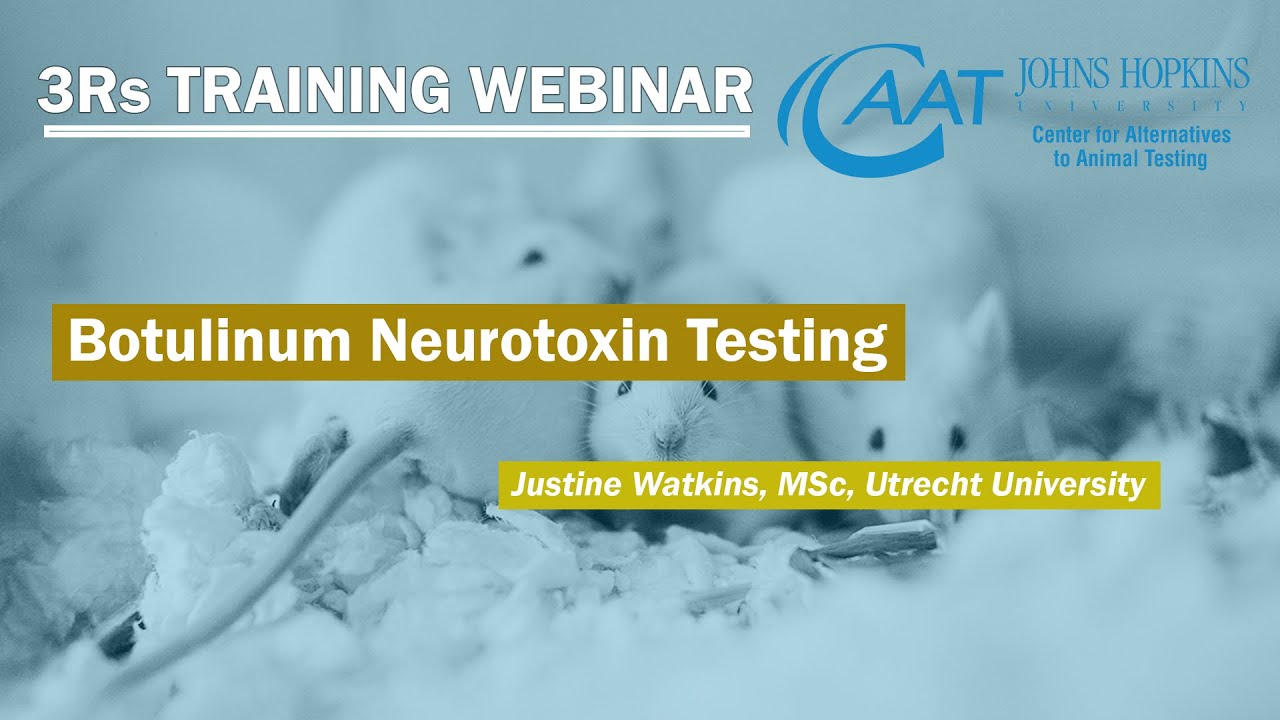
As part of the 3Rs Training Webinar Series led by Dr. Kathrin Herrmann, Director of the Education Program at the Center for Alternatives to Animal Testing (CAAT), Justine C. Watkins from Utrecht University’s Faculty of Veterinary Medicine presented her team’s latest research on replacing animal use in botulinum neurotoxin (BoNT) testing.
BoNT, commonly known as “Botox,” is widely used in medical and aesthetic applications. As a biological product, it requires batch potency testing to ensure safety and efficacy. Historically, this testing relied on the Mouse Lethality Bioassay (MLB)—a method that caused severe suffering and posed major ethical and scientific concerns due to poor reproducibility and limited human relevance.
Despite these issues, the MLB remained in use because of regulatory inertia and systemic barriers. Watkins outlined how recent advances in New Approach Methodologies (NAMs)—particularly cell-based assays (CBAs)—offered humane and scientifically robust alternatives for regulatory potency testing.
Drawing from her recent publication “Botulinum neurotoxin: Tracking the transition from lethal dose to in vitro models,” Watkins provided an overview of the European landscape of BoNT production and testing. She explained why potency testing is a regulatory requirement, described emerging cell-based alternatives, and examined the continued use of mice across the European Union and United Kingdom.
Her team’s analysis of over 31 Non-Technical Summaries (NTSs) from testing facilities in the UK, Germany, and Ireland revealed the scale of mouse use for BoNT testing and highlighted actionable strategies to overcome socio-technical barriers to implementing MLB alternatives.
The session concluded with a discussion on how accelerating the transition to validated, animal-free NAMs can advance reproducibility, ethics, and regulatory acceptance in BoNT potency testing.
See: Watkins, J. C., Middelkoop, J., Taylor, K., Filipova, D., Hartung, T., Visseren-Hamakers, I., ... & Salvatori, D. (2025). Botulinum neurotoxin: Tracking the transition from lethal dose to in vitro models. NAM Journal, 100040. https://www.sciencedirect.com/science...
About the Speaker
Justine Watkins is a PhD Candidate from Utrecht University working on the transition to animal-free innovations in collaboration with the Safety assessment through Animal Free Evolution (SAFE) consortium. She obtained her MSc in Biology from Radboud University specializing in animal physiology and behaviour. She obtained her Bachelor's of Science from University College Roosevelt, Netherlands, where she obtained an interdisciplinary degree majoring in biomedical and environmental sciences, with coursework in social sciences and arts and humanities. Above all else she has a passion for animal-related topics and strives to center her research and future career around the interests of non-human animals.
Повторяем попытку...
Доступные форматы для скачивания:
Скачать видео
-
Информация по загрузке: