Analyzing the performance of PLL (Phase-Locked Loop) circuits
Автор: CurioSphere
Загружено: 2025-12-07
Просмотров: 729
Описание:
🧲 What Is a PLL?
A Phase-Locked Loop (PLL) is an electronic control system that synchronizes the output of an oscillator with the phase and frequency of a reference signal. It’s widely used in communication systems, processors, and audio devices.
---
⚙️ Main Building Blocks
1. Phase Detector (PD)
Compares the phase of the input reference signal with the oscillator output.
Produces an error signal proportional to the phase difference.
2. Low-Pass Filter (LPF)
Smooths the error signal to remove high-frequency noise.
Provides a stable control voltage.
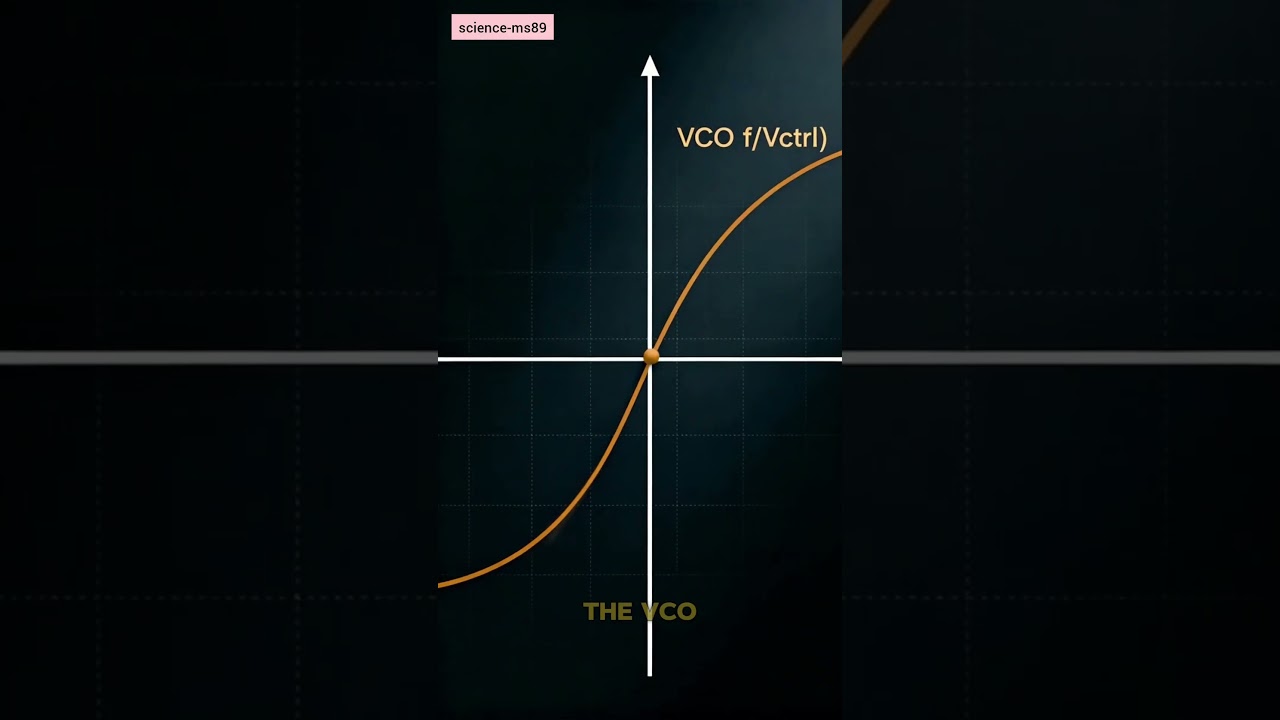
3. Voltage-Controlled Oscillator (VCO)
Generates an output frequency that changes based on the control voltage.
4. Frequency Divider (optional)
Used in frequency synthesis to scale down the oscillator output before comparison.
---
🔬 Performance Parameters
Lock Range: The range of frequencies over which the PLL can achieve lock.
Capture Range: The range of frequencies where the PLL can initially acquire lock.
Lock Time: How quickly the PLL synchronizes with the reference.
Jitter: Small variations in timing that affect signal stability.
Stability: Ability to maintain lock under noise or interference.
---
📐 Applications
Communication Systems: Frequency synthesis for radios, Wi-Fi, and cellular networks.
Microprocessors: Clock generation and synchronization.
Audio Devices: Reducing noise and distortion in playback systems.
Instrumentation: Precise timing in measurement equipment.
Повторяем попытку...
Доступные форматы для скачивания:
Скачать видео
-
Информация по загрузке: