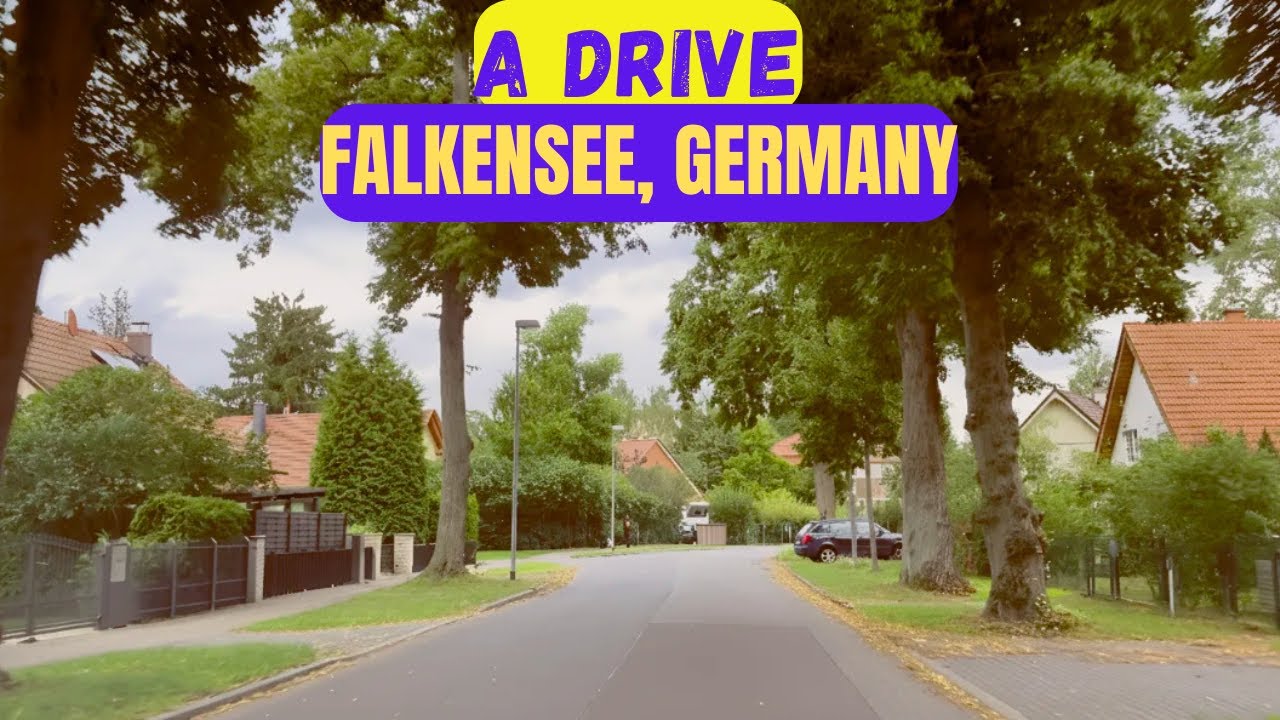
A drive in Falkensee, Germany: From Berlin’s suburb to thriving garden city
Автор: UrbanHistory
Загружено: 2025-11-10
Просмотров: 196
Описание:
Join me for a peaceful morning in Falkensee, Germany, a tranquil suburban escape near Berlin. This video captures the beauty of the area, showcasing its lush trees and serene atmosphere. Experience the charm of this Havelland town.
Falkensee is a medium-sized town located in Brandenburg, directly bordering Berlin to the west.
As of 2024, it has a population of around 45,000 residents, making it one of the fastest-growing towns in the region.
The town covers an area of about 43 square kilometers, combining urbanized zones with green landscapes.
Historically, Falkensee was formed in 1923 through the merger of the villages Falkenhagen and Seegefeld.
During the Cold War, Falkensee stood directly along the Berlin Wall, which cut it off from West Berlin until 1989.
This geopolitical position deeply influenced its urban development and economic patterns.
Since German reunification, Falkensee has experienced strong suburbanization, attracting Berlin commuters seeking more affordable housing and greener surroundings.
The town’s population has nearly doubled since 1990, reflecting its role as part of Berlin’s metropolitan growth.
Socioeconomically, Falkensee is characterized by a middle-class population, many employed in Berlin’s service economy.
The housing stock consists mainly of detached houses, row houses, and small apartment blocks.
Land use balances residential neighborhoods with commercial strips, small industrial estates, and extensive green areas.
The town places emphasis on green planning, with parks, tree-lined streets, and the nearby Falkenhagener See providing recreational value.
Falkensee’s urban form reflects a low-density, suburban structure rather than a compact city core.
Transportation planning plays a central role, as thousands commute daily to Berlin.
The regional rail (RE6 and RB10/RB14) connects Falkensee to central Berlin in about 15–25 minutes.
Public buses link the neighborhoods to the rail stations and surrounding Brandenburg towns.
Cycling is increasingly promoted, with bike lanes and regional cycle routes connecting Falkensee to Berlin and Havelland.
Road transport is also significant, with good access to highways such as the B5.
Socioeconomic development focuses on combining residential growth with sustainable planning to avoid uncontrolled sprawl.
Today, Falkensee is seen as a green commuter town, blending Berlin’s urban opportunities with a quieter, nature-oriented suburban lifestyle.
#falkensee #germany #berlin #suburbs #gardencity #urbanhistory #urbanplanning #urbandevelopment #germanytravel #sightseeinggermany #kraatzfarm #sustainablemobility #urbanization #publictransport #architecture #urbansustainability #sustainablecity #brandenburg #havelland #spandau #staaken #dalgow #falkenhagen
Повторяем попытку...
Доступные форматы для скачивания:
Скачать видео
-
Информация по загрузке: