Khazaria: A Turkic superpower that chose Torah over empire.
Автор: Synara Now
Загружено: 2026-01-31
Просмотров: 107
Описание:
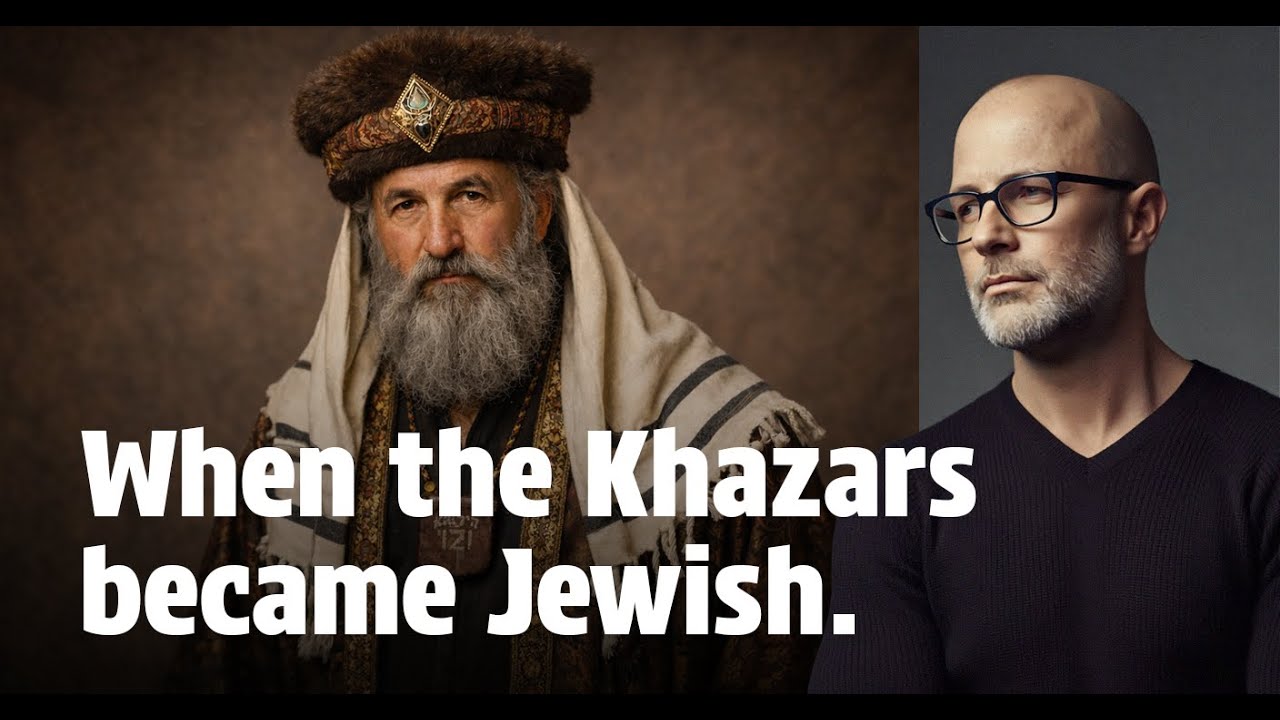
Khazar Judaism is one of the most surprising and misunderstood episodes in medieval history: a powerful Turkic steppe empire, positioned between the Christian Byzantine world and the Islamic Caliphates, adopted Judaism at the level of its ruling elite during roughly the 8th–10th centuries CE. This wasn’t a mass religious revolution across the entire population, but a strategic and ideological shift at the top of a multi-faith society. The Khazar Khaganate ruled key trade corridors across the North Caucasus and Volga region, thriving as a crossroads of merchants, armies, and cultures. In that environment, religion wasn’t just belief — it was political technology.
The Khazar conversion is often explained as a deliberate “third-way” decision. Islam risked subordination to the Caliphate, Christianity risked becoming a Byzantine client state, while Judaism offered a neutral position that preserved sovereignty and strengthened internal legitimacy. Over time, Khazar leadership appears to have developed a more formal Rabbinic Judaism: importing scholars, establishing synagogues and study traditions, and integrating Jewish law into elite governance. Yet Khazaria remained pluralistic. Christians, Muslims, pagans, and Jews coexisted, and historical accounts describe parallel legal systems where communities were judged according to their own religious authorities — a rare model of medieval tolerance driven by pragmatism and imperial stability.
Beneath the surface, Khazaria carried deep steppe roots. Before conversion, Khazar spiritual life likely resembled broader Turkic Tengrism: sky-god devotion, ancestor reverence, and shamanic ritual specialists tied to trance, divination, and sacrifice. Even after the elite adopted monotheism, older folk practices probably persisted among the wider population, creating a layered religious landscape where state Judaism and steppe tradition overlapped in complex ways. Claims of “occult Khazar Judaism” are mostly modern mythmaking, but the reality is still esoterically interesting: a political conversion grafted onto a culture with strong shamanic cosmology, producing a unique tension between ancient ritual instincts and strict biblical monotheism.
Philosophically, the Khazars didn’t produce major Jewish thinkers, but their story became a tool for later intellectual battles. Judah Halevi’s famous work The Kuzari used the Khazar king’s conversion as a dramatic framework to defend Judaism against both Christianity, Islam, and overly abstract philosophy. Later Jewish rationalists like Saadia Gaon and Maimonides represent the broader medieval project of harmonizing faith and reason, while modern figures like Spinoza reveal how radically Jewish ideas could evolve into secular critique and metaphysical redefinition.
After Khazaria’s fall under Rus’ pressure in the late 10th century, Khazar Jews likely dispersed into regions like Crimea, the Caucasus, and parts of Eastern Europe, leaving traces but no clear surviving “Khazar Judaism” sect. Their legacy today is less about direct lineage and more about symbolism: a reminder that Judaism has, at rare moments, functioned not only as diaspora survival — but as state identity, diplomacy, and power.
Повторяем попытку...
Доступные форматы для скачивания:
Скачать видео
-
Информация по загрузке: