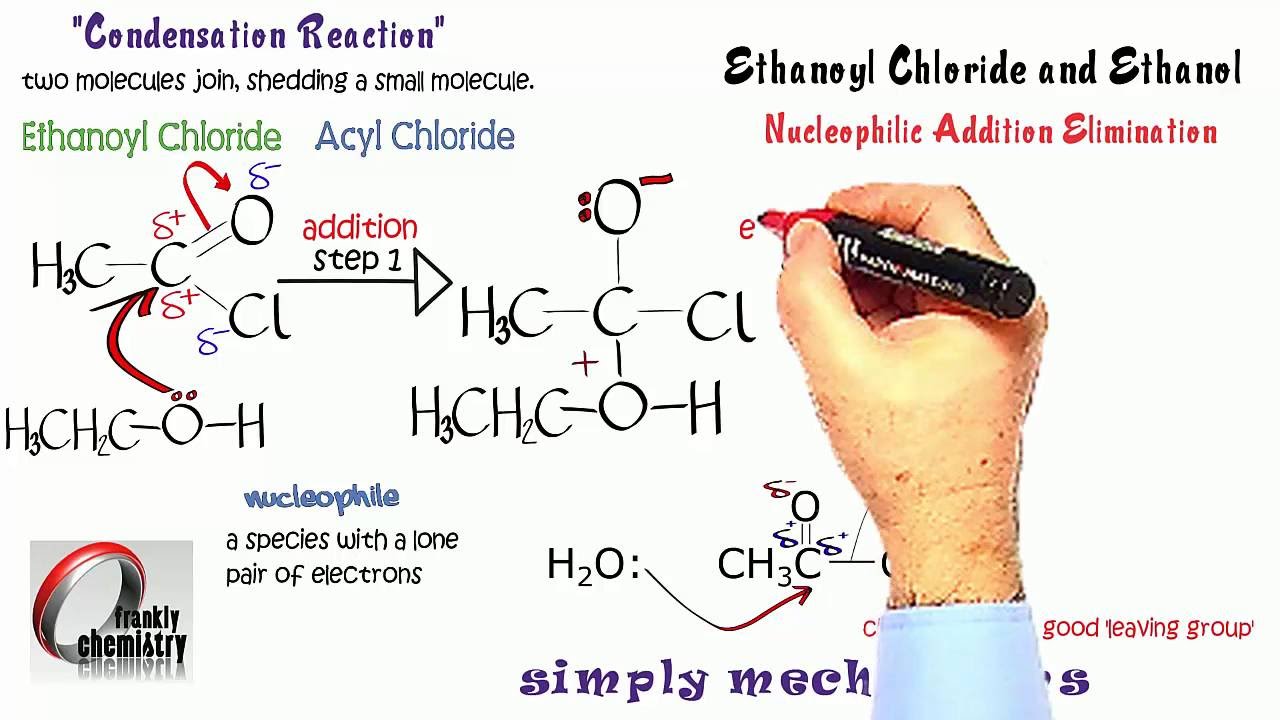
Simply Mechanisms 7b. Nucleophilic Addition Elimination (Ethanoyl Chloride & Ethanol).
Автор: FranklyChemistry
Загружено: 2016-05-30
Просмотров: 3660
Описание:
Find an accompanying mindmap here: http://franklychemistry.co.uk/simply_...
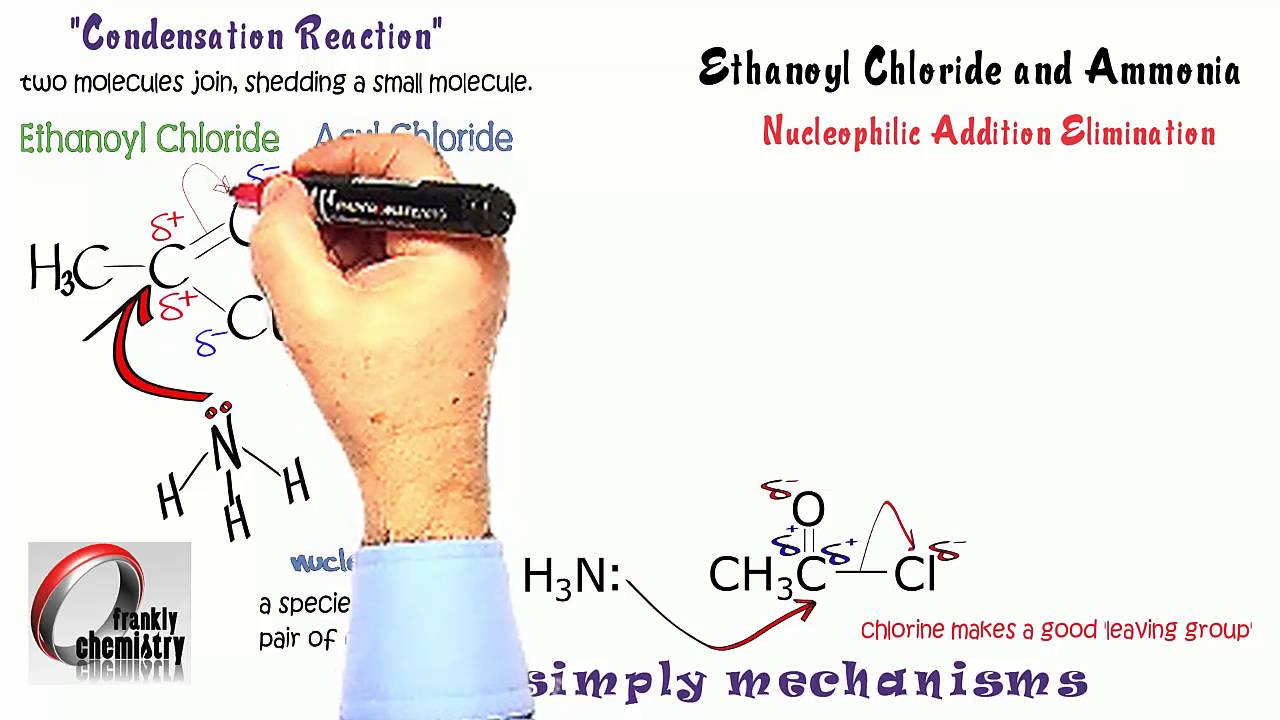
This video looks at the mechanism for nucleophilic addition elimination. These are also called condensation reactions - where two organic molecules join with a small molecule being shed in the process. In this case I look at the reaction of ethanoyl chloride (an acyl chloride) with ethanol. The carbon of the COCl function group of an acy chloride has two small positive charges assigned to it as it is bonded to 2 more electronegative atoms (O and Cl). This means that nucleophiles will be attracted very strongly. The Cl atom is also a very good leaving group, another reason for this reaction being fast and vigorous at room temperature. Addition takes place in the first step as the acy chloride and ethanol molecules join together to form a single unstable intermediate. The second step involves the elimination of both a chloride ion and a hydrogen ion. These form hydrogen chloride gas together and the organic product is the ester ethyl ethanoate. Other nucleophiles that react with ethanoyl chloride, in order of increasing vigour are: water (less reactive) to form ethanoic acid; ammonia (more reactive) to form the primary amide ethanamide; ethanamine (even more reactive) to form the secondary amide N-ethylethanamide.
Повторяем попытку...
Доступные форматы для скачивания:
Скачать видео
-
Информация по загрузке: