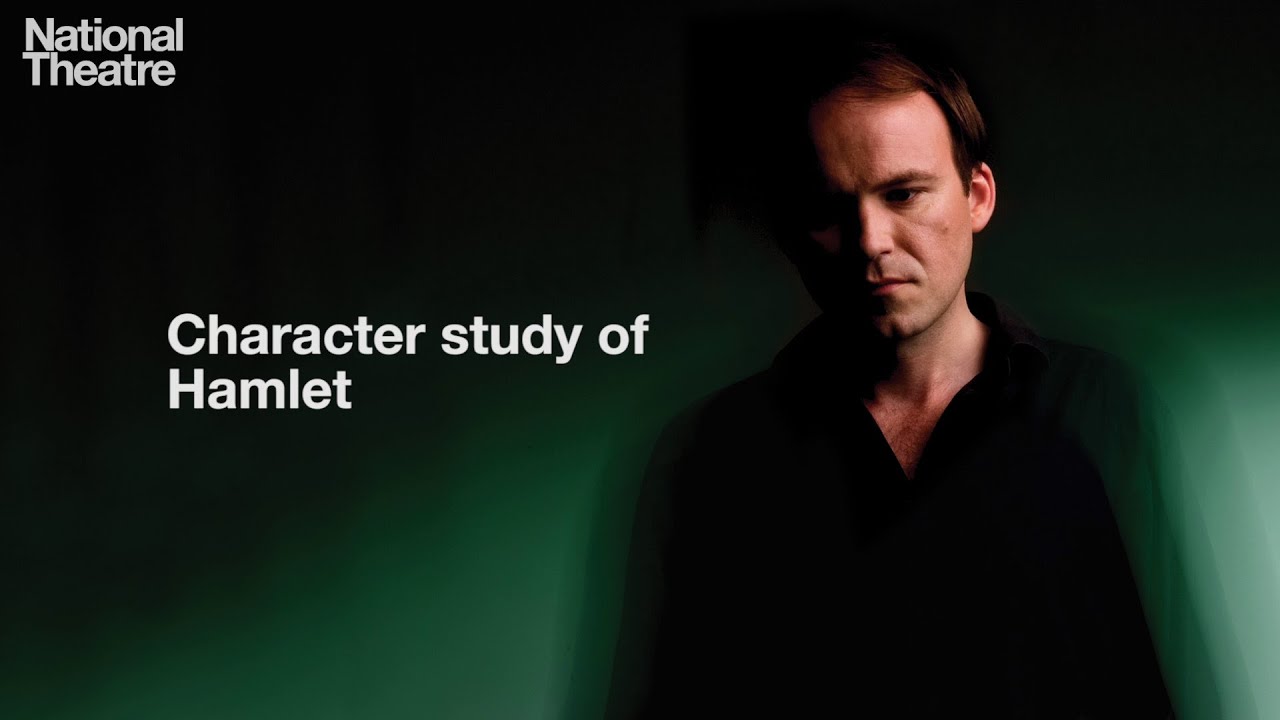
Unraveling the Bard's Genius: Critical Essay on 'Hamlet'
Автор: iitutor.com
Загружено: 2018-10-31
Просмотров: 10010
Описание:
📢 Receive Comprehensive Mathematics Practice Papers Weekly for FREE 😊
Click this link to get: ▶️▶️▶️ https://iitutor.com/email-list/ ◀️◀️◀️
You can also watch relevant video lessons:
Part 1: Hamlet | Contextual Values, Existentialism: • Hamlet's Existential Struggles: Contextual...
Part 2: Hamlet | Revenge, parent and Child Relationship: • √ The Analysis of Revenge, Parent and Chil...
Part 3: Hamlet | Dilemmas, Loyalty, Corruption, Appearance vs Reality: • Hamlet's Worldview: Navigating Loyalty, Co...
We do not like to see our author's plays acted, and least of all, HAMLET. There is no play that suffers so much in being transferred to the stage. Hamlet himself seems hardly capable of being acted. Mr. Kemble unavoidably fails in this character from a want of ease and variety.' The character of Hamlet is made up of undulating lines; it has the yielding flexibility of "a wave o' th' sea." Mr. Kemble plays it like a man in armour, with a determined inveteracy of purpose, in one undeviating straight line, which is as remote from the natural grace and refined susceptibility of the character, as the sharp angles and abrupt starts which Mr. Kean introduces into the part. Mr. Kean's Hamlet is as much too splenetic and rash as Mr. Kemble's is too deliberate and formal. His manner is too strong and pointed. He throws a severity, approaching to virulence, into the common observations and answers. There is nothing of this in Hamlet. He is, as it were, wrapped up in his reflections, and only thinks aloud. There should therefore be no attempt to impress what he says upon others by a studied exaggeration of emphasis or manner; no talking at his hearers. There should be as much of the gentleman and scholar as possible infused into the part, and as little of the actor. A pensive air of sadness should sit reluctantly upon his brow, but no appearance of fixed and sullen gloom. He is full of weakness and melancholy, but there is no harshness in his nature. He is the most amiable of misanthropes.
Samuel Taylor Coleridge (1772-1834) Lectures and Notes on Shakespeare and Other English Poets (1818)
HAMLET was the play, or rather Hamlet himself was the character, in the intuition and exposition of which I first made my turn for philosophical criticism, and especially for insight into the genius of Shakespeare, noticed. This happened first amongst my acquaintances, as Sir George Beaumont will bear witness; and subsequently, long before Schlegel had delivered at Vienna the lectures on Shakespeare, which he afterwards published, I had given on the same subject eighteen lectures substantially the same, proceeding from the very same point of view, and deducing the same conclusions, so far as I either then agreed, or now agree, with him. I gave these lectures at the Royal Institution, before six or seven hundred auditors of rank and eminence, in the spring of the same year, in which Sir Humphrey Davy, a fellow-lecturer, made his great revolutionary discoveries in chemistry. Even in detail the coincidence of Schlegel with my lectures was so extraordinary, that all who at a later period heard the same words, taken by me from my notes of the lectures at the Royal Institution, concluded a borrowing on my part from Schlegel. Mr. Hazlitt, whose hatred of me is in such an inverse ratio to my zealous kindness towards him, as to be defended by his warmest admirer, Charles Lamb—(who, God bless him! besides his characteristic obstinacy of adherence to old friends, as long at least as they are at all down in the world, is linked as by a charm to Hazlitt's conversation)—only as 'frantic';—Mr. Hazlitt, I say, himself replied to an assertion of my plagiarism from Schlegel in these words;—"That is a lie; for I myself heard the very same character of Hamlet from Coleridge before he went to Germany, and when he had neither read nor could read a page of German!" Now Hazlitt was on a visit to me at my cottage at Nether Stowey, Somerset, in the summer of the year 1798, in the September of which year I first was out of sight of the shores of Great Britain. Recorded by me, S. T. Coleridge, 7th January, 1819.
Повторяем попытку...

Доступные форматы для скачивания:
Скачать видео
-
Информация по загрузке:




![Почему Гамлет медлит? [Torrey Honors Institute]](https://imager.clipsaver.ru/axTiSLwT6Tk/max.jpg)