The Effect of Brexit on the Economy
Автор: Economics for Everyone
Загружено: 2023-06-27
Просмотров: 176
Описание:
#brexit #economic #uk #europe
Welcome to today's video, where we'll be discussing the effects of the United Kingdom's exit from the European Union on the economy. Brexit, as it's commonly known, has had a significant impact on the UK and the rest of Europe. Let's dive in and explore how the economic landscape has changed since the historic 2016 referendum.
Before we discuss the economic impact of Brexit, let's take a quick look at the timeline of events. In June 2016, the UK held a referendum, and 52% of the voters chose to leave the EU. After a series of negotiations and extensions, the UK officially left the EU on January 31, 2020, and entered a transition period until December 31, 2020.
During this period, the UK and the EU continued to negotiate the terms of their future relationship, resulting in the EU-UK Trade and Cooperation Agreement, which came into effect on January 1, 2021.
Economic Impact Overview
Since Brexit, there have been numerous immediate and long-term effects on the UK economy. The main areas of impact include trade, investment, the labor market, and the financial services industry. We'll look at each of these areas in detail.
Part 1: Trade
The UK's exit from the EU has had a significant impact on trade between the UK and the EU member states. As a result of leaving the single market and customs union, new customs checks, paperwork, and regulatory barriers have been introduced, leading to increased costs and delays for businesses.
In the short term, these changes caused a drop in the UK's exports to the EU. However, trade has gradually picked up as businesses adapted to the new rules and procedures. On the other hand, some businesses have shifted their focus towards non-EU markets, while others have set up operations within the EU to avoid trade barriers.
Presenter (voiceover): Brexit has also prompted the UK to negotiate new trade deals with countries outside the EU. Some of these deals have provided new opportunities for UK businesses, although the overall impact on trade has been relatively small compared to the losses in trade with the EU.
Part 2: Investment
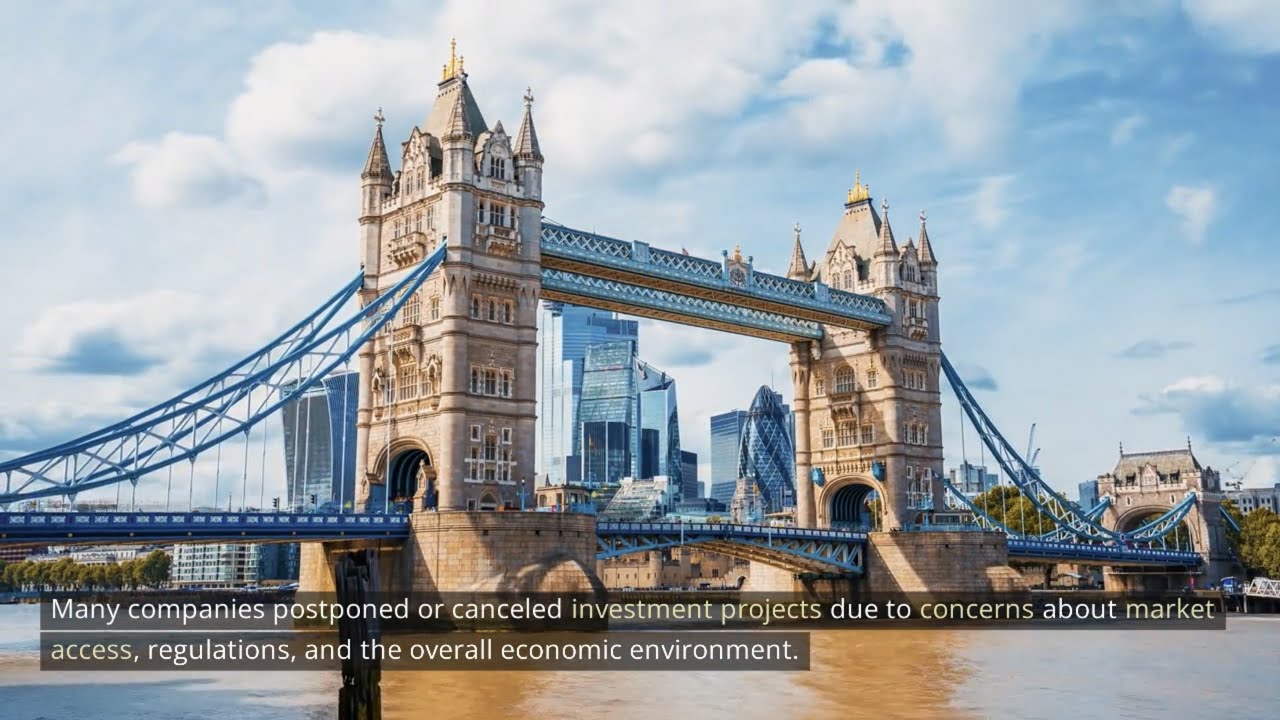
The uncertainty surrounding Brexit and the future UK-EU relationship led to a decline in business investment in the UK. Many companies postponed or canceled investment projects due to concerns about market access, regulations, and the overall economic environment.
However, since the EU-UK Trade and Cooperation Agreement came into effect, there has been a modest recovery in business investment, as companies gained more clarity on the UK's future relationship with the EU.
Similarly, foreign direct investment (FDI) in the UK has experienced fluctuations since the Brexit referendum. While some international companies have reduced their investments in the UK, others have continued to invest, attracted by the country's skilled workforce, innovation, and business-friendly environment.
Part 3: Labor Market
Brexit has had a mixed impact on the UK labor market. In some sectors, such as agriculture and hospitality, the end of free movement has led to labor shortages, as fewer EU workers are available to fill low-skilled jobs. This has, in turn, put upward pressure on wages and led to higher costs for businesses and consumers.
On the other hand, Brexit has encouraged some companies to invest in automation and training, helping to improve productivity and create higher-skilled jobs. Additionally, the UK government has introduced new immigration policies aimed at attracting skilled workers from around the world.
Part 4: Financial Services
The financial services sector, which is a crucial part of the UK economy, has faced challenges due to Brexit. The loss of passporting rights, which allowed UK-based financial firms to provide services across the EU without additional regulation, has prompted some companies to relocate their operations to EU financial centers, such as Frankfurt and Paris.
Despite these challenges, London remains a global financial hub, with many international firms choosing to maintain a significant presence in the city. The UK has been pursuing regulatory equivalence with the EU, which would allow UK financial firms to access the EU market under similar conditions as before Brexit. However, negotiations are ongoing and the outcome remains uncertain.
Part 5: Positive Economic Developments
While Brexit has presented several challenges for the UK economy, there have been some positive developments as well. The UK government has focused on promoting innovation, investment in research and development, and upgrading the country's infrastructure, which can help stimulate economic growth and create new opportunities.
Additionally, the flexibility to set its own trade and regulatory policies has allowed the UK to explore new partnerships and tailor its economic policies to better suit its domestic needs and priorities.
Повторяем попытку...
Доступные форматы для скачивания:
Скачать видео
-
Информация по загрузке: