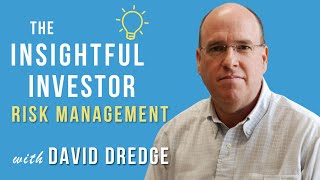
Convex Strategies: How to abandon 60/40 model improve returns by risk mitigation and growth assets.
Автор: OpalesqueTV
Загружено: 2020-01-22
Просмотров: 6051
Описание:
00:00 - Intro
00:48 - Studied economics at Berkeley under Janet Yellen
04:05 - How to create convexity in portfolios.
07:35 - How does Convex Strategies fit into a balanced 60/40 portfolio?.
11:28 - What causes this negative convexity?
17:43 - How to “bend” the convexity of a portfolio - and why.
23:25 - Understanding time averaging and the mathematics of compounding:
28:12 - CASE STUDY: Who are Convexity Strategies’ clients?.
33:26 - A Value Investor in Volatility: How to achieve efficiency (cost to pay out) in long volatility strategies.
38:55 - Team. Being a price maker not a price taker.
41:50 - Timing: The best time to correct convexity in your portfolio was yesterday.
47:08 - Why also asset managers and hedge funds use Convex Strategies.
Many end capital owners have had potentially superior compounded returns destroyed through concave/negatively convex investment activities run by wrongly incentivized fiduciaries, namely short term returns with fees linked to positively correlated returns and/or negatively skewed returns. The industry standard 60/40 (or 50/50) model delivers over-exposure to fixed income and ignores the fact that zero/negative interest rates have killed off the traditional benefits of running yield, portfolio and risk mitigation and negative correlation to performance of equities. But not only have investors' defensive allocations become ineffective since Greenspan established the new normal in financial markets, investors have also lacked participation in what has been one of the longest bull markets in equity markets in history.
By improving explicit risk mitigation dynamics of their portfolios and owning more growth assets, investors can correct the convexity in both wings of their portfolio. Therefore, creating positive convexity for a portfolio is the solution to the problem of inferior returns across an investment cycle:
“It’s just math,”, says David Dredge, who in the 80s studied Economics at Berkeley under Janet Yellen and Options and Financial Mathematics with options pioneer and founder of portfolio insurance, Mark Rubinstein: “Down numbers matter more than up numbers.”
“To fix the compounding of a portfolio, fix the convexity of your book.”
“The best time to correct convexity in your portfolio was yesterday”, says Dredge, “not only because of insurance, but to achieve better compounding on the return side. Taking ‘good risk’ allows you to take more risk: improving your risk mitigation dynamics allows you to own more growth assets.”
Today, the asset that provides the best risk mitigation (volatility) is the cheapest while fixed income, which has become the least efficient, is the most expensive ever. Dredge also points out that the convex insurance he is focusing on tends to grow over time instead of deteriorating.
Singapore based Convex Strategies is a value investor in volatility, a price maker not a price taker. He also points out that Convex isn't a macro fund trying to time some sort of market crash or “something happening”, but highly specialized in trading derivatives, across developed and emerging markets, and creating a positively convex core of risk that can be embedded in any investment portfolio.
In this Opalesque.TV BACKSTAGE video, David Dredge also talks about:
“If you are not bearish, how come you have 40% of your capital in low yielding, non risk-mitigating fixed income?”
Why historical volatility and correlation can be very poor measures of potential risk
How to create convexity in portfolios. How does Convex Strategies fit into a balanced 60/40 portfolio?
Conflict of interest: This problems of short term return chasing. Fiduciaries vs. asset owners or goals scored per game incentive structure vs. standing at the end of the season
How Warren Buffett’s “hedge fund bet” could have been won
Understanding time averaging and the mathematics of compounding: where traditional financial mathematics fail
Benefits of being based in Asia
Why also asset managers and hedge funds use Convex Strategies.
David Dredge studied Economics at Berkeley under Janet Yellen and Options and Financial Mathematics with options pioneer and founder of portfolio insurance, Mark Rubinstein. He has over 30 years experience of managing risk across global markets and started his Asian career at a time “most institutions did not understand risk”: October 1987.
Prior to co-founding Convex Strategies, David served as a Managing Director and Portfolio Manager at Artradis Fund Management in Singapore, where he was responsible for the fixed income aspects of their volatility strategy. Earlier in his career, David built and ran Asian and Global EM trading businesses for RBS (ABN AMRO Group), Bankers Trust and Bank of America. David holds an MBA from University of California, Berkeley and Bachelor’s degree from University of Utah. He currently sits on the Monetary Authority of Singapore Markets Committee (SFEMC).
Повторяем попытку...

Доступные форматы для скачивания:
Скачать видео
-
Информация по загрузке: