The Power of the Consumer: Briefing on Core Economic Principles and Systems
Автор: Secular Markets
Загружено: 2026-03-10
Просмотров: 0
Описание:
This briefing synthesizes a comprehensive analysis of modern economic systems, principles, and behaviors. The U.S. economy is predominantly driven by for-profit private businesses, which produced 87% of its GDP in 2012, and consumer spending, which accounted for over two-thirds of GDP in the same year. While corporations represent only 18.5% of U.S. firms, they generate over 81% of all business receipts, underscoring their economic dominance. The broader global economy, which reached a real GDP of $71.7 trillion in 2012, is increasingly integrated through three pillars of globalization: international trade, foreign direct investment (FDI), and cross-border financial flows.
Economic history has progressed through four main stages—food gathering, agriculture, industrial, and the current information age—each transforming production and society. Modern economies are broadly categorized as market-based (capitalism), command-based (communism), or mixed systems (socialism), with a global trend toward market-oriented principles. Economic growth, measured by real GDP, is driven by a virtuous cycle of savings and investment, which fuels productivity, innovation, and capital formation. However, this growth has limitations, including widening income inequality and significant environmental stress.
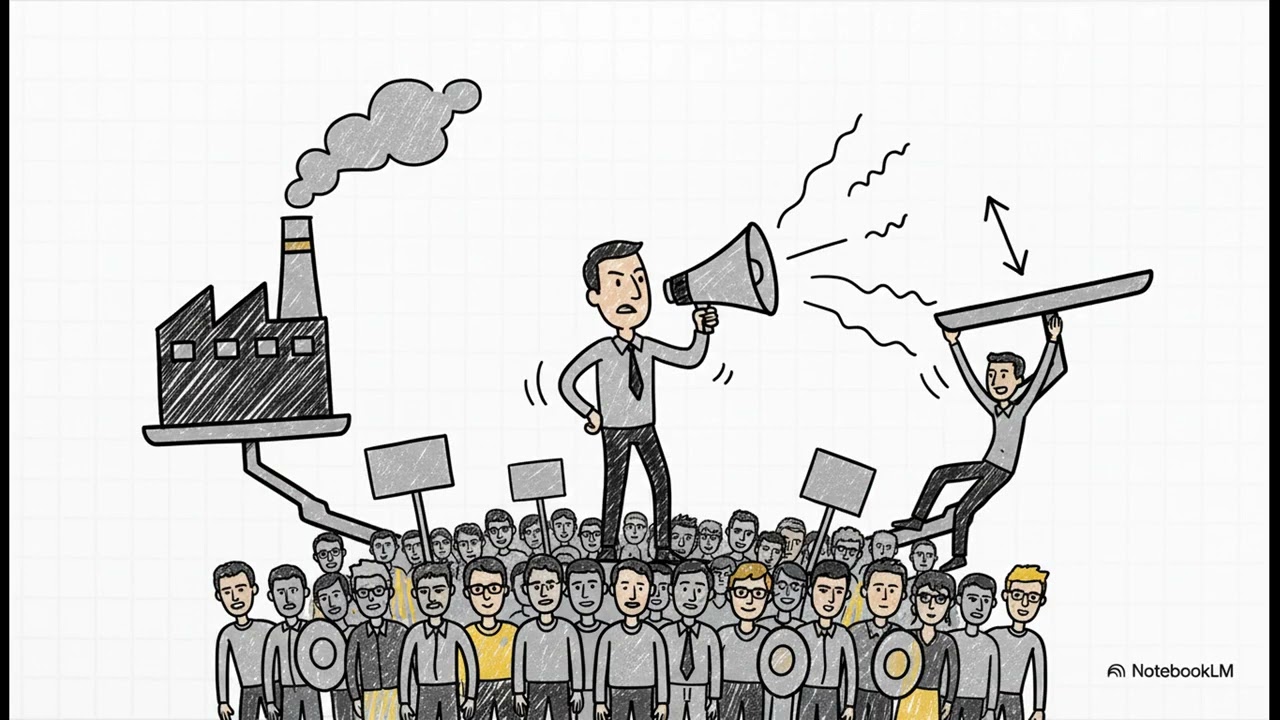
The financial system acts as the lubricant for economic activity, with money serving as a medium of exchange, unit of account, and store of value. In the U.S., a complex network of depository institutions (commercial banks, thrifts, credit unions) and other financial markets (stocks, bonds, futures) facilitates the flow of capital. The labor market, meanwhile, is governed by the principles of supply and demand, though influenced by government interventions and the collective power of unions. While union membership in the U.S. has declined from a peak of over 30% to 11.3% in 2012, organized labor continues to influence wages and working conditions, particularly in the public sector.
Finally, the rise of a highly interdependent global economy presents both immense opportunities and significant risks. Multilateral institutions like the World Bank, IMF, and WTO work to promote stability and growth, but challenges such as financial contagion, the "race to the bottom" in labor and environmental standards, and the persistent problem of the informal economy in developing nations remain critical areas of focus.
Повторяем попытку...
Доступные форматы для скачивания:
Скачать видео
-
Информация по загрузке: