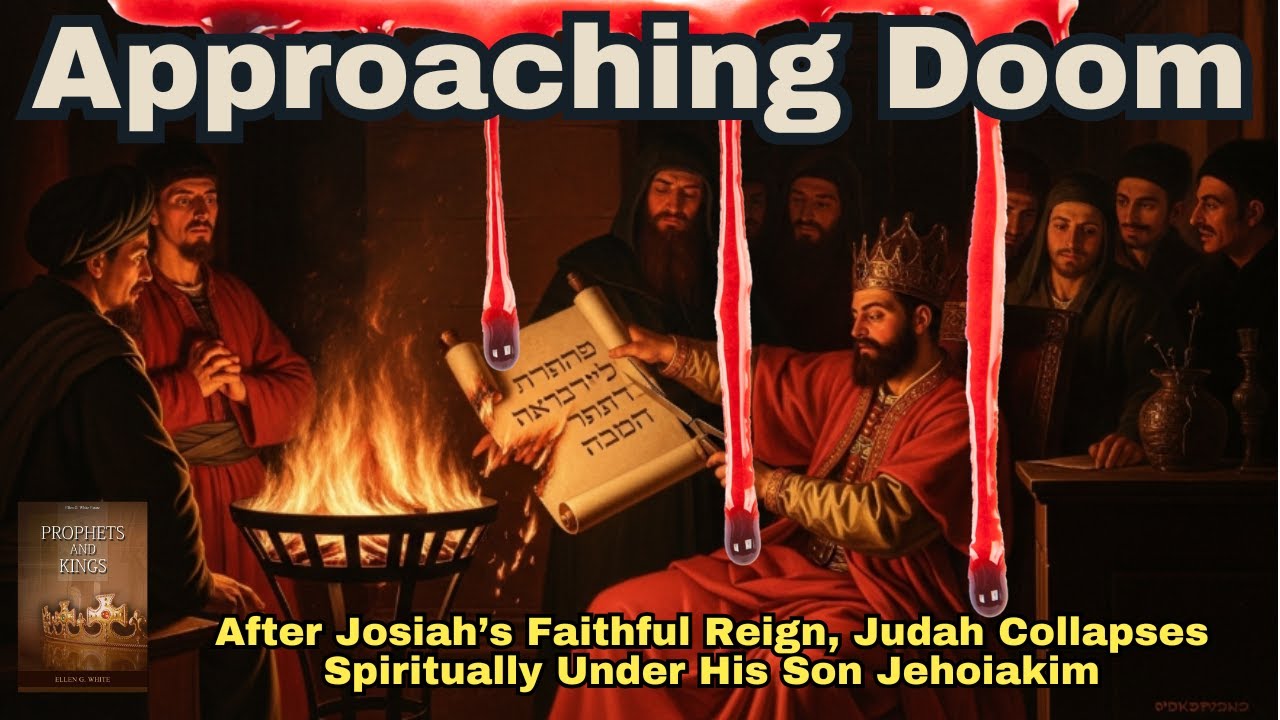
Prophets & Kings | Ch35 | Approaching Doom - Idolatry - Injustice - Corruption - Rebellion Jehoiakim
Автор: LAW & TESTIMONY
Загружено: 2025-11-19
Просмотров: 10
Описание:
After Josiah’s faithful reign, Judah collapses spiritually under his son Jehoiakim. The people return to idolatry, injustice, corruption, and open rebellion. God sends Jeremiah to plead with them, warning that Babylon is coming, but the warnings are mocked. Jehoiakim becomes the embodiment of defiant unbelief: he literally cuts up and burns the Word of God. When a nation rejects the Word, it rejects protection.
1) From Revival to Rebellion:
After Josiah’s death, spiritual collapse is immediate.
Under Jehoiakim:
Leaders exploit the weak.
Justice is bought and sold.
Idolatry returns openly.
The temple becomes superstition rather than worship. Judah trusts in religious ritual, not obedience.
2) Jeremiah Warns — Babylon Is Coming:
God commands Jeremiah to speak:
Babylon will be the rod of correction.
Jerusalem will fall if they refuse to repent.
Submission to God is safety; rebellion is ruin.
The people dismiss Jeremiah as “negative” and “disloyal.”
3) Jeremiah Dictates God’s Message to Baruch:
At God’s command: Jeremiah dictates everything God has spoken.
Baruch writes it on a scroll. Jehoiakim refuses to attend the reading. Instead, Baruch reads it publicly — calling for repentance.
4) Jehoiakim Burns the Scroll:
In deliberate defiance, Jehoiakim: Cuts up the scroll, piece by piece, Throws it into the fire, Sitting comfortably in his winter palace as the Word of God burns. He does not tremble at the Word. He destroys it. God instructs Jeremiah to rewrite the scroll — with added judgments against Jehoiakim.
5) Hardened by Rejection:
Jehoiakim becomes more cruel:
Persecutes Baruch and Jeremiah
Murders prophets
Leads the nation deeper into sin
Judah crosses a threshold:
Truth rejected → conscience hardened
Conscience hardened → judgment unavoidable
Spiritual / Prophetic Lessons
Theme: Lesson from the Chapter
Rejecting light increases darkness: Burning the scroll did not destroy truth; it sealed judgment.
Ritual cannot replace obedience: Judah trusted the temple, not God.
God warns before judgment: Mercy always precedes justice.
Truth resisted becomes hatred of truth: Jehoiakim escalates from ignoring the scroll → to destroying it → to persecuting its messengers.
Probation closes gradually: Not when people stop hearing truth, but when they stop responding to it.
This chapter reveals an irreversible law: Truth ignored becomes truth hated.
Relevance Today:
Judah’s condition mirrors the final generation:
Leaders refuse correction,
Truth is called “extremist,”
People prefer comforting lies over confronting reality.
Today, society doesn’t burn the Bible physically — it burns it morally:
Shrugging at conviction
Editing Scripture to fit culture
Silencing voices that call to repentance
Jehoiakim didn’t need to argue the Word. He simply destroyed it.
Modern equivalent:
“We don’t want Scripture.
We want affirmation.”
Final Reflection:
This chapter exposes the progression of apostasy:
Indifference to truth
Rejection of truth
Hatred of truth
Destruction of truth
Judgment
Jehoiakim stands as the tragic symbol of spiritual defiance.
Jeremiah weeps.
God pleads.
The Word warns.
But Judah says: “No.”
The last act before judgment was the burning of the Word. Their doom was not Babylon. Their doom was rejecting God.
The Great Controversy ➡️ From Destruction of Jerusalem Ad70 ➡️ The Controversy Ended
• EGW | The Great Controversy 1911 Audiobook...
Patriarchs & Prophets ➡️ Old Testament
• EGW | Patriarchs & Prophets
Prophets & Kings ➡️ Old Testament
• EGW | Prophets & Kings
Desire of Ages ➡️ New Testament
• EGW | The Desire of Ages
Acts of The Apostles ➡️ New Testament
• EGW | Acts of the Apostles
Повторяем попытку...
Доступные форматы для скачивания:
Скачать видео
-
Информация по загрузке: