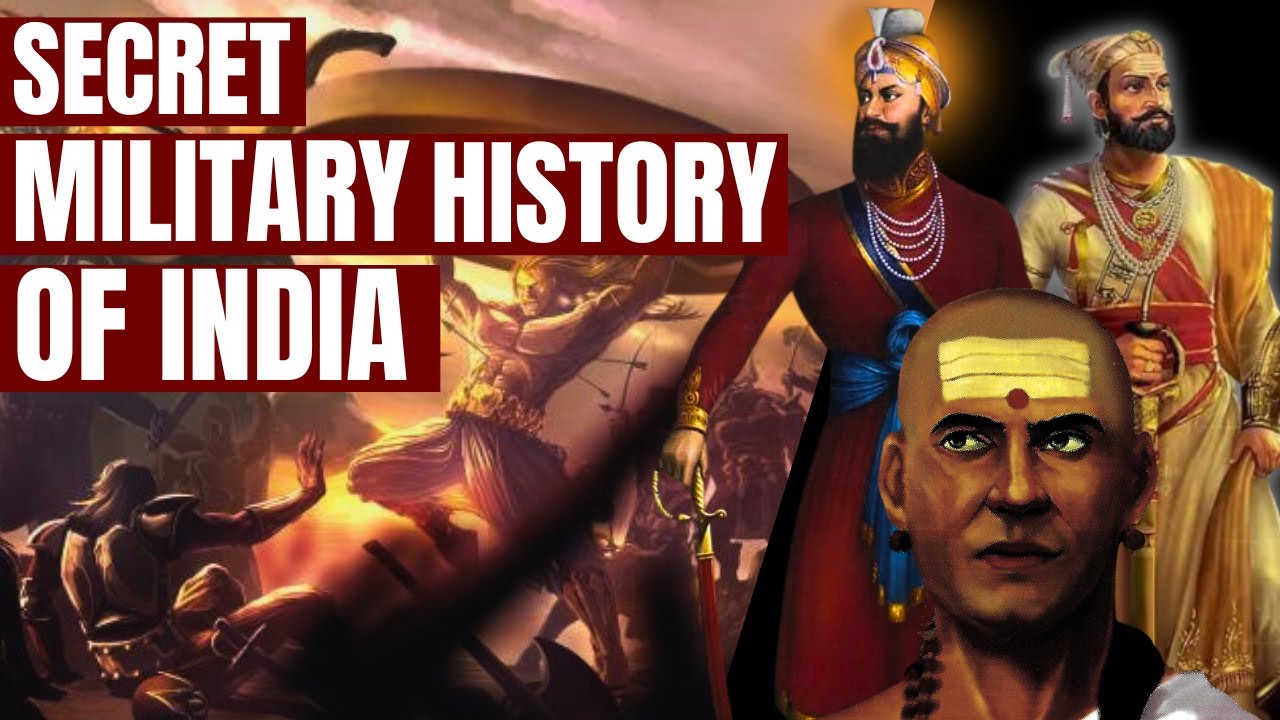
Secret Military History of India
Автор: Pavneet Singh
Загружено: 2023-10-23
Просмотров: 123853
Описание:
Nehru’s bias against the military was well known in the Services. The clearest example of this is when Cariappa outlined his plan for the security of NEFA, after China had occupied Tibet, Nehru flared up and thumping the table said “It is not the business of the C-in-C to tell the Prime Minister who is going to attack us where. You mind only Kashmir and Pakistan.” Nehru continued to appease the Chinese and the untimely death of Sardar Patel took away all opposition to Nehru’s views. The Sino-Indian War of 1962 and the national humiliation was the result of this policy and the bias against the military. The military also failed by acquiescing to a policy they knew to be militarily and politically unsound.
Indian Army is likely to face four types of threats and challenges in the future including traditional threats from China and Pakistan; contemporary threats in the form of terrorism; internal challenges; and out of area contingency threats. This implies that India faces a two front threat as far as conventional conflicts are concerned and these may be large scale conflicts or even border wars under the nuclear shadow. The other challenges are in the form of international terrorism, and home grown insurgencies aided and abetted by some of its neighbours, and out of area challenges whose contours are hazy at present. Many feel that conventional conflicts in the present circumstances when the region has become nuclearised are unlikely, however can Kargil type border wars be precluded, considering that we have unresolved borders in the form of Line of Control with Pakistan and the Line of Actual Control with China? Is there an assurance that the border wars will not escalate to larger conflicts involving more than one sector facing two different adversaries on two widely separated fronts? Hence the element of strategic uncertainty is introduced in to the entire operational planning which has a direct impact on overall force levels and capability build up. One fact which is undeniable is that should there be another war it will be of ‘Hybrid’ nature and it may involve fighting the enemy simultaneously on two fronts, in varying terrain, at the borders, while simultaneously countering terrorism and/or insurgency in the hinterland. There are a large number of studies that have been done in the Army in this context and these can be updated and fruitfully utilized to get an insight into the operational preparedness and budgetary support required.
The time has come for the government to seriously consider the transformation of the Indian military for the future, through technological improvements coupled with new joint operational doctrines and innovative Operational Art along with joint operational training which should give India a distinct advantage over its potential adversaries, which is vital for preserving India’s sovereignty and furthering its national interests.
Following the establishment of the Modi government with the strongest mandate ever, a lot was expected by the armed forces regarding the hastening of the modernisation process. However the expected change has so far not manifested itself on the ground and the army is the worst off as far as the modernization is concerned because it needs replacements for nearly every weapon and equipment that it currently has in its inventory starting from assault rifle to the artillery and air defence weapons, night fighting equipment, surveillance devices, and a new helicopter fleet comprising various categories of helicopters, just to name a few. It seems that our government machinery is constantly in the election mode with political leaders are more keen to retain their political edge with scant regard for the worsening national security scenario and the urgent need to modernise the armed forces. Our procurement procedures despite DPP 2016 continue to be cumbersome. Thus no worthwhile upgrade of weapons and equipment has taken place in the last two decades or more.
The Government has notified the strategic partnership policy focusing on selecting an Indian strategic partner for all major defence procurements by the Government in key segments like helicopters, submarines, armoured fighting vehicles etc. This policy is an integral step towards indigenisation and capability development. It would not be an exaggeration to say that, if properly implemented, the policy may result in revolutionary changes in domestic defence production and the creation of an ecosystem for defence manufacturing. However the progress on the ground is excruciatingly slow.
In the current state of army’s modernisation it would be difficult to envisage accomplishment and success in future wars. Mere promises and tall claims is not going to help the nation build a worthwhile military capability in the form of a deterrence, which is vital in order to avoid wars and if compelled to go to war then we must be in a position to win the war.
Повторяем попытку...
Доступные форматы для скачивания:
Скачать видео
-
Информация по загрузке: