藝文.逸志 - 河北之旅17: 正定古城隆興寺東方美神Art.Culture - Hebei Tour 17: The Eastern Graces of Longxing Temple
Автор: Art-Culture
Загружено: 2025-12-14
Просмотров: 85
Описание:
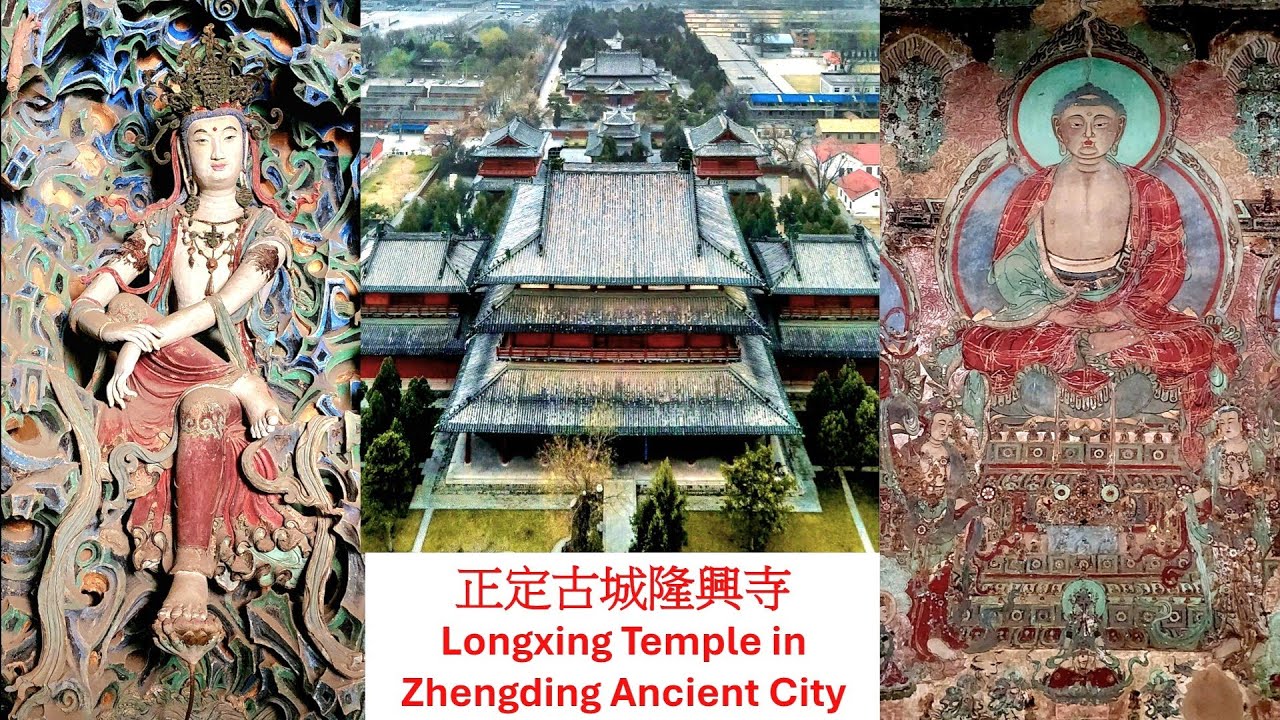
我們遊罷正定古城城牆後,首先來到隆興寺參觀,主要目的是一睹摩尼殿內的"東方美神"觀音塑像風采及欣賞精美的壁畫。當進入摩尼殿時,我們感覺如進入佛教藝術寶庫,頓時目定口呆,四周巨幅壁畫及栩栩如生的北壁彩塑群像,特別是倒座觀音塑像無不令人嘆為觀止。
被魯迅譽為「東方美神」的隆興寺「倒座觀音」像位於摩尼殿北壁,是眾多宋代五彩塑像最觸目的一尊,以其獨特「坐南朝北」的姿勢聞名,寓意觀音菩薩慈悲普度眾生的精神。這尊雕像身姿優美,頭微側、身前傾,慈眉善目,與大殿佛像背對背,展現了高超的藝術與宗教意涵,是隆興寺九絕之一。
倒座觀音是宋代五彩泥塑,姿態生動,頭戴寶冠,身著紅裙,右足搭左腿,神情安詳,被譽為中國最美觀音之一。在中國佛教文化中,倒座觀音象徵觀音菩薩「眾生普度不完,誓不回頭」的宏大志願,顯示其無盡的慈悲心。親臨其境從任何角度看,遊客都能與觀音菩薩對視,可見佛教造像藝術的巧妙設計。
摩尼殿各壁繪滿佛教題材的彩色壁畫,這些壁畫工筆重彩,技巧嫺熟,是高妙的藝術佳作。壁畫原有面積為五百二十八平方米,由於歷經風蝕,有一部分已經脫落,現存為四百二十二平方米。
壁畫中的人物刻劃個性鮮明。作者以高超的技藝將佛像、菩薩、尊天、天王、羅漢、樂伎、供養人大都刻劃得各盡其志,活靈活現。西方三聖、說法的釋迦,神態慈祥安然,金剛、天王的強悍威武,眾信徒的虔誠,無不栩栩如生。
隆興寺摩尼殿內的壁畫,根據一九七八年落架重修時在牆內木料柱上的記載,為明成化年間畫工所作,距今五百餘年了。只有內槽東、西扇面牆內壁為清代繪製。
隆興寺,別名大佛寺,位於河北省石家莊市正定古城內中山東路109號,佔地面積82500平方米。寺院建築南北縱深,中軸線南端為一座高大的一字琉璃照壁,自三路單孔石橋向北依次為天王殿、大覺六師殿(遺址)、摩尼殿、牌樓門、戒壇、慈氏閣、轉輪藏閣、大悲閣、御書樓、集慶閣、彌陀殿、毗盧殿、龍泉井亭等十幾座殿閣,主次分明,高低錯落,氣勢恢巨集,是中國國內現存時代較早、規模較大且保存完整的佛教寺院之一,也是研究中國古代佛教寺院建築佈局的典型實例。
隆興寺始建於隋開皇六年(公元586年),初名龍藏寺,唐改額隆興寺。北宋開寶四年(公元971年),奉宋太祖趙匡胤旨,於寺內鑄造一尊巨大的四十二臂銅質千手觀音-菩薩像,並蓋大悲寶閣,此後,寺內大興土木進行擴建,以大悲閣為主體的宋代建築群便相繼告成。金、元、明各代對寺內建築均有不同程度的修葺和增建。清康熙、乾隆年間,又曾兩次奉敕大規模重修,寺院形成了東為僧徒起居之處,中為佛事活動場所,西為帝王行宮三路並舉的建築格局。康熙四十九年(公元1710年)賜額“隆興寺”。清朝末葉至民國年間,政治腐敗,經濟凋敝,戰爭頻仍,隆興寺也隨之頹敗。新中國成立後,隆興寺受到了政府的高度重視和科學保護,使古剎逐漸恢復其風貌。
隆興寺是正定縣的主要建築,中國歷史建築學者梁思成首次去考察時,稱之為 「 河北重要大伽藍之一」。寺內規模最大、最著名的建築,便是建於北宋皇佑四年(1052年)的摩尼殿了。
梁思成對於摩尼殿評價甚高,曾在《正定古建築調查紀略》指: 「隆興寺中現存古構中,以摩尼殿為最大、 最完整、最重要」,並如此形容摩尼殿的結構: 「那種畫意的瀟灑,古勁的莊嚴,的確令人起一種不 可言喻的感覺。尤其是在立體布局的觀點上,這摩尼殿重疊雄偉,可以算是藝臻極品,而在中國建築物裏也是別開生面。」
來源: 百度百科
After touring the ancient city walls of Zhengding, our first stop was Longxing Temple. Our main purpose was to admire the "Oriental Goddess of Beauty" Guanyin statue in the Mani Hall and appreciate the exquisite murals. Upon entering the Mani Hall, we felt as if we had entered a treasure trove of Buddhist art, and were immediately stunned. The massive murals surrounding the walls and the lifelike painted sculptures on the north wall, especially the Guanyin statue in its reversed posture, were all breathtaking.
The "Reversed Guanyin" statue in Longxing Temple, praised by Lu Xun as the "Oriental Goddess of Beauty," is located on the north wall of the Mani Hall. It is the most striking of the many Song Dynasty polychrome sculptures, renowned for its unique "sitting south facing north" posture, symbolizing the compassionate spirit of Guanyin Bodhisattva in saving all sentient beings. This statue, with its graceful posture, slightly tilted head, and leaning forward, displaying benevolent eyes and a compassionate expression, stands back-to-back with the Buddha statue in the main hall, showcasing superb artistry and religious significance. It is one of the nine wonders of Longxing Temple.
The Reclining Guanyin is a Song Dynasty polychrome clay sculpture, vividly depicted with a jeweled crown and red skirt, her right foot crossed over her left, her expression serene. It is considered one of the most beautiful Guanyin statues in China. In Chinese Buddhist culture, the Reclining Guanyin symbolizes Guanyin Bodhisattva's grand vow to "never turn back until all sentient beings are liberated," displaying her boundless compassion. From any angle, visitors can appear to be gazing directly at Guanyin, showcasing the ingenious design of Buddhist sculptural art.
The walls of the Mani Hall are covered with colorful murals depicting Buddhist themes. These murals, painted with meticulous brushwork and rich colors, are masterpieces of art. Originally covering 528 square meters, some areas have been eroded, leaving 422 square meters remaining.
The figures in the murals are vividly portrayed. The artists, with superb skill, have depicted Buddhas, Bodhisattvas, deities, heavenly kings, arhats, musicians, and donors, each with their own distinct personality and lifelike appearance. The murals of the Western Paradise Triad, including the serene and compassionate Shakyamuni Buddha preaching, the powerful and majestic Vajra and Heavenly Kings, and the devout believers, are all vividly depicted.
According to inscriptions on wooden pillars inside the walls during the 1978 renovation, the murals in the Mani Hall of Longxing Temple were painted during the Chenghua period of the Ming Dynasty, more than 500 years ago. Only the inner walls of the east and west fan-shaped sections of the inner courtyard were painted during the Qing Dynasty.
Longxing Temple, also known as Dafosi (Great Buddha Temple), is located at No. 109 Zhongshan East Road, Zhengding Ancient City, Shijiazhuang City, Hebei Province, covering an area of 82,500 square meters.
Source: Baidu Encyclopedia
Повторяем попытку...
Доступные форматы для скачивания:
Скачать видео
-
Информация по загрузке:


![[慕名而来]杨俊芳讲述“华严三圣”以及壁画中的故事 | 第艺流](https://image.4k-video.ru/id-video/LSTLOltBIOM)