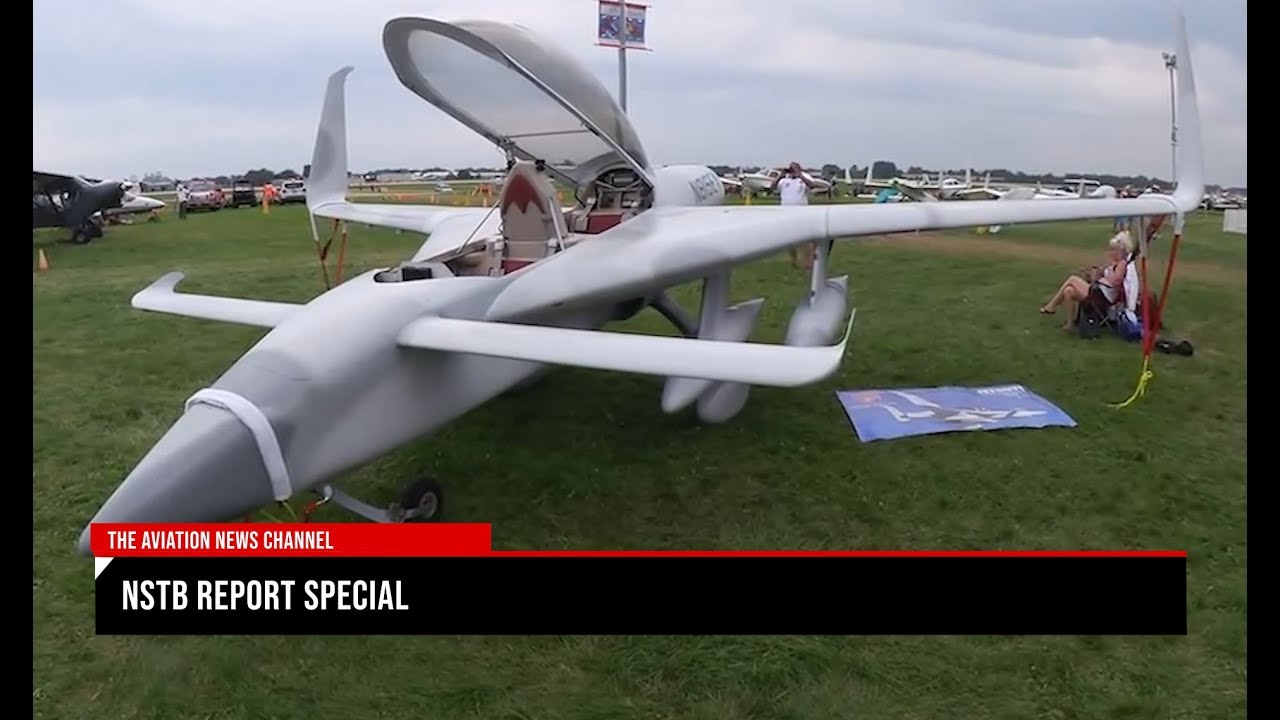
In-flight Break up of Amateur Built JETEZ September 2018 (NTSB Reports)
Автор: The Aviation News Channel
Загружено: 2018-09-13
Просмотров: 266776
Описание:
On September 1, 2018, about 1720 central daylight time, an experimental amateur-built JETEZ, N815EY, was destroyed, when it experienced an in-flight breakup, and impacted terrain while maneuvering at low altitude, near Covington Municipal Airport, Covington, Tennessee. The airline transport pilot was fatally injured. The airplane was operated by the pilot as a personal flight. Day visual meteorological conditions prevailed, and no flight plan was filed for the local flight.
According to a witness, Shortly after the airplane crossed the runway, he observed the left wing and winglet, "oscillate" about 5 times, and then the left wing "exploded." He then observed pieces of the airplane falling, the airplane pitched up about 90°, the right wing separated, and the airplane descended into a cotton field.
According to a second witness, he observed the airplane cross over the airport about 200 feet. After the airplane flew over the airport, he continued watching the airplane to his left, observed a "gentle pull-up" to the point where he could see the canard located on the forward part of the fuselage. At this time, he noticed a "wave like movement" or a "wiggle" in the left wing, and then the "left wing failed at mid-span." Subsequently, the airplane pitched up "violently," the right wing "snapped off," and numerous pieces departed the airplane as it "tumbled down to the left," and impacted terrain. He then observed fire and smoke. The witness reported that he held an airline transport pilot certificate.
According to Federal Aviation Administration airmen records, the pilot held an airline transport pilot certificate with an airplane multi-engine land rating, and a commercial pilot certificate with airplane single-engine land and lighter-than-air balloon ratings. He also held a flight instructor certificate for airplane single and multi-engine. At that time, the pilot reported civil flight experience that included 22,000 total hours and 5 hours in preceding 6 months.
According to airworthiness records, the airplane was a two-seat original design composite, canard style airplane, manufactured by the pilot. It was powered by a modified turbine engine.
The airplane was designed with blended composite winglets that were integral to a C-channel wing spar.
The airplane's fuselage came to rest inverted in a flat cotton field oriented on a magnetic heading of 065°, about 0.50 nautical miles northeast of the airfield. The airplane sustained extensive
impact damage, and evidence of a post-impact fire was observed. All major components of the airplane were accounted for along the airplane's flight path. Fragments of the outboard portion of the left wing and winglet were found separated from the left-wing root, earliest in the debris field, about 1,000 ft from the fuselage. Moving forward in the debris field, fragments of the outboard portion of the right wing and winglet were found separated from the right-wing root, about 870 ft from the fuselage.
The nose landing gear separated from the fuselage, and xamination revealed it was in the retracted position. The main landing gear separated from the fuselage and was found about
100 ft forward of the fuselage. Examination of the restraint system buckles found next to the fuselage revealed they were latched. Fragments of the canard were found separated from the
fuselage in the debris path. The engine had separated from the engine mounts and was found with the fuselage.
Examination of the left wing revealed that it separated from the fuselage into multiple fragments. Multiple pieces of the blue foam wing core separated from inside of the wing and were scattered in the along the flight path. The left aileron fragmented and separated
from the wing. The left rudder was found in one piece and separated from the winglet, and its flight control cable had separated and was consistent with tensile overload.
The right wing separated from the fuselage into multiple fragments. The right aileron was found separated from the wing and was in one piece. The right rudder separated from the
winglet and was found in one piece.
The wreckage was retained for further examination.
Subscribe to the aviation news channel to be kept up to date with the latest aviation reports.
/ theaviationnewschannel
Повторяем попытку...
Доступные форматы для скачивания:
Скачать видео
-
Информация по загрузке:


