Black Cave gorge Prousos | Φαραγγι Μαυρη Σπηλια
Автор: Tk Spirit Traveler
Загружено: 2026-02-25
Просмотров: 12
Описание:
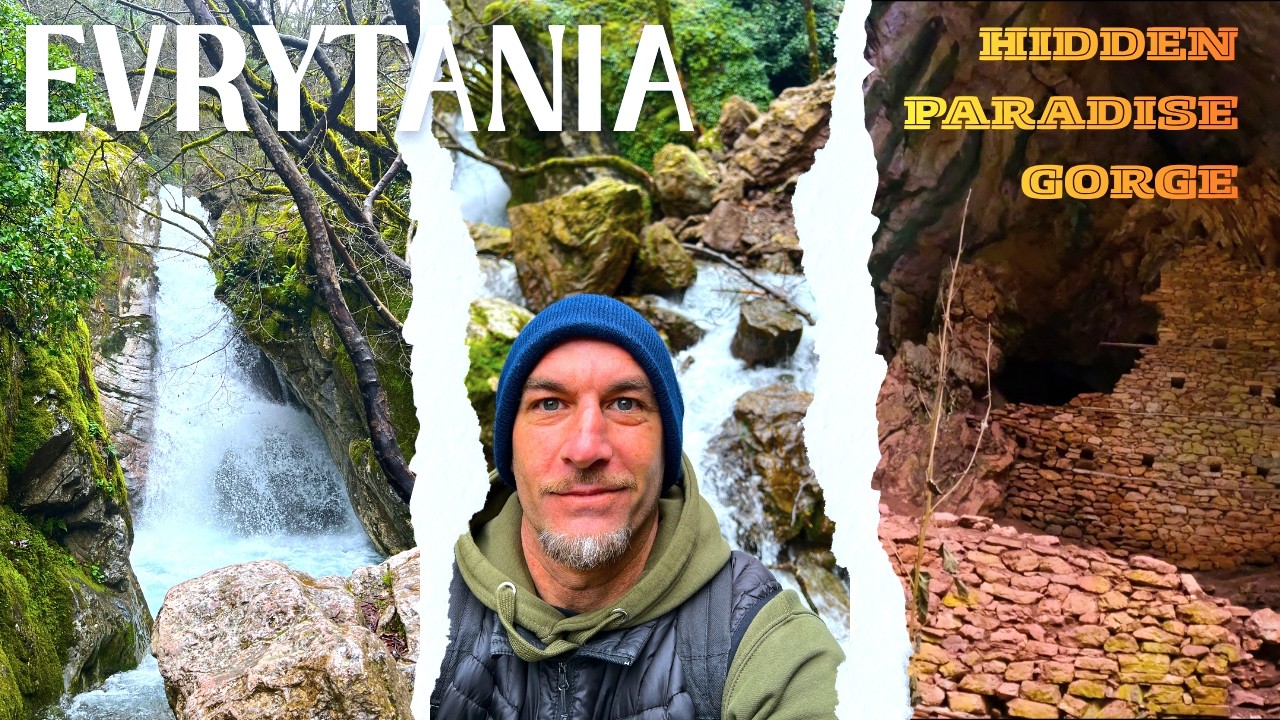
Day road trip to the Prousou Monastery and the Black Cave gorge hike in the county of Evrytania.
The Black Cave Gorge in Evrytania has a rich history, serving as a refuge for the inhabitants during the Ottoman and German occupations. The gorge was once a shelter for the region's inhabitants from war and Turkish occupation, with a large stone wall surviving today inside the cave. It is believed to have been used as a place of worship in ancient times and possibly as a church or ascetarium in later years. The gorge's historical significance is further highlighted by the presence of a stone wall that once sealed the cave entrance, which remains intact today. The gorge's history is also tied to the monastery of Panagia Proussiotissa, which was built to house an icon of the Virgin Mary and later served as a refuge for rebels during the Ottoman and Nazi occupations. The gorge's natural beauty and historical significance make it a must-visit destination for those interested in the history and culture of Evrytania.
The name of the Monastery is due to the miraculous icon of "Panagia Prousiotissa". According to tradition, this icon comes from Bursa in Asia Minor and is believed to be the work of Luke the Evangelist. The icon of the Theotokos was located in a church in Bursa, but fearing that it would be destroyed by order of the iconoclast emperor of Byzantium Theophilus (829–842), it fled to Central Greece.
Tradition links the sanctuary of the icon, the current site of the Monastery, with miracles that occurred during the transfer of the icon there. The young man who carried it, together with one of his servants, decided to establish a monastery at this spot as they found it impossible to move the image from there. They themselves became the first monks, with the names Dionysios and Timotheus.
A few years before the Greek War of Independence, the spiritual Kyrillos Kastanofyllis was sent to the monastery as abbot. He was a member of the Filiki Eteria and the pretext was to correct his alleged spiritual and moral decline. Immediately and based on a plan, he organized and operated the "School of Greek Letters" (1818–1828).
The Monastery was a center of political guidance of the liberation struggle. He played a crucial role in the entire management of the siege of Missolonghi and also in the rescue of many after the destruction of the "Exodus". It functioned throughout the match as a hospital and a hospital for the wounded.
Karaiskakis had his headquarters in the monastery. General Karaiskakis donated the silver cover of the icon as a sign of gratitude for the heat, which was bothering him and from which he was cured during his stay in the Monastery. The Vault of the Monastery today has the weapons of Karaiskakis.
A large part of the Monastery was burned by the Germans on August 16, 1944, because it was a support center for the Resistance rebels. Many relics, utensils, manuscripts and books were destroyed, but not the precious icon of the Virgin Mary, which had been placed in a crypt.
Thank you for watching and coming along!
Повторяем попытку...
Доступные форматы для скачивания:
Скачать видео
-
Информация по загрузке: