Guy Weitz: I. Regina Pacis, from Symphony No. 1
Автор: Samuel Backman
Загружено: 2024-10-21
Просмотров: 117
Описание:
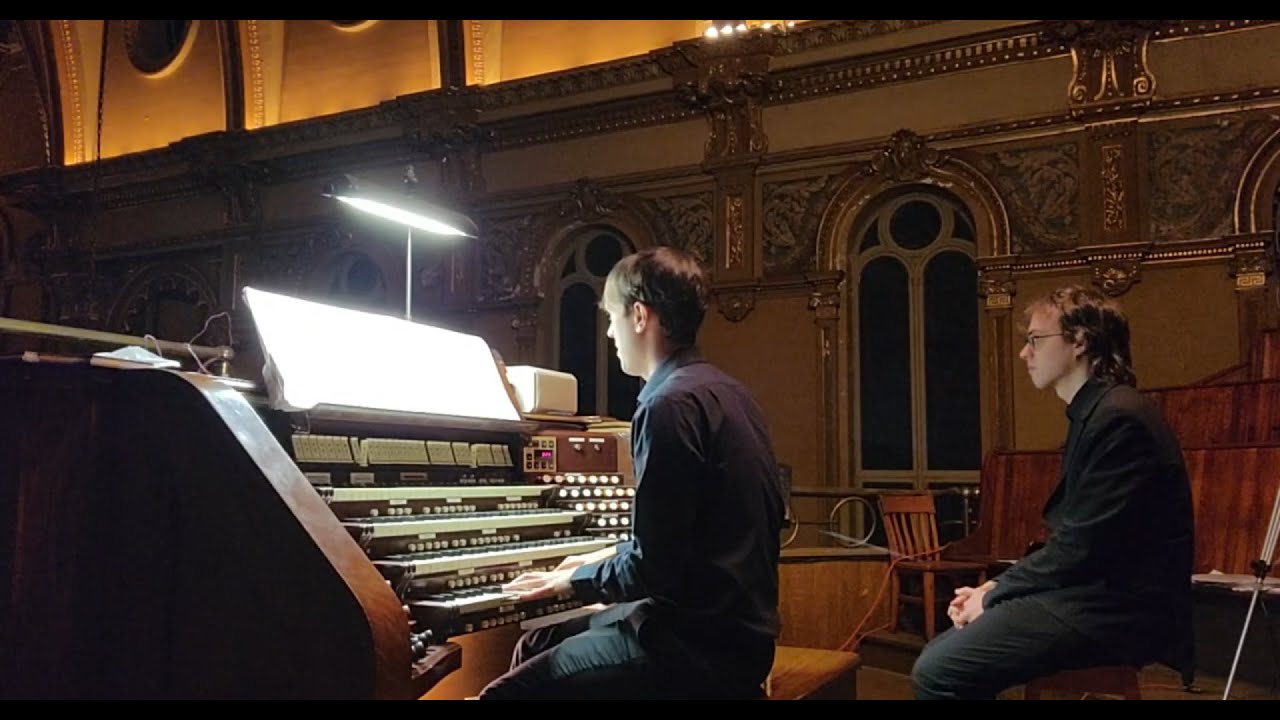
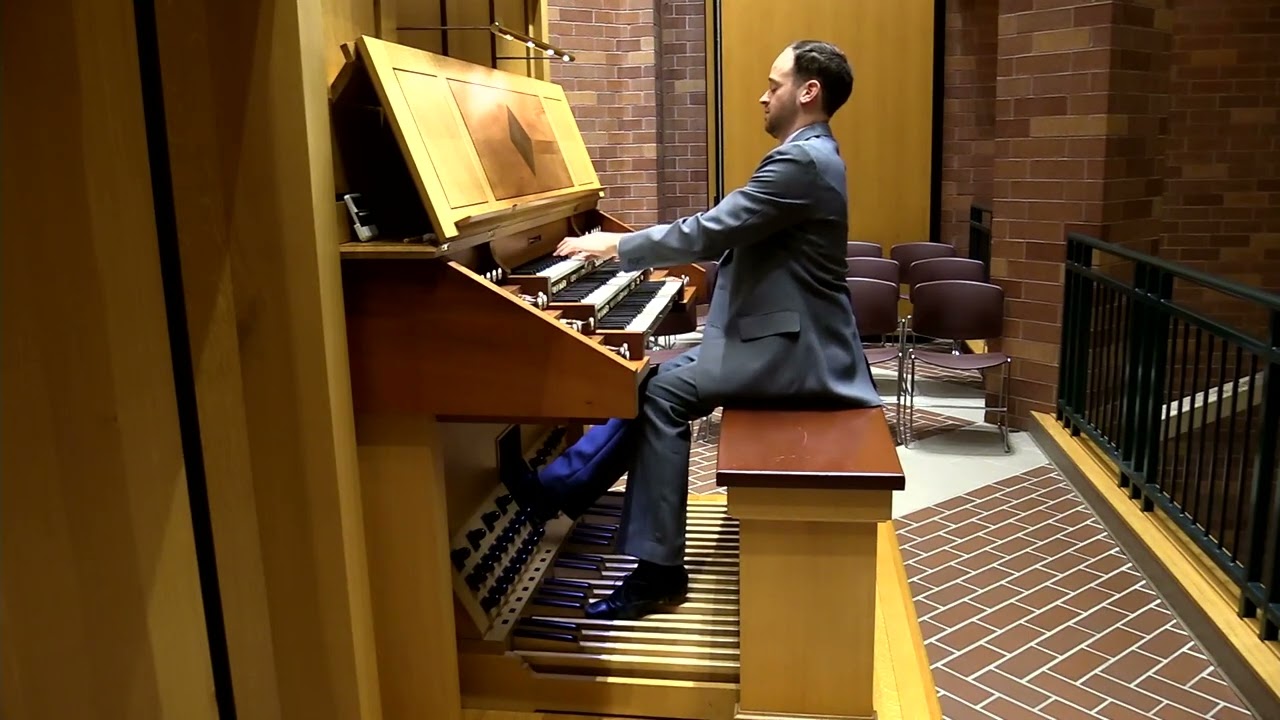
Samuel Backman, organist
Recorded live on C.B. Fisk Op. 111 at the University of Oklahoma in Norman on April 5, 2019.
Guy Weitz was born in Belgium and trained at the conservatory in Liège. At the age of nineteen, he went Paris to study under D’Indy and Vierne at the Schola Cantorum. Though Weitz returned to Liège following his studies in Paris, he soon emigrated to England as a refugee in 1914 and remained there for the rest of his life. Weitz had no prior professional connections to England, but a prominent Duchess knew of his musical prowess and helped him establish himself professionally his new country of residence. His success in England was so immediate that he was knighted by the year 1921. As honorary organist at Westminster Cathedral, Weitz was instrumental in the process of designing and raising funds for the Willis organ. In this capacity, he reached the broader English public through a BBC broadcast of several recitals performed at the Cathedral. As an organist, Weitz’s repertoire was historically and geographically diverse, consisting of Baroque works from France, Germany, and Italy, as well as a copious amount of French symphonic repertoire. The cosmopolitan nature of his repertoire had a profound impact on his style of composition.
A lifelong Roman Catholic, Weitz based a substantial quotient of his works on Gregorian chant, and his Symphony No. 1 for organ is no exception. This three-movement symphony features three separate chant melodies, each of which is thematically linked to the title of a specific movement. The first movement, Regina Pacis (or “Queen of Peace”), features the well-known Ave Maria gratia plena chant from the Second Vespers for the Feast of the Holy Rosary. The anguish-laden second movement, Mater Dolorosa (or “Sorrowful Mother”), is based on Stabat Mater Dolorosa, a hymn that is frequently sung while praying the Stations of the Cross. The third movement, Stella Maris (or “Star of the Sea”), is derived from another well-known Marian vespers hymn, namely the Ave Maris Stella. Though each movement has a different chant as its primary basis, Symphony No. 1 is composed in a cyclic fashion, meaning that one unifying theme presents itself throughout each movement of the symphony. In this case, the opening segment of the Ave Maria gratia plena chant forms the basis of the first movement but appears at the very end of both the second and third movements.
Повторяем попытку...
Доступные форматы для скачивания:
Скачать видео
-
Информация по загрузке: