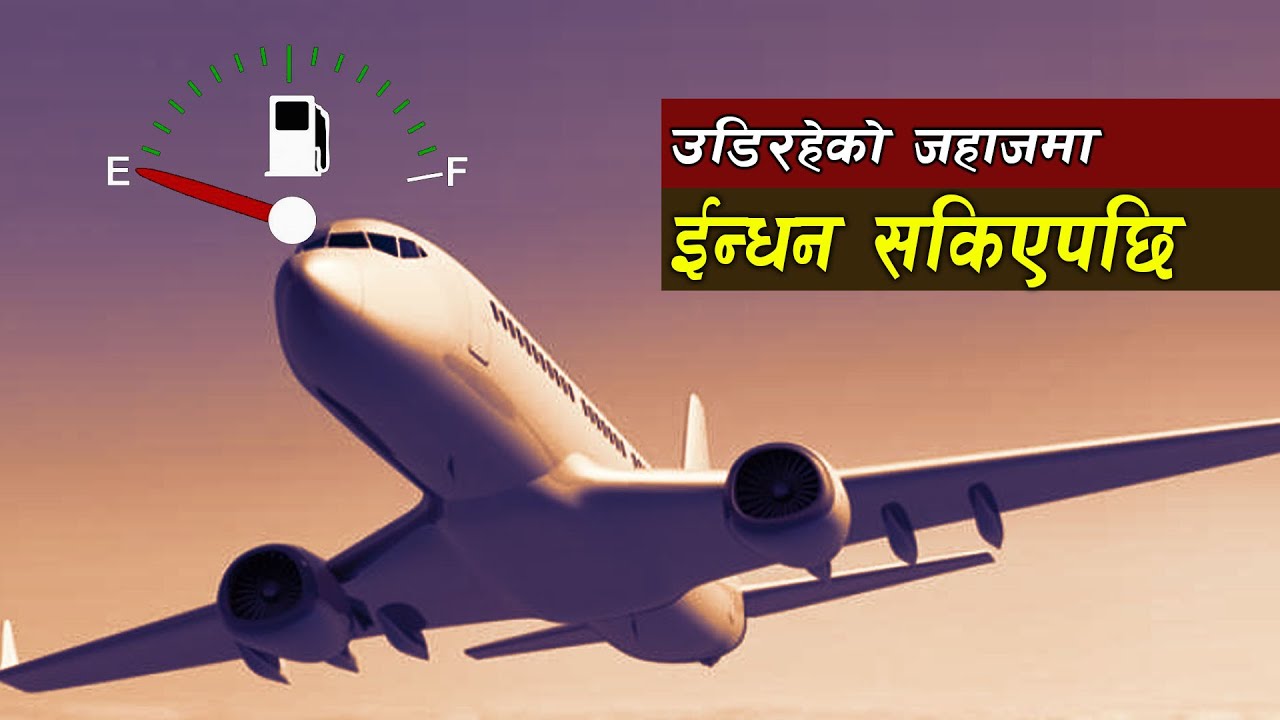
जब उड्दै गरेको प्लेनमा अचानक फ्यु'ल सकियो || Canadian Airlines Flight 143 || Bishwa Ghatana
Автор: Bishwo Ghatana
Загружено: 2020-01-05
Просмотров: 512314
Описание:
बिश्वका केही एयरपोर्टहरु || Airports in the World, • बिश्वका केही एयरपोर्टहरु || Airports in th...
किन राखि'दैन प्यारासुट || Parachutes for Passengers, • किन राखि'दैन प्यारासुट || Parachutes for ...
Our Next youtube channel :
All History: • The richest Man on Earth - Mansa Musa || स...
Follow on Facebook: / bishwoghatna
Follow on twitter: / bishwoghatana
Canadian Airlines Flight 143
Flight 143's problems began on the ground in Montreal. A computer known as the Fuel Quantity Information System Processor manages the entire 767 fuel loading process. The FQIS controls all of the fuel pumps and drives all the 767's fuel gauges. Little is left for crew and refuelers to do but hook up the hoses and dial in the desired fuel load. But the FQIS was not working properly on Flight 143. The fault was later discovered to be a poorly soldered sensor. A highly improbable, one-in-a-million sequence of mistakes by Air Canada technicians investigating the problem defeated several layers of redundancy built into the system. This left Aircraft #604 without working fuel gauges.
In order to make their flight from Montreal to Ottawa and on to Edmonton, Flight 143's maintenance crew resorted to calculating the 767's fuel load by hand. This was done using a procedure known as dripping the tanks.
"Dripping" could be compared to calculating the amount of oil in a car based on the dipstick reading. Among other things, the specific gravity of jet fuel is needed to make the proper drip calculations.
The flight crew had never been trained on how to perform the drip calculations. To be safe they re-ran the numbers three times to be absolutely, positively sure the refuelers hadn't made any mistakes; each time using 1.77 pounds/liter as the specific gravity factor. This was the factor written on the refueler's slip and used on all of the other planes in Air Canada's fleet. The factor the refuelers and the crew should have used on the brand new, all-metric 767 was 0.8 kg/liter of kerosene.
After a brief hop Flight, 143 landed in Ottawa. To be completely safe, Pearson insisted on having the 767 re-dripped. The refuelers reporting the plane as having 11,430 liters of fuel contained in the two wing tanks. Pearson and Quintal, again using the same incorrect factor used in Montreal, calculated they had 20,400 kilos of fuel onboard. In fact, they left for Ottawa with only 9144 kilos, roughly half what would be needed to reach Edmonton.
Only Gimli, the site of an abandoned Royal Canadian Air Force Base remained as a possible landing spot. It was 12 miles away. It wasn't in Air Canada's equivalent of Jeppesen manuals, but Quintal was familiar with it because he'd been stationed there in the service. Unknown to him and the controllers in Winnipeg, Runway 32L (left) of Gimli's twin 6800-foot runways had become inactive and was now used for auto racing. A steel guard rail had been installed down most of the southeastern portion of 32L, dividing it into a two-lane dragstrip. This was the runway Pearson would ultimately try and land on, courting tragedy of epic proportions.
Air Canada Aircraft #604 was repaired sufficiently to be flown out of Gimli two days later. After approximately $1M in repairs, consisting primarily of nose gear replacement, skin repairs and replacement of a wiring harness it re-entered the Air Canada fleet. To this day Aircraft, #604 is known to insiders as "The Gimli Glider." The avoidance of disaster was credited to Capt. Pearson's "Knowledge of gliding which he applied in an emergency situation to the landing of one of the most sophisticated aircraft ever built." Captain Pearson strongly credits Quintal for his cockpit management of "Everything but the actual flight controls," including his recommendation of Gimli as a landing spot. Captains Pearson and Quintal spoke at the 1991 SSA Convention in Albuquerque about their experiences. Pearson was, at the time, still employed and flying for Air Canada, and occasionally flying his Blanik L-13 sailplane on the weekends; he has since retired to raise horses. Maurice Quintal is now an A-320 Pilot for Air Canada, and will soon be captaining 767's; including Aircraft #604.
Music Credit :
Martian Cowboy Kevin MacLeod (incompetech.com)
Licensed under Creative Commons: By Attribution 3.0 License
http://creativecommons.org/licenses/b... http://incompetech.com/ http://audionautix.com/ http://audionautix.com/
Повторяем попытку...
Доступные форматы для скачивания:
Скачать видео
-
Информация по загрузке: