The Taj Mahal: Witness the World's Ultimate Love Letter, Secrets and forbidden romance
Автор: World Cities Khabar
Загружено: 2025-11-08
Просмотров: 46
Описание:
The Taj Mahal: History, Architecture, and Modern Controversies
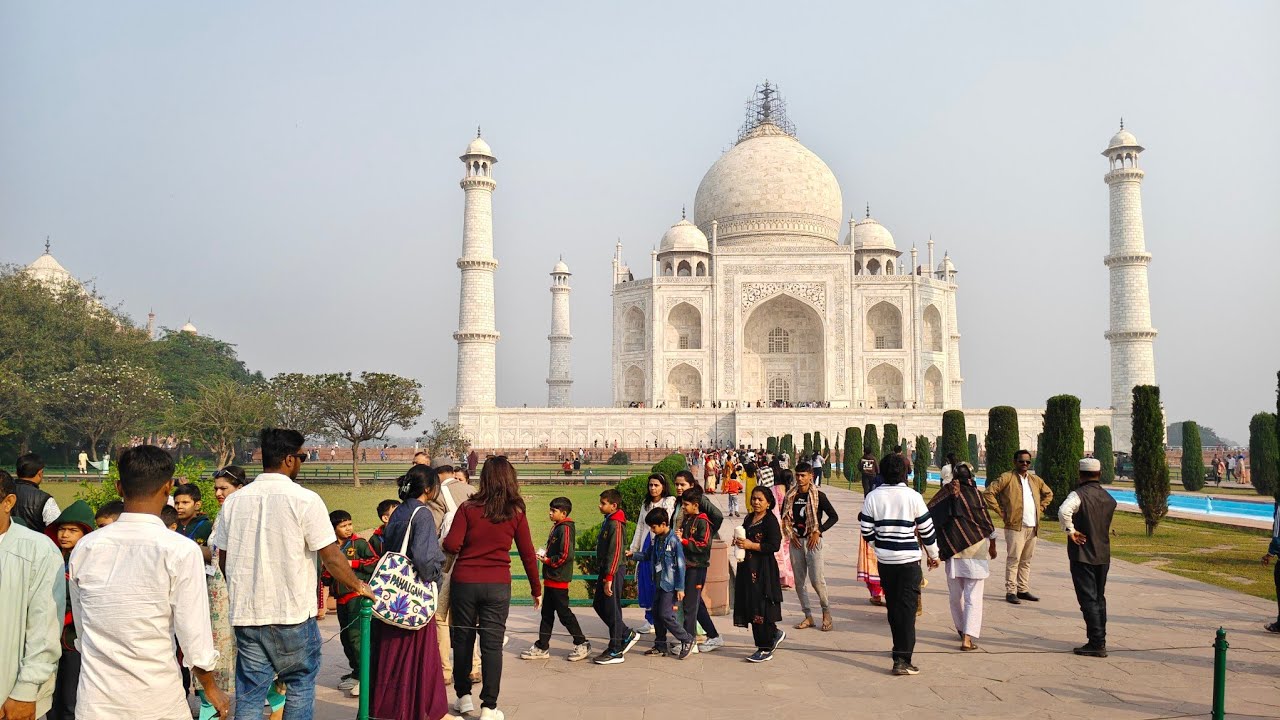
The Taj Mahal, located on the south bank of the Yamuna River in Agra, India, is widely regarded as the finest example of Mughal architecture—a blend of Indian, Persian, and Islamic styles. Designated a UNESCO World Heritage Site in 1983, it is celebrated globally as a "universal admired masterpiece."
1. A Monument of Love and Grief
The mausoleum was commissioned in 1632 by the Mughal Emperor Shah Jahan (reigned 1628–1658) to house the tomb of his favorite wife, Arjumand Banu Begum, better known as Mumtaz Mahal ("Chosen One of the Palace").
The Commission: Mumtaz Mahal died in 1631 while giving birth to their 14th child. Shah Jahan, reportedly grief-stricken, began construction almost immediately to fulfill a promise to his deceased wife.
Construction Timeline: The main mausoleum was substantially completed by 1648, though the entire complex, including the mosque, guest house, and main gateway, was finished around 1653. It is estimated that more than 20,000 artisans and craftsmen were employed in its construction.
Final Resting Place: The emperor himself was eventually interred beside Mumtaz Mahal upon his death in 1666, making the Taj Mahal the tomb for both imperial figures.
2. Architectural Masterpiece
The design of the Taj Mahal reflects a vision of paradise on Earth (Jannah), meticulously planned around principles of bilateral symmetry, rational geometry, and hierarchy.
Materials: The primary structure is built of white Makrana marble, sourced from Rajasthan, known for its ability to change hue depending on the time of day. Secondary buildings within the complex are constructed from contrasting red sandstone.
Symmetry and Layout: The entire complex adheres to strict symmetrical planning. The main tomb is flanked by four tapering minarets, which are deliberately built leaning slightly outward to prevent them from falling onto the main mausoleum in the event of an earthquake.
Inlay Work (Pietra Dura): Perhaps the most striking feature is the exquisite ornamentation. The white marble is inlaid with thousands of precious and semi-precious stones (including jade, crystal, sapphire, and carnelian) in a technique called pietra dura. These stones form intricate floral and vegetative motifs, as Islamic art generally forbids anthropomorphic representation.
The Charbagh: The mausoleum is set within a massive Persian-style garden (Charbagh), divided into four quadrants by walkways and water channels that meet at a central reflecting pool, reinforcing the theme of symmetry and paradise.
3. Preservation and Modern Challenges
As a universally admired site, the preservation of the Taj Mahal is a constant challenge, primarily due to atmospheric pollution.
The Yellowing Effect: Airborne particulate matter, particularly pollutants like sulfur dioxide, causes the white marble to yellow and discolor.
Protection Zone: In response, the Indian Supreme Court established the Taj Trapezium Zone (TTZ)—a 10,400 sq km area around the monument—to enforce stringent environmental protection measures.
Recent Measures: As noted in the recent news report, authorities are continuing to deploy new Continuous Ambient Air Quality Monitoring Stations (CAAQMS) to generate real-time data on pollutants like PM2.5, which is crucial for informing targeted policy changes to safeguard the marble.
4. Historical Controversy
Despite its accepted history as a Mughal mausoleum, the monument periodically becomes the subject of historical dispute.
The 'Tejo Mahalaya' Claim: Controversies often revolve around the disputed theory that the Taj Mahal was originally a Hindu temple dedicated to Shiva called 'Tejo Mahalaya'. These claims, primarily championed by writer P.N. Oak, have been repeatedly dismissed by the Archaeological Survey of India (ASI) and mainstream historians as lacking credible evidence.
Recent Cinematic Revival: This theory was recently revived in the public sphere following the release of the film The Taj Story on October 31, 2025. The film dramatizes the claims, leading to legal action and public debate. While the Delhi High Court allowed the release, it mandated the inclusion of a clear disclaimer that the movie is based on a controversial, disputed narrative and does not represent verified history.
The Taj Mahal stands today as a profound symbol—not only of eternal love and architectural genius but also as a recurring focus of cultural and historical debates in modern India.
Повторяем попытку...
Доступные форматы для скачивания:
Скачать видео
-
Информация по загрузке: