#breakingnews
Автор: Indian Defense Analysis
Загружено: 2023-04-22
Просмотров: 8158
Описание:
Join this channel to get access to perks:
/ @indiandefenseanalysis
Maiden trial of AD-1 interceptor
Indian has achieved self-reliance in developing highly complex network-centric anti-ballistic missile systems. On 2nd November 2022, the world has witnessed the India’s new capability of neutralizing the Ballistic Missiles. The DRDO Chief Dr Samir Kamat said that the AD-1 missile test was a “significant jump" in India’s military capability against ballistic missiles. As per DRDO chief – In phase-1 the capability was developed to destroy incoming missiles of 2000 km class. The maiden test of AD-1 has helped to intercept any missile of the 5000 km class. It is mainly an endo-atmospheric interceptor, but it will also work in the low exo-atmospheric region. DRDO is parallelly developing interceptor for the high exo-atmospheric region. The entire system of BMD including AD-1 and the high exo-atmospheric missile will be ready by 2025.
Sea-Based interceptor trial
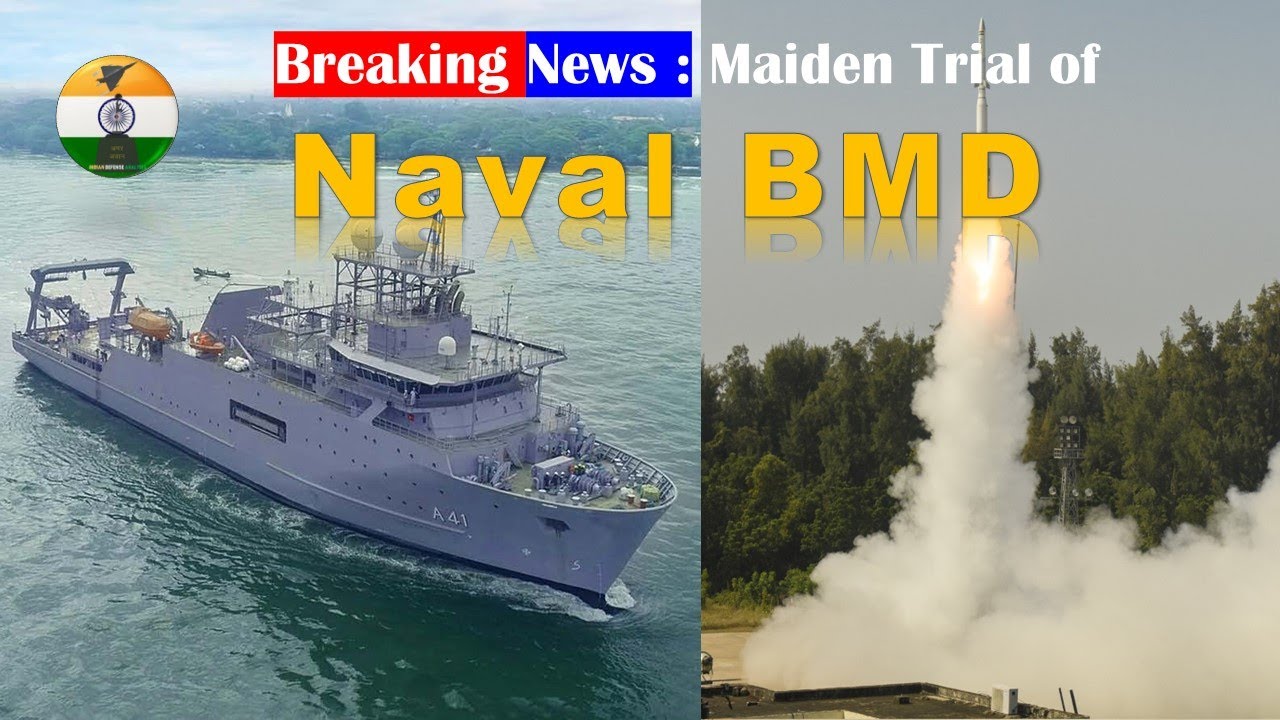
On 21st April 2023, DRDO and Indian Navy has successfully conducted a maiden flight trial of sea-based endo-atmospheric interceptor missile off the coast of Odisha in the Bay of Bengal. The trial was aimed to engage and neutralize a hostile ballistic missile threat and with its success it has elevated India into the elite club of Nations having Naval BMD capability.
While the name of missile was not revealed in official statement its none other than AD-1 which was tested in November 2022.
AD-1 missile in Detail
AD-1 is a long-range interceptor missile designed for both low exo-atmospheric and endo-atmospheric interception of medium-range ballistic missiles and aircraft. It can even intercept targets at near space i.e., low Exo-Atmospheric. The aircraft which has been mentioned here would be AWACS, Aerial refuellers & transport aircraft.
The unique feature of the AD-1 interceptor is its Ka-Band RF seeker whose unique capability minimizes the miss distance and thus improves the interception probability which enables the missile to achieve Hit to Kill Mechanism.
Traditional missile guidance algorithms require the use of a blast and fragmentation warhead and a proximity fuze to ensure target kill, since some miss distance is predictable, even with the use of a variable speed missile and sophisticated proportional navigation.
But Hit to Kill mechanism requires the direct hit to the target and high degree of accuracy. The THAAD missile defense system also uses Hit to Kill mechanism.
The AD-1 has been designed for hit to kill mechanism. This method is also known as “kinetic killing”, where the missile system is not armed with a warhead but strikes the enemy missile at very high speed. Thus, the destructive power of the missile is very large.
**WHOMSOEVER IT MAY CONCERN
Most of the pictures clip or BGM included in the Video
Belongs to their Respected Owners and we do not claim rights.
We are using them under following act:
UNDER SECTION 107 OF THE COPYRIGHT ACT 1976, ALLOWANCE IS MADE FOR "FAIR USE" FOR PURPOSES SUCH AS CRITICISM,
COMMENT, NEWS REPORTING, TEACHING, SCHOLARSHIP, AND RESEARCH. FAIR USE IS A USE PERMITTED BY COPYRIGHT STATUTE THAT MIGHT
OTHERWISE BE INFRINGING. NON-PROFIT, EDUCATIONAL OR PERSONAL USE TIPS THE BALANCE IN FAVOR OF FAIR USE.
Follow us on social media:
/ analysisdefense
https://indiandefenseanalysis.com/
==============THANKS FOR WATCHING!================
PLEASE LIKE SHARE & SUBSCRIBE: "INDIAN DEFENSE ANALYSIS"
Music: Eternal Garden - Dan Henig
Повторяем попытку...
Доступные форматы для скачивания:
Скачать видео
-
Информация по загрузке: