Savings → Investment → Growth | Capital Formation & Disposable Income | Indian Economy
Автор: The Helping Hands
Загружено: 2026-03-07
Просмотров: 40
Описание:
📚 Savings and Investment | Capital Formation | Disposable Income | Foreign Funds | Indian Economy Explained
In this video, we break down one of the most important topics of Economics for UPSC, BPSC and other competitive exams — Savings, Investment and Capital Formation. These handwritten notes explain the concepts in a very simple, conceptual and exam-oriented way, making them easy to understand and remember.
If you want to clearly understand how savings lead to investment and how investment drives economic growth, this video will help you build a strong conceptual foundation.
---
🔎 What You Will Learn in This Video
✔ Meaning of Savings and Investment
✔ What is Capital Formation and why it is important for economic growth
✔ Rate of Capital Formation and its formula
✔ Gross Domestic Savings (GDS) explained in simple terms
✔ What is Disposable Income and how it affects savings
✔ Major sources of capital formation in an economy
✔ Reasons for low savings rate in India
✔ Demonstration effect and consumption behaviour
✔ Role of foreign funds in capital formation
✔ Concerns related to inflow of foreign capital
---
📖 Topics Covered in Detail
1️⃣ Savings
Savings refer to the portion of income that is not spent on consumption.
It is the basic source of investment in an economy.
Formula:
Savings = Income – Expenditure
Higher savings → Higher investment → Higher economic growth.
---
2️⃣ Investment
Investment refers to the use of income to purchase capital goods, such as:
• Machines
• Tools
• Infrastructure
• Buildings
• Factories
• Roads and schools
These investments increase productive capacity of the economy.
---
3️⃣ Capital Formation
Capital formation means creating productive assets that help produce goods and services in the future.
Examples:
• Machinery
• Infrastructure
• Factories
• Transport systems
More capital formation → Higher productivity → Higher GDP growth
---
4️⃣ Rate of Capital Formation
The Rate of Capital Formation shows how much of a country’s GDP is invested.
Formula:
Rate of Capital Formation =
(Total Investment in a Year ÷ GDP of that Year) × 100
Example:
If GDP = ₹100 and investment = ₹10
Rate of capital formation = 10%
---
5️⃣ Gross Domestic Savings (GDS)
Gross Domestic Savings is the total savings generated within an economy.
Formula:
GDS = National Income – Total Consumption
Major contributors:
• Household sector (largest share)
• Private corporate sector
• Public sector
---
6️⃣ Disposable Income
Disposable income is the income left with individuals after paying taxes.
Formula:
Disposable Income = Income – Taxes
This income is used for:
• Consumption
• Savings
Higher disposable income → Higher potential savings.
---
7️⃣ Reasons for Low Savings Rate in India
Some important reasons include:
🔹 Low income levels – When income is low, most of it goes to consumption.
🔹 Demonstration effect – People imitate higher consumption patterns seen in developed countries.
🔹 Consumer culture and EMI spending – Increase in credit cards and loan-based consumption.
🔹 High consumption demand – Rising lifestyle aspirations reduce savings.
---
8️⃣ Inflow of Foreign Funds
When domestic savings are insufficient, countries use foreign capital to finance investment.
Examples:
• FDI (Foreign Direct Investment)
• FPI (Foreign Portfolio Investment)
• External Borrowing
Foreign funds help accelerate capital formation and development.
---
9️⃣ Concerns Related to Foreign Funds
Although foreign investment helps growth, it also raises some concerns:
⚠ Economic dependency on foreign capital
⚠ Policy influence by international institutions
⚠ Debt burden due to interest payments
⚠ Impact on foreign policy and economic sovereignty
Hence, a balanced approach between domestic savings and foreign capital is important.
---
🎯 Why This Topic is Important for Exams
This concept is frequently asked in:
✔ UPSC Prelims
✔ UPSC Mains (GS-3 Economy)
✔ BPSC
✔ State PCS Exams
✔ UGC NET Economics
✔ Other competitive exams
Understanding Savings → Investment → Capital Formation → Economic Growth is fundamental to Indian Economy.
---
📌 Who Should Watch This Video?
• UPSC / BPSC aspirants
• Students preparing for competitive exams
• Anyone who wants to understand Indian Economy basics clearly
---
⭐ If you found this video helpful:
👍 Like the video
💬 Comment your doubts
🔔 Subscribe for more UPSC economy concepts and handwritten notes
---
📖 **Learning Economics becomes easy when concepts are clear.
Let’s build strong foundation together.
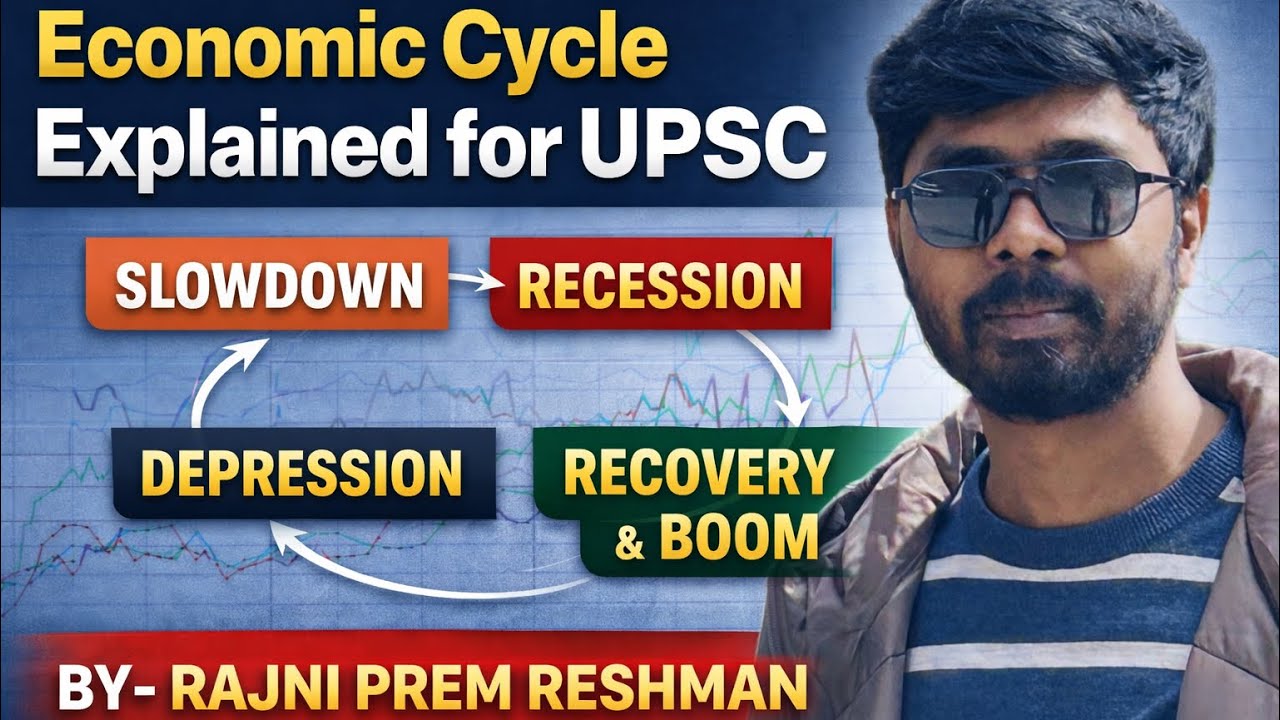
By- RAJNI PREM RESHMAN
Повторяем попытку...

Доступные форматы для скачивания:
Скачать видео
-
Информация по загрузке:





![[LIVE] Bez litości. Jan Piński, Tomasz Szwejgiert i Tomasz Wiejski na żywo](https://imager.clipsaver.ru/UxbyXMYMR6w/max.jpg)