Physics Summary, part 2 of 3.
Автор: Tom Hendricks
Загружено: 2026-01-08
Просмотров: 43
Описание:
SOME SPECIFICS.
Photons are eternal and outside of time and distance.
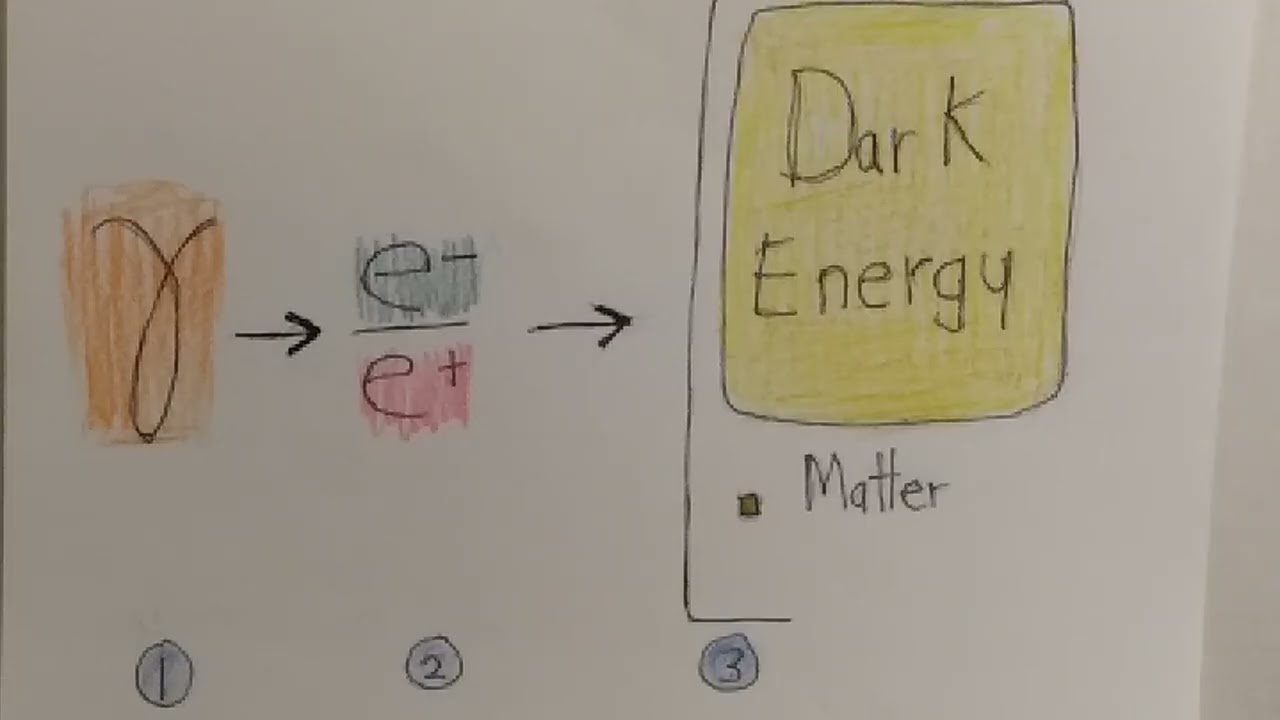
The singularity of energy that began the universe was a singularity of photons.
That singularity of photons created the Big Bang.
That singularity created space time.
Photons created mass through pair conversion of electron positron pairs in the Big Bang.
These electrons and positrons made the elementary particles which in turn made the atoms.
Protons are made of two positrons and one electron.
Neutrons are made of one proton and one electron or two positrons and two electrons.
Most protons were created in the immediate era after the Big Bang when positrons were plentiful.
Neutrons are unstable protons and decay in 10 minutes.
The proton neutron bond in the atom nucleus, kept neutrons from decay and was key to building all elements.
Neutrons and hydrogen atoms may have the same makeup, but with different electron placements.
The key to atoms stability may be the deuterium nucleus or deuteron that helps bind one proton to one neutron.
The missing anti matter is in protons and neutrons.
Photons, electrons, and positrons, seem to be different versions of the same thing. Photons can make an electron and positron pair in pair conversion. Then the electron and positron can annihilate back to photons.
Both electrons and positrons may move in a helix motion.
Charge may be opposite helix movements.
Neutrinos may be a form of photon lite.
The horizon problem may have a possible solution if the energy of the singularity pushes into the universe from all empty space, instead of a big bang starting point that pushes out in all directions.
Virtual particles may be a key part of quantum leaps.
Virtual particles may power beta plus decay.
Повторяем попытку...
Доступные форматы для скачивания:
Скачать видео
-
Информация по загрузке:



![Пожалуй, главное заблуждение об электричестве [Veritasium]](https://image.4k-video.ru/id-video/6Hv2GLtnf2c)