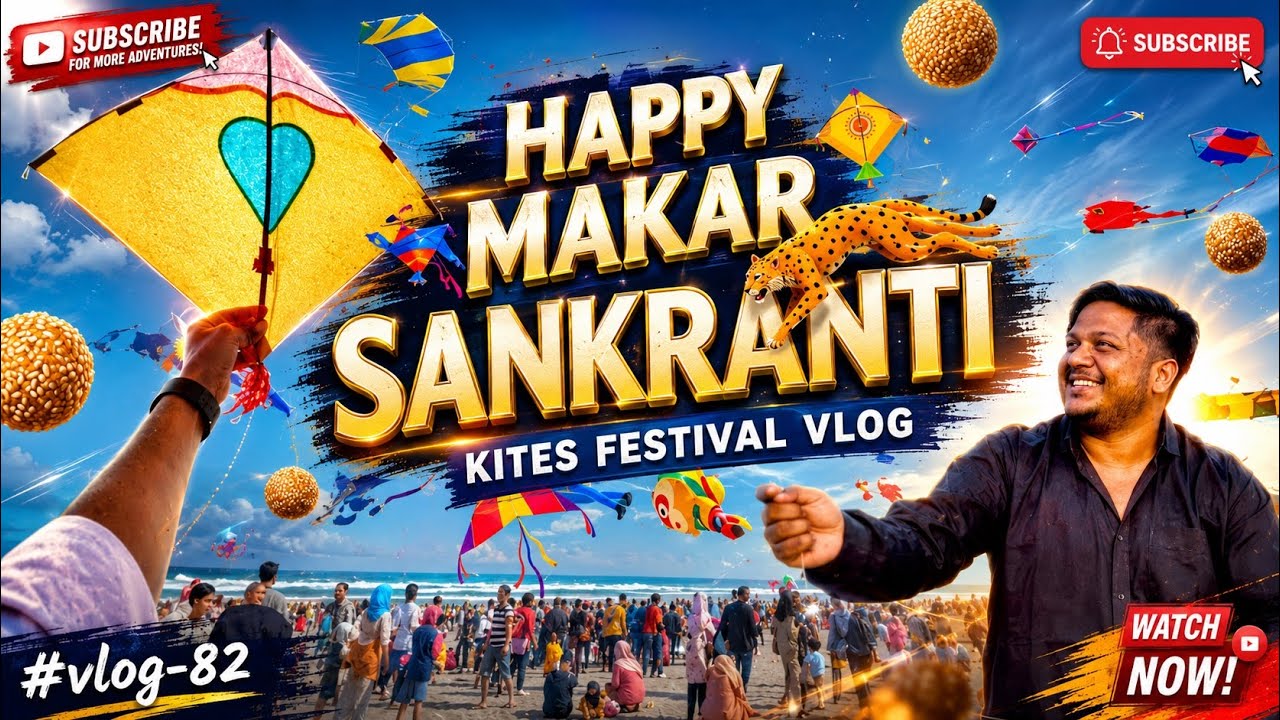
Makar Sankranti Celebration|| Jaipur Kites Festival || Patang ladana || Picnic Vlog With Family||
Автор: CHAUHAN MOTORS VLOGS
Загружено: 2026-01-17
Просмотров: 91
Описание:
Makar Sankranti Celebration|| Jaipur Kites Festival || Patang ladana || Picnic Vlog With Family||
MAKAR SANKRANTI VLOG:-
Makar Sankranti is one of the most significant festivals in India, marking the Sun's transition into the zodiac sign of Capricorn (Makara). It signals the end of the winter solstice and the beginning of Uttarayan, the six-month period of the Sun’s northward journey which brings longer, warmer days.
Makar Sankranti 2026: Key Dates & Times
In 2026, Makar Sankranti falls on Wednesday, January 14. While the festival is often a day-long celebration, there are specific "muhurats" (auspicious timings) for rituals:
Sankranti Moment: 3:13 PM IST (When the Sun enters Capricorn)
Punya Kaal (Auspicious Period): 3:13 PM to 5:45 PM
Maha Punya Kaal (Most Auspicious): 3:13 PM to 4:58 PM
Regional Celebrations & Names
Makar Sankranti is a pan-Indian harvest festival celebrated with unique local customs and names:
Name Region Key Tradition
Uttarayan Gujarat & Rajastha:-
Massive kite-flying festivals that fill the sky with color.
Pongal Tamil Nadu:-
A four-day harvest festival featuring the cooking of "Pongal" rice.
Lohri Punjab Celebrated on the eve (Jan 13) with bonfires, dancing, and sweets.
Traditions and Rituals
Holy Bath (Snan): Devotees take ritual baths in sacred rivers like the Ganga, Yamuna, or Godavari. This is believed to purify the soul and wash away past sins.
Charity (Daan): Giving to the needy is a core part of the festival. Common donations include blankets, clothes, food grains, and sesame seeds.
Worshipping the Sun: As a solar festival, people offer Arghya (water) to the Sun God (Surya) and chant mantras to pray for health and prosperity.
Special Foods:
Til-Gul (Sesame & Jaggery): Ladoo or chikki made from sesame and jaggery are exchanged with the phrase: "Til-gul ghya, goad goad bola" (Eat this sweet and speak sweetly).
Khichdi: A comforting one-pot meal made with rice, lentils, and seasonal winter vegetables.
Undhiyu: A slow-cooked vegetable delicacy popular in Gujarat.
Why 2026 is Special
This year is considered particularly auspicious because Shattila Ekadashi (a day dedicated to Lord Vishnu) falls on the same day as Makar Sankranti. This rare alignment encourages devotees to observe fasts and perform extra spiritual practices for merit and liberation.
While Makar Sankranti is celebrated in many ways, the Kite Festival (especially in Gujarat and Rajasthan) is its most iconic and high-energy tradition. In 2026, the festivities reach a peak as people across the country take to their rooftops to "battle" in the skies.
The 2026 International Kite Festival (Gujarat)
The official government-sponsored festival is a world-renowned event held primarily in Ahmedabad at the Sabarmati Riverfront.
Dates: January 10 – 17, 2026 (The main celebration is on Jan 14).
Special Guests: The 2026 festival was inaugurated by PM Narendra Modi and German Chancellor Friedrich Merz.
Highlights: * Global Participation: Master kite flyers from over 40 countries (like Japan, Brazil, and France) bring giant, uniquely shaped kites (dragons, birds, and even futuristic designs).
Night Flying: After sunset, illuminated kites called Tukals (box kites with lanterns) are launched, turning the sky into a glowing starscape.
The Vibe: The streets come alive with music, Garba dances, and food stalls serving seasonal favorites like Undhiyu and Jalebi.
Why Do We Fly Kites?
The tradition is a beautiful blend of myth, science, and community:
Spiritual Ascent: Kites represent the human soul soaring toward the divine. In folklore, it’s said that Lord Rama flew a kite on this day that reached the heavens (Indralok).
Health (The "Sun Bath"): Historically, winter was a time of illness. Spending hours on the terrace in the sun helps the body absorb Vitamin D and ward off skin infections and winter blues.
The "Kite Battle" Culture
If you are on a rooftop in India during Makar Sankranti, it’s not just about flying; it's about competition.
The Manjha: Strings are coated with a mixture of glue and powdered glass (manjha) to make them sharp enough to cut the strings of rival kites.
The Victory Cry: When a rival's kite is cut, the flyer and their family scream "Kai Po Che!" (in Gujarat) or "Woh Kaata!" (in North India) to celebrate the win.
The Community: Rooftops become massive social hubs with loudspeakers playing music, families sharing snacks, and neighbors teasing each other across the terrace walls.
Safety Note
While the festival is joyous, the glass-coated strings can be dangerous. It is highly recommended to:
Use Cotton Manjha (Sada Dora) to avoid injuring birds and people.
Keep an eye on children near rooftop edges.
#makarsankranti
#kites
#patang
#kitesfestival
#jaipur
#gujrat
#makarsankrantivlog
#viralvlogs
#sweets
#picnic
#picnicspot
#raipur
#bhilai
#chattisgarh
Повторяем попытку...
Доступные форматы для скачивания:
Скачать видео
-
Информация по загрузке: