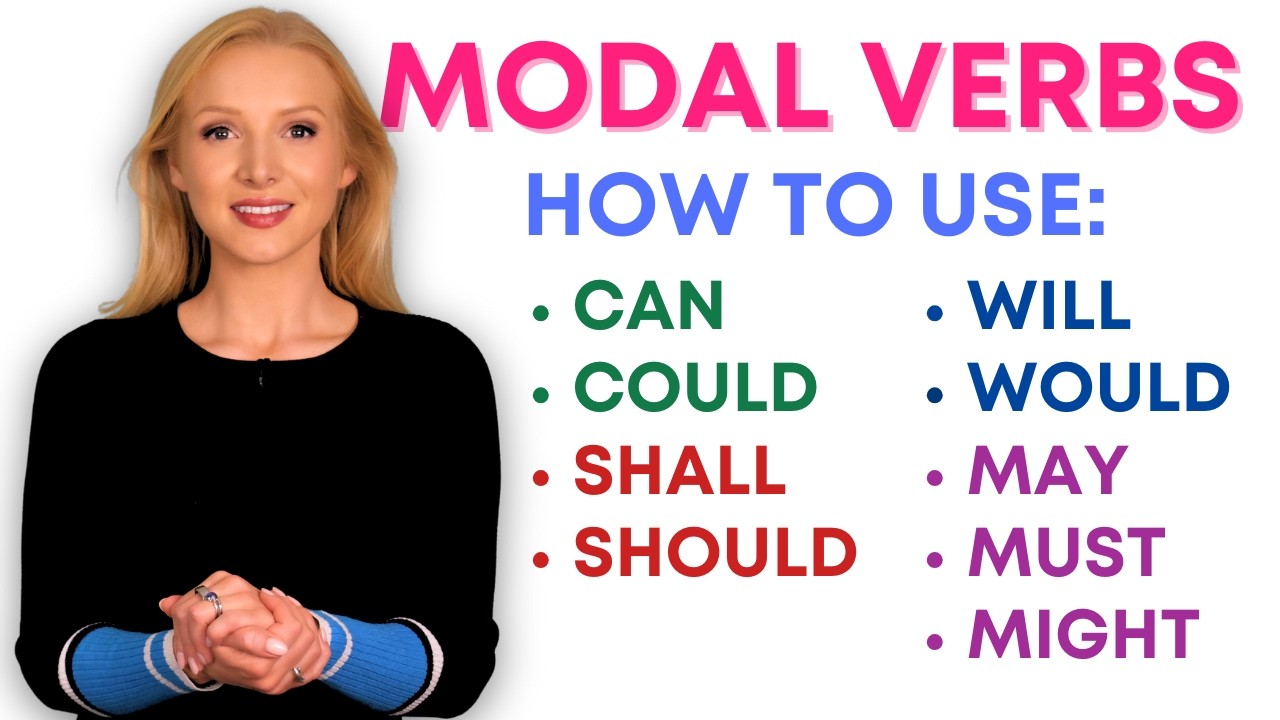
CAN AND COULD | Correct Use of CAN and COULD | What's the Difference? | Modals in English Grammar |
Автор: Fazal Rabi
Загружено: 2021-10-20
Просмотров: 1260
Описание:
can and could
modals can and could
can of could differences and examples
First, I will start from comparing and differentiating CAN and COUKD.
the main use of CAN is for the ability. It will show the ability of person to do a thing
Here are some examples:
1) I can swim across the river.
2) He can win the match
3) She can buy a luxury car.
So all of these express Ability.
What about COULD?
Well COLD as I mentioned in my previous video lecture that it is the past tense of verb CAN.
I can say,
1) I could swim across the river when I was young.
That means I had the ability in the past but now I can’t swim because it’s been a long time and am too old now.
Here a couple more examples:
2) He could win the match until he had a good practice.
3) She could buy a luxury car when she was wealthy.
So, in these sentences, CAN shows the present ability, and COULD shows the past ability,
The second difference is when we want to talk about the possibility,
To talk about what is possible, we normally use COULD and not CAN.
Now imagine, you and me, we are both waiting for a bus at bus station. It’s time for bus to arrive, but we don’t see it. So I might say,
1) The bus could be late. (present)
So I am making the guess about the current situation, saying what is possible.
Here is another example,
2) If you don’t hurry, you could be late. (future)
Are you sure to be getting late? No, you could reach in time, but, I am saying that it is possible that if you don’t hurry, you will be late.
Notice that this sentence talks about future possibility.
Here the question arises that we just talked about the present and future possibility. Can we talk about past possibility?
Yes, we can.
Here Is an example:
3) She could have passed the test if she had taken the classes. (past)
So what do we understand from that?
Well, there was a test it was possible for her go for the test and pass it but she didn’t take the classes. So she failed the test.
1) You can catch a cold if you go out in the rain.
2) Travelling across Australia can be quite expensive.
You can see that these are just general statements about what is possible in the world.
In this case it is okay to use CAN, but this use is less common. Normally, when we talk about possibility in our lives we use COULD.
Let’s now move to the final use of CAN and COULD, and this is in polite expressions when we talk to people. There are four situations you need to know about.
The first is making suggestions. For this purpose, we use could. Here are some examples.
1) We could go to the movies if you like.
2) You could ask the teacher if you have any problem.
In the first sentence, I am making the suggestion about watching the movie. In second, I am suggesting that, if you had problem why don’t you consult the teacher.
Using could just makes it very polite.
The second situation is making requests.
Here, both ‘can’ and ‘could’ are possible:
1) Can you pass me the pen?
Could you pass me the salt, please?
Or on the phone:
2) Can I speak to David?
Could I speak to David, please?
Did you notice that I said ‘please’ at the end of the sentences with ‘could’? That’s because ‘could’ is more polite than ‘can’.
So if you are in a formal situation, like if you’re talking to your boss or other superior and you want to be very polite, use ‘could’. If you’re with friends or family, then ‘can’ is fine.
Our next function is making offers:
1) Can I get you something to eat?
2) Could I get you something to eat, sir?
3) Can I help you with that?
4) Could I help you with that, madam?
Again, notice the extra politeness with ‘could’.
Finally, the last conversational situation is when we want to ask for permission. Here are some sentences:
1) Can I borrow your car?
2) Could I borrow your car, please?
3) Can I take the day off tomorrow?
4) Could I take the day off tomorrow?
If you’re very friendly with your boss at work, you would use ‘can’, but if your boss is very strict, then you would use ‘could’.
Now I will compare CAN and COULD in one chart with best examples, to make it easy to understand.
CAN COULD
For
general ability: I can speak 4 languages (present) I could play a guitar when I was a child. (past)
Here, CAN shows the general ability of speaking 4 languages of a person remember it is in present form. While on the other side COULD also shows the ability of person who was able to play guitar but is no longer capable of, so becomes the past ability.
for
Permission: can I use your book please. (polite)
It is purely a permission in a bit less polite and less formal way.
Could I use your bathroom please? (more polite)
It is more polite and formal.
for
Request for something: can you help me please. (informal) here, someone is requested to help in informal way.
Could you lend me this book? (more polite)
This request or permission has been done in more polite way.
for
Possibility: smoking can cause cancer. (present)
Thank you so much.
#canandcould
#modalscanandcould
#couldorcan
Повторяем попытку...

Доступные форматы для скачивания:
Скачать видео
-
Информация по загрузке: