Artemis II Left Earth During Conditions Space Weather Forecasters Had Already Warned About
Автор: The Science Studio
Загружено: 2026-04-03
Просмотров: 3665
Описание:
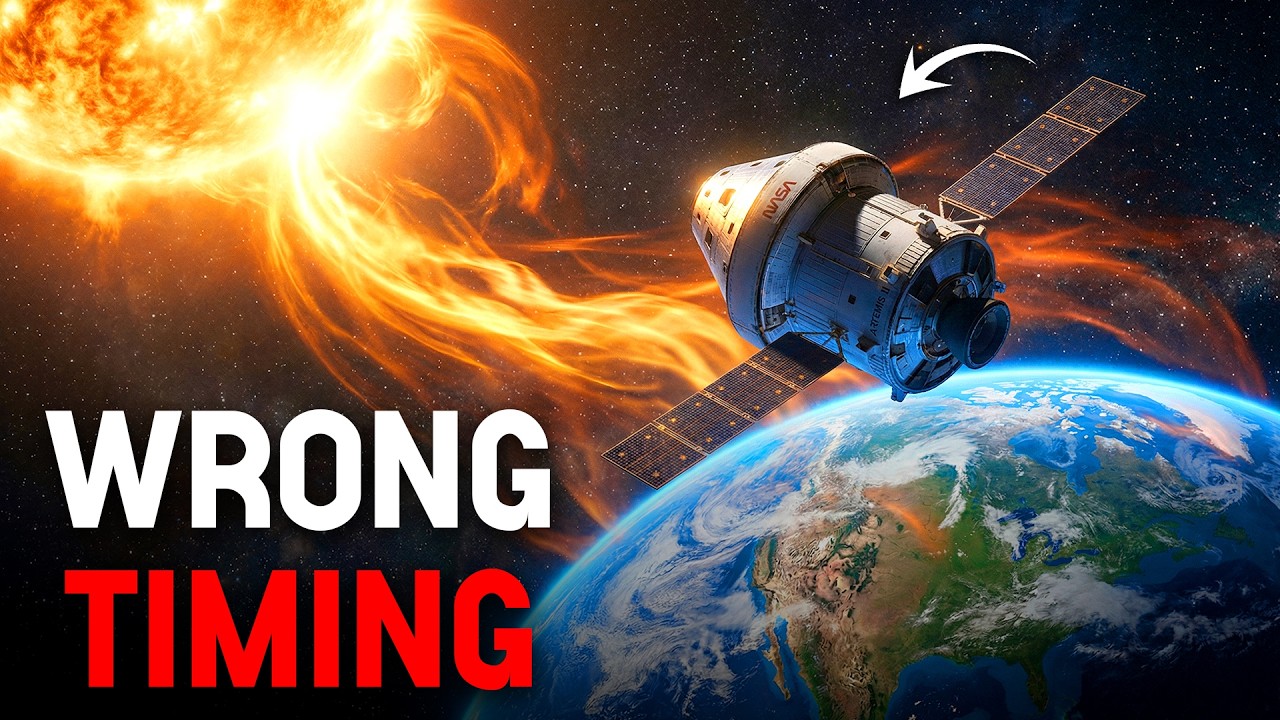
This video examines whether NASA made a calculated or reckless decision by launching four astronauts into deep space during a period of active solar conditions that forecasters were already monitoring closely.
NOAA's Space Weather Prediction Center issued a G2 geomagnetic storm watch on April 2, 2026, the same day the Artemis II crew completed their burn out of Earth orbit and headed toward the Moon.
The four astronauts are traveling beyond Earth's protective magnetic field for the first time since Apollo 17 in December 1972, relying on a spacecraft whose radiation shielding was mapped in detail during the uncrewed Artemis I mission in 2022.
After watching, you will be able to explain why a geomagnetic storm watch at Earth does not automatically mean danger for a crew in deep space, and what Orion carries that Apollo never had.
Shawn Dahl of NOAA's Space Weather Prediction Center and Patricia Reiff of Rice University are among the experts whose findings anchor this investigation.
Did you watch the Artemis II launch, and how did you feel knowing the crew was heading into active solar conditions? Share where you watched from and what went through your mind.
👍 This kind of in-depth coverage takes time to put together. A like and a subscribe helps this channel keep going. Thank you.
📚 SOURCES:
Shawn Dahl — NOAA Space Weather Prediction Center, forecaster
Lori Glaze — NASA, acting associate administrator for exploration systems development
Patricia Reiff — Rice University, space physicist
Ricky Egeland — NASA Johnson Space Center, solar physicist
Shaowen Hu — NASA-affiliated researcher, biological radiation exposure modeling
Janet Barzilla — NASA, bioengineer, Artemis I radiation analysis
Rob Chambers — Lockheed Martin, Orion spacecraft engineer
Azita Valinia — NASA Engineering and Safety Center, former chief scientist
Stuart George — NASA, radiation analysis
NOAA Space Weather Prediction Center — G2 geomagnetic storm watch, April 2026
NASA — Artemis II mission documentation and launch data
NASA — Artemis I MARE radiation experiment results
ESA, German Aerospace Center, Israeli Space Agency — MARE experiment partners
NASA Perseverance rover — Mastcam-Z solar observation data
BioSentinel CubeSat — NASA deep space radiation monitoring mission
SOLAR-1 — NOAA solar wind observatory at L1
⚠️ Disclaimer: The information included in this video originates from multiple publicly available sources and has been compiled for educational and informational use. While accuracy and relevance have been prioritized, certain interpretations or analyses may differ as new data becomes available. The imagery and visuals displayed throughout this video have been created using artificial intelligence for representation purposes only.
#ArtemisII #SpaceWeather #SolarStorm #NASAMoon
Повторяем попытку...
Доступные форматы для скачивания:
Скачать видео
-
Информация по загрузке: