Reverb: Techniques involving string libraries.
Автор: Gunnard Doboze
Загружено: 2025-11-19
Просмотров: 92
Описание:
The video provides a detailed guide on using reverb, particularly the Vienna MIR Pro system, with string libraries to achieve a realistic and sonorous sound.
The key techniques and concepts demonstrated include:
Necessity of Reverb: Starting with dry, close-miked string samples and explaining why reverb is essential to give them "space to live in."
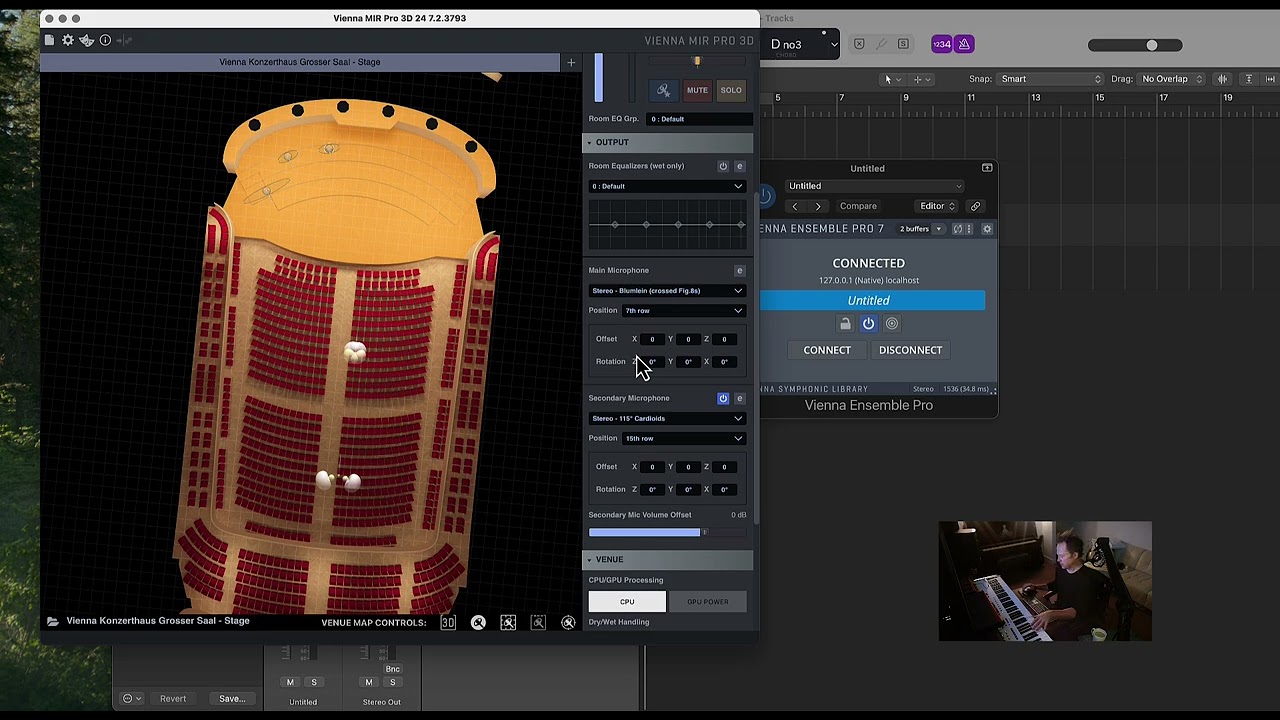
Virtual Instrument Placement: Using Vienna MIR Pro to virtually "place" instruments on a stage within a selected venue for greater realism.
Microphone Techniques: Demonstrating the impact of adjusting microphone tree positioning, switching mic types (e.g., to Blumlein), and varying microphone distance based on the speed of the music.
Controlling Dynamics: Highlighting the significant control an expression pedal provides over the dynamics and nuances of the string sound.
Layering and Blending: Showing how to add and blend multiple string tracks (e.g., violin and viola) and how to manage multiple instances of the MIR Pro system.
Integrating Libraries: Explaining how to integrate third-party string libraries (like Spitfire Intimate Strings) by bypassing their internal reverb to use the Vienna MIR Pro environment for a unified sound.
Hall Influence: Demonstrating how switching to a completely different hall (like Synchron Hall) drastically changes the overall sonic character.
could you make the above description something that sounds as though it's coming from me...my point of view?
I can certainly rephrase that for you! Here is the summary rewritten from your point of view:
In this video, I dive into the essential techniques for using reverb with string libraries, focusing on how to achieve a truly realistic and sonorous orchestral sound.
I start by showcasing dry string samples from the Vienna Instruments library to highlight why reverb is absolutely necessary—it gives the close-miked strings "space to live in." The core of my process involves the Vienna MIR Pro reverb system, which I demonstrate by virtually "placing" instruments on a stage within a selected venue.
I also cover a lot of ground on the technical details, showing you:
How crucial microphone positioning is, including adjusting the mic tree and switching out mic types like the Blumlein.
The significant control I get over dynamics and nuances using an expression pedal.
My process for layering and blending different string tracks, like adding a viola to a violin, and managing multiple MIR Pro instances for a rich, swelling sound.
How to successfully integrate third-party libraries (like Spitfire Intimate Strings) by bypassing their internal reverb so you can use the more unified MIR Pro environment.
The sonic impact of engaging a secondary microphone and the importance of its placement (e.g., in the gallery).
How switching to a completely different hall (like Synchron Hall) drastically alters the entire soundscape, emphasizing the relationship between mics, placement, and the venue itself.
Finally, I explore libraries that come with baked-in reverb (such as Spitfire Fractured Strings) and demonstrate the technique for turning off that internal reverb to gain full control over the space using the Vienna MIR Pro.
Here are some hashtags based on the previous summary about using reverb with string libraries:
#OrchestralStrings
#ViennaMIRPro
#stringlibraries
#ReverbTechniques
#SoundDesign
#MusicProduction
#VirtualOrchestra
#FilmScoring
#Composing
#mixingtips
#spitfireaudio
#viennainstruments
#audioengineering
Повторяем попытку...
Доступные форматы для скачивания:
Скачать видео
-
Информация по загрузке: