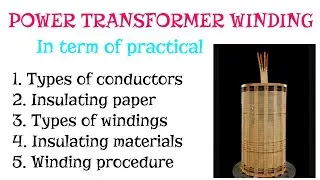
Types of Transformer Winding || Halfboil Engineers ||
Автор: HalfBoil Engineers
Загружено: 2022-06-29
Просмотров: 958
Описание:
#transformer #electrical #electricalengineering
Our team "Halfboil Engineers" motivate all the students. Daily learn sometimes about Electrical Engineering. We try our best solution through this halfboil engineers channel.We will believe all the students are prepare the Basics of Electrical engineering, and major part of the electrical engineering through this channel.
E-mail 📧: ID:[email protected]
Types of transformer winding Link : https://www.elprocus.com/transformer-...
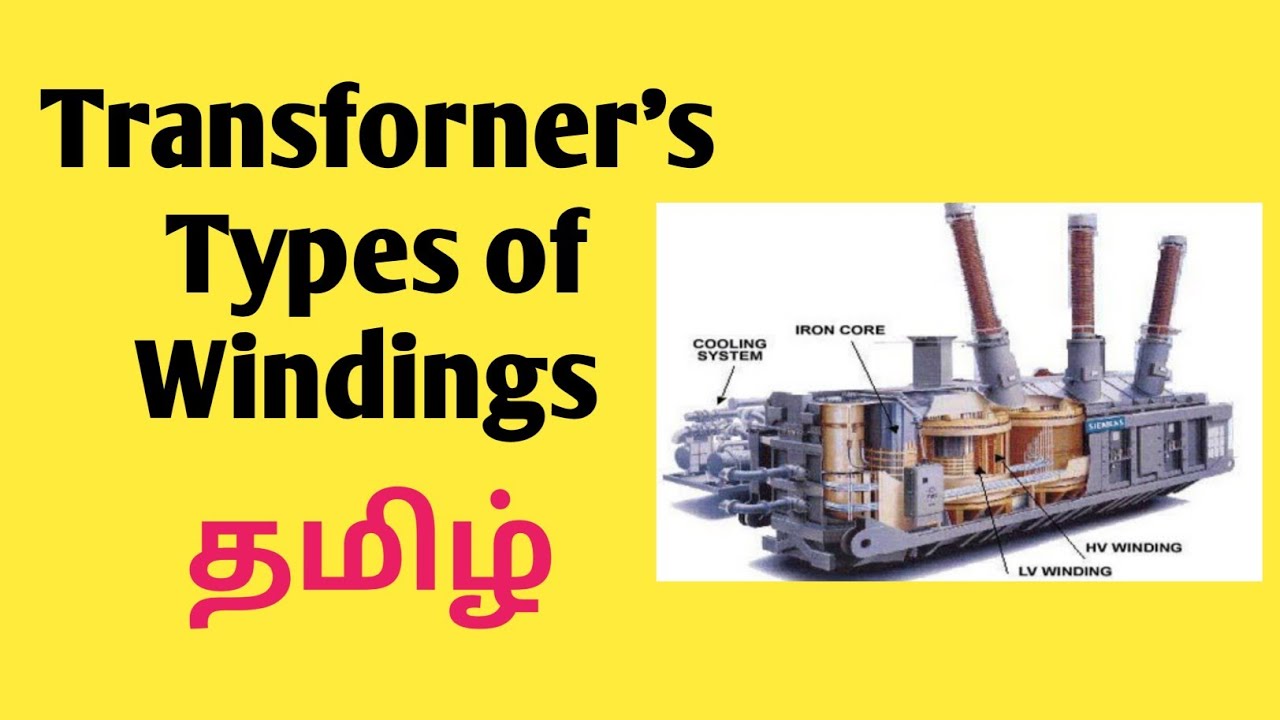
Transformer windings constitute the electrical circuit of a transformer. They are made up of current-carrying conductors wound around the core. The primary windings form the input to the transformer and the secondary windings form the output. The construction of the transformer windings should be stable enough to ensure safe operation. It should also be mechanically strong to withstand the faults. A suitable type of transformer windings is selected depending on the VA rating of the transformers.
Types of transformer windings
Some commonly used types of transformer windings are:
Layer windings
Helical windings or spiral winding
Disc windings
Foil windings
Layer windings
Layer winding is done by axially arranging turns of insulated conductor along the windings. Turns are wound next to each other without any space in between them. Layered windings can be single or multilayered. The single-layered winding has only one turn of winding around the core limb
In multilayered windings, several layers of insulated conductors are wound on above the other. These layer are separated by solid insulation, oil ducts or the combination of both. Multilayered windings are chiefly used for small and medium size transformers.
Helical winding or spiral winding
Helical winding is otherwise known as spiral winding. It is a variant of multilayer winding and consists of several conductors in parallel to form a single turn. The parallel conductors are wound along the axial direction with spacers inserted between the adjacent turns. This type of construction resembles a corkscrew. Helical windings are used in low voltage and high currents where current flow in several parallel conductors. The voltage induced in each turn of each strand remains the same.
Disc winding
Disc windings are constructed by connecting several discs of conductors in series. At first, a disc is made by winding multiple turns of insulated conductors one over the other and then several such discs are connected in series to form disc winding. Each disc is seperated from the adjacent disc using spacers. The disc can be formed by winding a single conductor or several conductors in parallel.
The major difference between a disc winding and helical winding is that the helical winding consists of only one turn of parallel conductor per disc while the disc winding consists of several turns per disc. In most core type transformers rated above 25kV, disc type windings are preferred. Like helical windings, disc windings are also mechanically robust.
Foil Windings
Foil windings are made by using thin sheets of copper or aluminium. A thin sheet of insulated sheet is wound multiple times to form a multilayer spiral windings. The winding can be formed either using a single sheet or multiple sheets in parallel wound on the flat side. They are used in high capacity transformers with current ranging from 12 to 600 A.
Transformer winding conductors
Conductor materials
The primary material used for transformer windings is aluminium and copper. Copper has higher conductivity and mechanical strength whereas aluminium is lighter and cheaper than copper. For large transformers, copper windings are normally (to make the size of transformer smaller) used whereas, in small and medium-sized transformers, aluminium conductors are commonly used.
Повторяем попытку...
Доступные форматы для скачивания:
Скачать видео
-
Информация по загрузке: