Study Guide: Drone Warfare and African Security Architectures (2024–2026)
Автор: Dr Reiad Rajack
Загружено: 2026-02-17
Просмотров: 3
Описание:
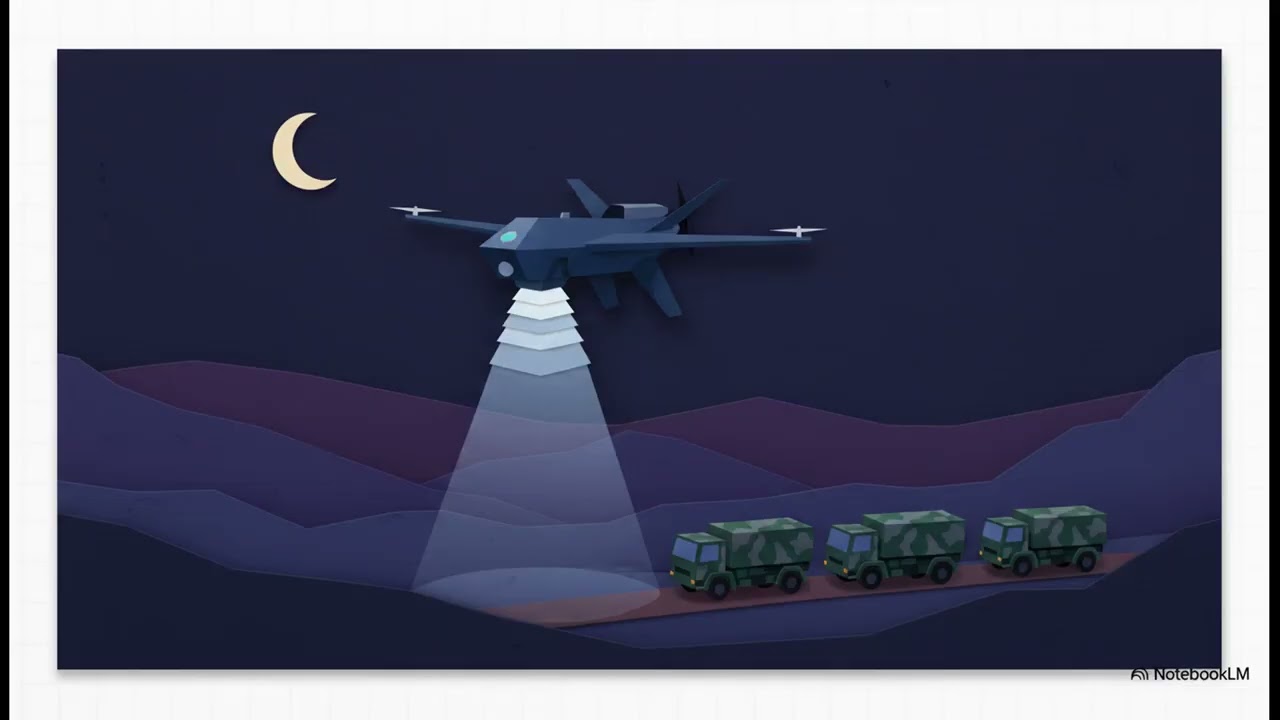
1. The "dual proliferation" dynamic consists of two tiers: state actors acquiring Medium-Altitude Long-Endurance (MALE) systems from global suppliers like Turkey and China, and non-state actors weaponizing commercial-off-the-shelf (COTS) technology. This shift effectively contests the state's traditional monopoly on air power.
2. The collapse of the Western monopoly has decoupled air power from Western political alignment, allowing African states to bypass human rights conditionality and end-use monitoring. States now find willing partners in "middle powers" like Turkey and Iran, who provide advanced precision strike capabilities without the same political restrictions.
3. The Al-Khadim airbase serves as a pivotal logistics node for Russia, facilitating an air bridge between Syria and the African continent. It is used to move drone components and air defense systems from Tartus to destinations in Mali, Burkina Faso, and Sudan.
4. Turkey's drone diplomacy was evidenced by providing drones to Ethiopia during the Tigray war, which was instrumental in preventing the fall of Addis Ababa. This provision earned Ankara significant political capital and secured its economic interests in the region.
5. China's non-interference model involves packaging drone sales with broader economic deals such as infrastructure loans, mining concessions, and telecommunications projects. This approach prioritizes protecting Chinese investments and allows for security assistance without interfering in the domestic politics of the recipient nation.
6. RSF swarming tactics involve using large numbers of FPV (First-Person View) drones and quadcopters modified to drop mortar shells. These low-cost "swarms" allow the RSF to overwhelm traditional state defenses and conduct precision strikes despite lacking a formal air force.
7. In the Great Lakes region, dense forests and mountainous terrain provide natural cover that hinders aerial surveillance. Additionally, frequent cloud cover and storms can ground optical sensors, while some rebels are believed to possess electronic warfare capabilities to disrupt drone command links.
8. Starlink terminals have served as a force multiplier for insurgents by providing high-bandwidth data links in remote areas. This allows non-state actors to operate commercial drones with greater range and reliability, even in isolated desert environments.
9. The accountability gap refers to the lack of legal frameworks and investigative mechanisms to address civilian harm caused by drone strikes. Unlike Western programs that operate under specific (if flawed) laws, operations by groups like the Africa Corps or the RSF are characterized by total impunity and a lack of end-use monitoring by suppliers.
10. The security blocs in the Horn of Africa have bifurcated into two rival groups: a Qatar-Turkey-Somalia axis and a UAE-Ethiopia-Somaliland alignment. This shift was cemented by a 2026 defense agreement between Qatar and Somalia, which filled a vacuum left by the expulsion of UAE trainers.
1. The Democratization of Lethality: Analyze how the availability of commercial drone technology and loitering munitions has altered the balance of power between African states and non-state armed groups.
2. The Geopolitics of Proliferation: Compare and contrast the strategic motivations of Turkey, Russia, and China in their efforts to export drone technology to African nations.
3. Tactical Innovation vs. Strategic Success: Discuss the "Sahel Paradox," where state actors achieve tactical victories through drone strikes but fail to translate them into long-term territorial control or regional stability.
4. The Rise of the Indigenous Industry: Evaluate the efforts of South Africa, Egypt, and Nigeria to develop domestic drone production capabilities and the strategic importance of "sovereign" air power.
5. Humanitarian Consequences of Remote Warfare: Examine the psychological and physical impact of drone warfare on civilian populations in conflict zones like Sudan, Tigray, and the Sahel.
Africa Corps
The Russian Ministry of Defense-controlled successor to the Wagner Group, responsible for formalized military operations in Africa.
Akinci
A Turkish High-Altitude Long-Endurance (HALE) drone capable of carrying cruise missiles, acquired by Ethiopia and Libya.
Bayraktar TB2
A Turkish-made MALE drone often called the "Kalashnikov of the skies" due to its low cost and widespread use across Africa.
COTS
Commercial-Off-The-Shelf; refers to civilian drone technology (like DJI models) that is modified for military use by non-state actors.
Drone Diplomacy
A strategy, primarily used by Turkey, that integrates defense exports (UAS) with foreign policy objectives and security guarantees.
FPV Drone
First-Person View drone; highly maneuverable racing drones used by insurgents for "kamikaze" or precision-drop attacks.
HALE
High-Altitude Long-Endurance; drones capable of flying at very high altitudes for extended periods.
JNIM
A prominent jihad
Повторяем попытку...
Доступные форматы для скачивания:
Скачать видео
-
Информация по загрузке:







![KRYM PO 12 LATACH OKUPACJI PUTINA - SZPITALE WOJSKOWE ZAMIAST SANATORIÓW [BOJKE]](https://imager.clipsaver.ru/9wOp5s-3yRU/max.jpg)