Radial vs. Bias Ply Tractor Tires: Which Should You Choose?
Автор: Tractor Mike
Загружено: 2026-03-05
Просмотров: 2504
Описание:
Are your tractor tires showing their age? If you’re seeing sidewall cracking, dry rot, or significant tread wear, it’s time to talk about replacement. But before you head to the tire shop, you have a big decision to make: between radial and bias ply tractor tires: which should you choose?
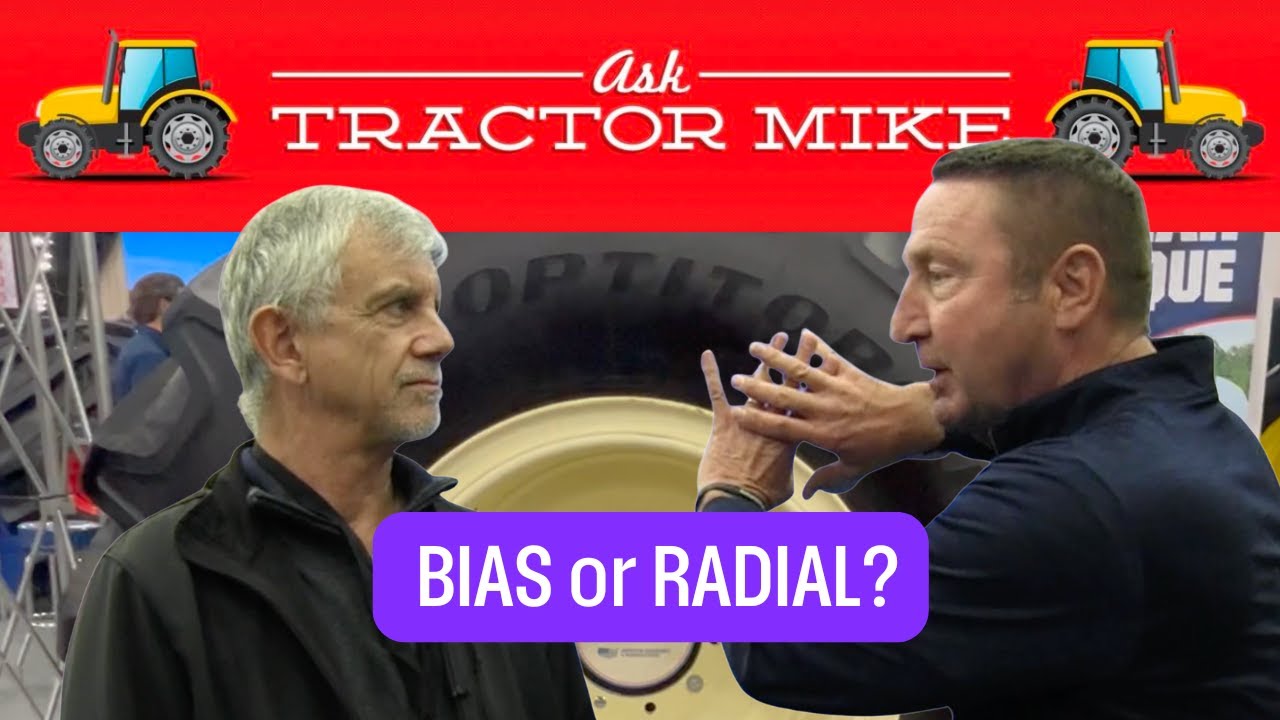
In this video, we dive deep into the pros and cons of both tire types to help you make the best investment for your machine. This topic was inspired by a question from Jason, a viewer with a Massey Ferguson 253 with 30 years old tires—a classic scenario many tractor owners face. To ensure we provide the most accurate advice, I took Jason’s question straight to a high-ranking engineer at Titan International during the National Farm Machinery Show, and his insights might surprise you.
What’s the Real Difference? The difference between these two isn't just the price tag; it's the internal architecture of the tire. Bias-Ply tires are built with multiple plies of rubber overlapping in a diagonal (bias) pattern from bead to bead. In a bias tire, the sidewall and the tread function as one single, stiff unit. In a radial tire, the cord plies run perpendicular to the direction of travel (90 degrees to the bead). This allows the sidewall and the tread to function independently, letting the tire "flex" more naturally.
While radials get a lot of hype in the high-horsepower farming world, bias-ply tires are often the "unsung heroes" for compact and utility tractors. Here is why: because the sidewall is integrated with the tread, it is incredibly stiff. This makes bias tires much more resistant to punctures from stumps, rocks, and debris. That same stiffness prevents the "swaying" feeling you might get with a flexible radial, providing a more stable platform when working on inclines.
Cost-Effectiveness is another consideration. Bias tires are significantly more affordable. For a tractor like the Massey 253, the cost of a full set of radials might not provide enough return on investment for the average homeowner or hobby farmer. As I discuss in the video, I always prepare for the worst. If you destroy a tire in rough ground, replacing a bias tire is much less painful on the wallet than replacing a high-end radial.
When should you go radial? There are specific scenarios where radials are the clear winner. If you spend a lot of time "roading" or driving your tractor on pavement, radials offer a much smoother ride and better heat dissipation. If you are doing serious row-crop farming, radials allow you to run lower air pressures. This creates a larger "footprint," which reduces soil compaction and increases traction. Finally, in high-hour, high-torque applications, the increased efficiency of a radial can eventually pay for the price difference in fuel savings.
So what's the verdict for small tractors? For compact and utility tractors (especially those with loaders like Jason's Massey 253), I lean toward bias tires. Unless you are sensitive to a rough ride or find radials at a very similar price point, the durability and cost-savings of bias-ply are hard to beat for utility work. If you're farming with the tractor, definitely opt for radials.
LINKS YOU NEED TO KNOW ABOUT...
Tractor Mike Website/Fun Store: https://asktractormike.com/products-f...
Support the Tractor Mike Channel: / tractormike
Amazon Affiliate Page: https://www.amazon.com/shop/tractormike
Contact us at: [email protected]
Copyright 2026 Tractor Mike LLC
Повторяем попытку...
Доступные форматы для скачивания:
Скачать видео
-
Информация по загрузке: