ycliper

Популярное

Музыка Кино и Анимация Автомобили Животные Спорт Путешествия Игры Юмор

Интересные видео

2025 Сериалы Трейлеры Новости Как сделать Видеоуроки Diy своими руками

Топ запросов

смотреть а4 schoolboy runaway турецкий сериал смотреть мультфильмы эдисон
Скачать

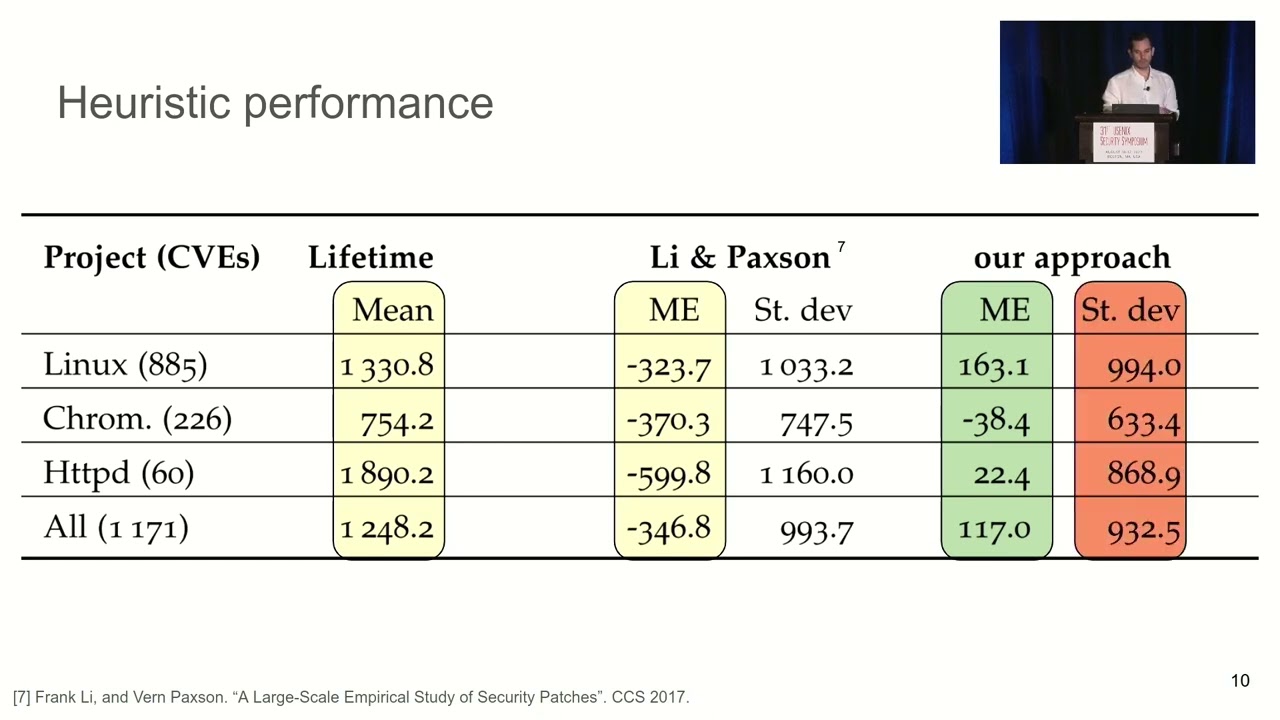
USENIX Security '22 - How Long Do Vulnerabilities Live in the Code? A Large-Scale Empirical...

Автор: USENIX

Загружено: 2022-10-25

Просмотров: 531

Описание: USENIX Security '22 - How Long Do Vulnerabilities Live in the Code? A Large-Scale Empirical Measurement Study on FOSS Vulnerability Lifetimes

Nikolaos Alexopoulos, Manuel Brack, Jan Philipp Wagner, Tim Grube, and Max Mühlhäuser, Technical University of Darmstadt

How long do vulnerabilities live in the repositories of large, evolving projects? Although the question has been identified as an interesting problem by the software community in online forums, it has not been investigated yet in adequate depth and scale, since the process of identifying the exact point in time when a vulnerability was introduced is particularly cumbersome. In this paper, we provide an automatic approach for accurately estimating how long vulnerabilities remain in the code (their lifetimes). Our method relies on the observation that while it is difficult to pinpoint the exact point of introduction for one vulnerability, it is possible to accurately estimate the average lifetime of a large enough sample of vulnerabilities, via a heuristic approach.

With our approach, we perform the first large-scale measurement of Free and Open Source Software vulnerability lifetimes, going beyond approaches estimating lower bounds prevalent in previous research. We find that the average lifetime of a vulnerability is around 4 years, varying significantly between projects (~2 years for Chromium, ~7 years for OpenSSL). The distribution of lifetimes can be approximately described by an exponential distribution. There are no statistically significant differences between the lifetimes of different vulnerability types when considering specific projects. Vulnerabilities are getting older, as the average lifetime of fixed vulnerabilities in a given year increases over time, influenced by the overall increase of code age. However, they live less than non-vulnerable code, with an increasing spread over time for some projects, suggesting a notion of maturity that can be considered an indicator of quality. While the introduction of fuzzers does not significantly reduce the lifetimes of memory-related vulnerabilities, further research is needed to better understand and quantify the impact of fuzzers and other tools on vulnerability lifetimes and on the security of codebases.

View the full USENIX Security '22 program at https://www.usenix.org/conference/use...

Не удается загрузить Youtube-плеер. Проверьте блокировку Youtube в вашей сети.
Повторяем попытку...
USENIX Security '22 - How Long Do Vulnerabilities Live in the Code? A Large-Scale Empirical...

Поделиться в:

Доступные форматы для скачивания:

Скачать видео

  • Информация по загрузке:

Скачать аудио

Похожие видео

USENIX Security '22 - Expected Exploitability: Predicting the Development of Functional...

USENIX Security '22 - Expected Exploitability: Predicting the Development of Functional...

Day 6: Data Structures - Introduction to Scientific Software Programming in C and C++

Day 6: Data Structures - Introduction to Scientific Software Programming in C and C++

10 SEKUND vs 1 GODZINA w ZBUDUJ ROLLERCOASTER w Minecraft!

10 SEKUND vs 1 GODZINA w ZBUDUJ ROLLERCOASTER w Minecraft!

SREcon25 Европа/Ближний Восток/Африка — Компьютер хочет потерять ваши данные

SREcon25 Европа/Ближний Восток/Африка — Компьютер хочет потерять ваши данные

USENIX Security '22 - Are Your Sensitive Attributes Private? Novel Model Inversion Attribute

USENIX Security '22 - Are Your Sensitive Attributes Private? Novel Model Inversion Attribute

Мир AI-агентов уже наступил. Что меняется прямо сейчас

Мир AI-агентов уже наступил. Что меняется прямо сейчас

Aki Nishimura|Hamiltonian counterparts to piecewise deterministic Markov processes

Aki Nishimura|Hamiltonian counterparts to piecewise deterministic Markov processes

Donut Solid-State Battery: Fast Charge Test | I Donut Believe (Pt.1)

Donut Solid-State Battery: Fast Charge Test | I Donut Believe (Pt.1)

The Internet, Reinvented.

The Internet, Reinvented.

Joe Dassin - Best of

Joe Dassin - Best of

ВСЕ ЧТО НУЖНО ЗНАТЬ ПРО DEVOPS

ВСЕ ЧТО НУЖНО ЗНАТЬ ПРО DEVOPS

SREcon25 Европа/Ближний Восток/Африка — ACK в будущее: TCP в 2025 году

SREcon25 Европа/Ближний Восток/Африка — ACK в будущее: TCP в 2025 году

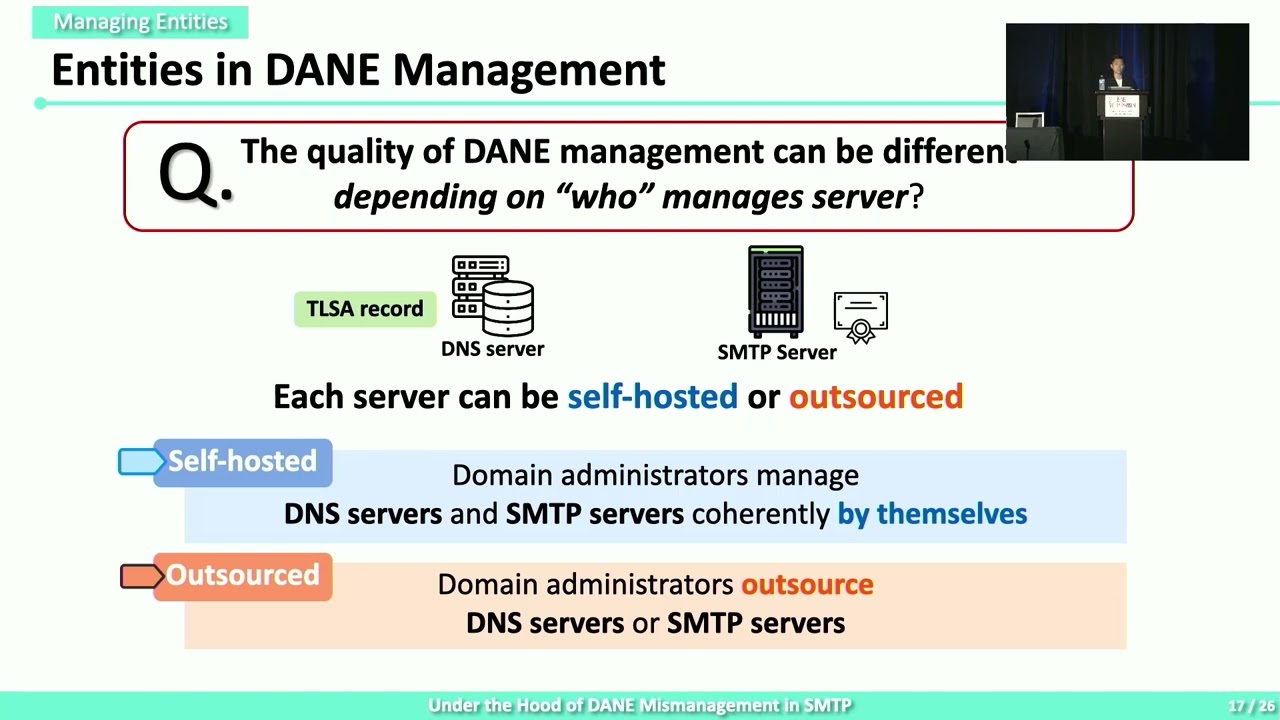
USENIX Security '22 - Under the Hood of DANE Mismanagement in SMTP

USENIX Security '22 - Under the Hood of DANE Mismanagement in SMTP

CSCI 3151 - M34 -  Vanishing/exploding gradients & remedies

CSCI 3151 - M34 - Vanishing/exploding gradients & remedies

Największe tajemnice wszechświata - Dr Tomasz Miller, didaskalia#177

Największe tajemnice wszechświata - Dr Tomasz Miller, didaskalia#177

Трампу запретили тарифы / Возврат доллара на Мосбиржу / Трансфер из OpenClaw в OpenAI

Трампу запретили тарифы / Возврат доллара на Мосбиржу / Трансфер из OpenClaw в OpenAI

SREcon25 Европа/Ближний Восток/Африка — HyperRouter: уроки, извлеченные из создания L4-загрузочно...

SREcon25 Европа/Ближний Восток/Африка — HyperRouter: уроки, извлеченные из создания L4-загрузочно...

SREcon25 Европа/Ближний Восток/Африка — от 4 часов до 8 минут с агентами ИИ, которые преобразуют ...

SREcon25 Европа/Ближний Восток/Африка — от 4 часов до 8 минут с агентами ИИ, которые преобразуют ...

Claude Code Is Not a Coding Tool. It's a Business Asset

Claude Code Is Not a Coding Tool. It's a Business Asset

ChatGPT now recommends Malware?

ChatGPT now recommends Malware?

© 2025 ycliper. Все права защищены.


  • Контакты
  • О нас
  • Политика конфиденциальности


Контакты для правообладателей: [email protected]