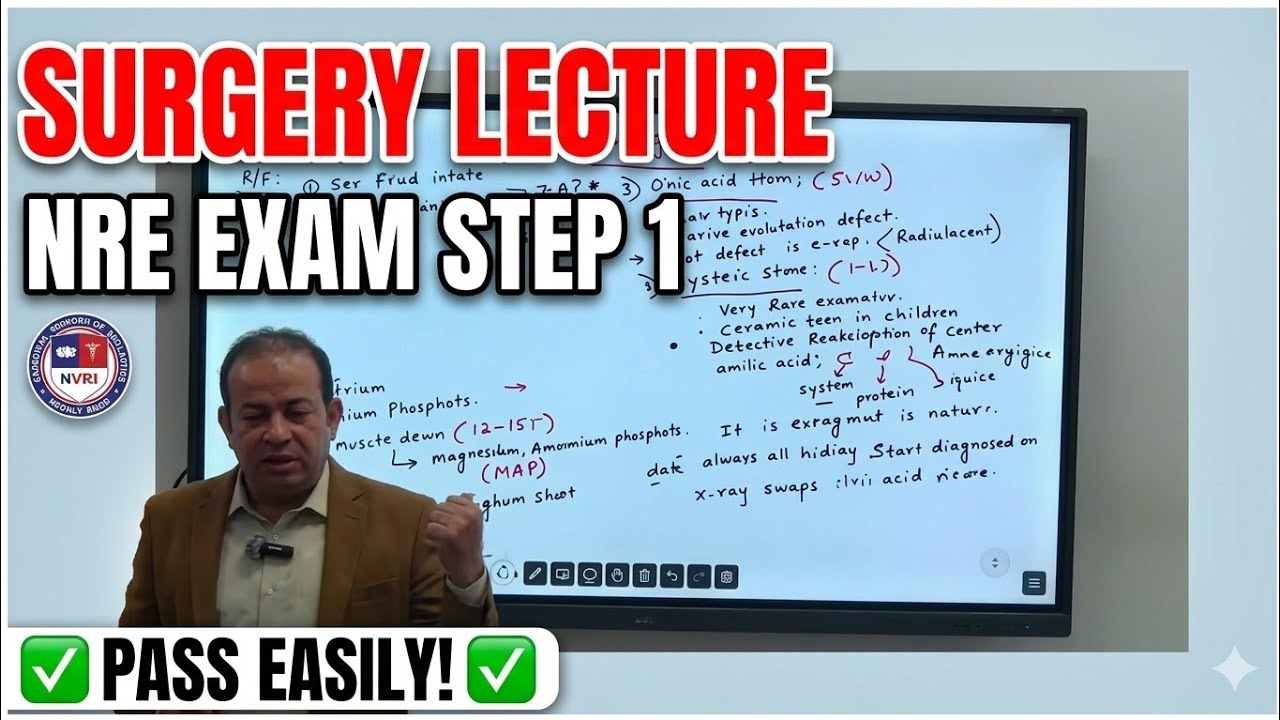
Surgery Lecture 10 for NRE Step 1 || NRE Exam || PMC Pakistan Medical Commission || Dr Sadiq Ali
Автор: Dr Khan
Загружено: 2026-06-19
Просмотров: 40
Описание:
The National Registration Examination (NRE) is a crucial licensing gateway for foreign medical graduates (FMGs) to practice independently. The exam typically consists of two primary stages: a Theory Component (Multiple Choice Questions) and a Clinical Skills Examination (CSE) (a practical, OSCE-style assessment).
Core Components & Surgery Preparation
Theory (Step 1): Focuses on basic and clinical sciences. In surgery, the curriculum emphasizes both general and systemic principles. You must be prepared to answer clinical, case-based questions rather than simple recall.
Surgery Syllabus Highlights:
General Surgery: Shock, hemorrhage, blood transfusion, wound healing, burns, anesthesia, basic surgical skills (anastomoses), and trauma management (TBI, torso/pelvic trauma).
Systemic Surgery: Management of specific systems including the breast, thyroid/parathyroid, gastrointestinal tract (stomach, duodenum, gallbladder, pancreas, intestine), vascular disorders, and pediatric surgery.
.
Clinical Skills (CSE): This is a performance-based assessment. You are evaluated on your ability to interpret clinical data, perform physical examinations, and manage patients safely. Practice is essential—use mock stations to build your confidence in procedural skills and patient communication.
How to Pass the NRE Exam
Clinical Reasoning Over Memorization: The NRE is designed to test your ability to apply knowledge. Stop trying to memorize textbooks from cover to cover; instead, focus on understanding "why" a particular diagnosis or treatment plan is chosen for a specific patient.
Use High-Yield Resources: Utilize targeted review books, video lectures, and online question banks that mirror the NRE/OSCE exam format. Focus on materials that provide detailed explanations for both correct and incorrect options.
Active Practice: Enroll in mock exams. Practicing under timed conditions improves your pacing and reduces exam-day anxiety. If possible, join a study group to debate complex cases and refine your clinical decision-making.
Clinical Rotations: If you have access to internships or clinical observerships, prioritize them. Real-world interaction with patients is the most effective way to prepare for the practical CSE component.
Strategic Revision: Consistent, spaced repetition is better than cramming. Dedicate time to review your weakest subjects repeatedly until they become strengths.
Studying Medicine Abroad
Studying medicine abroad offers a unique global perspective, exposing students to diverse healthcare systems, patient populations, and medical practices that differ from those in their home countries. Programs range from undergraduate MD/MBBS degrees to specialized postgraduate clinical rotations. Students often gain experience with international diagnostic protocols and healthcare technology, which can be a significant advantage in their future careers. However, it requires careful navigation of the licensing landscape, as graduates must ensure their degree is accredited by their home country’s medical council and prepare for mandatory licensing exams like the NRE to practice locally. Successful completion of such programs requires adaptability, strong cross-cultural communication skills, and the discipline to maintain the high academic standards necessary for both international graduation and national registration.
Are you currently preparing for a specific step of the NRE, or would you like more information on the eligibility criteria for your specific country?
Повторяем попытку...
Доступные форматы для скачивания:
Скачать видео
-
Информация по загрузке: