UKNOF52 - Volcanic Hazards and Subsea Cables: Lessons from the 2022 Eruption of Hunga Volcano
Автор: UKNOFconf
Загружено: 2023-10-02
Просмотров: 297
Описание:
Speakers: Isobel Yeo (National Oceanography Centre), Dr Michael Clare (National Oceanography Centre)
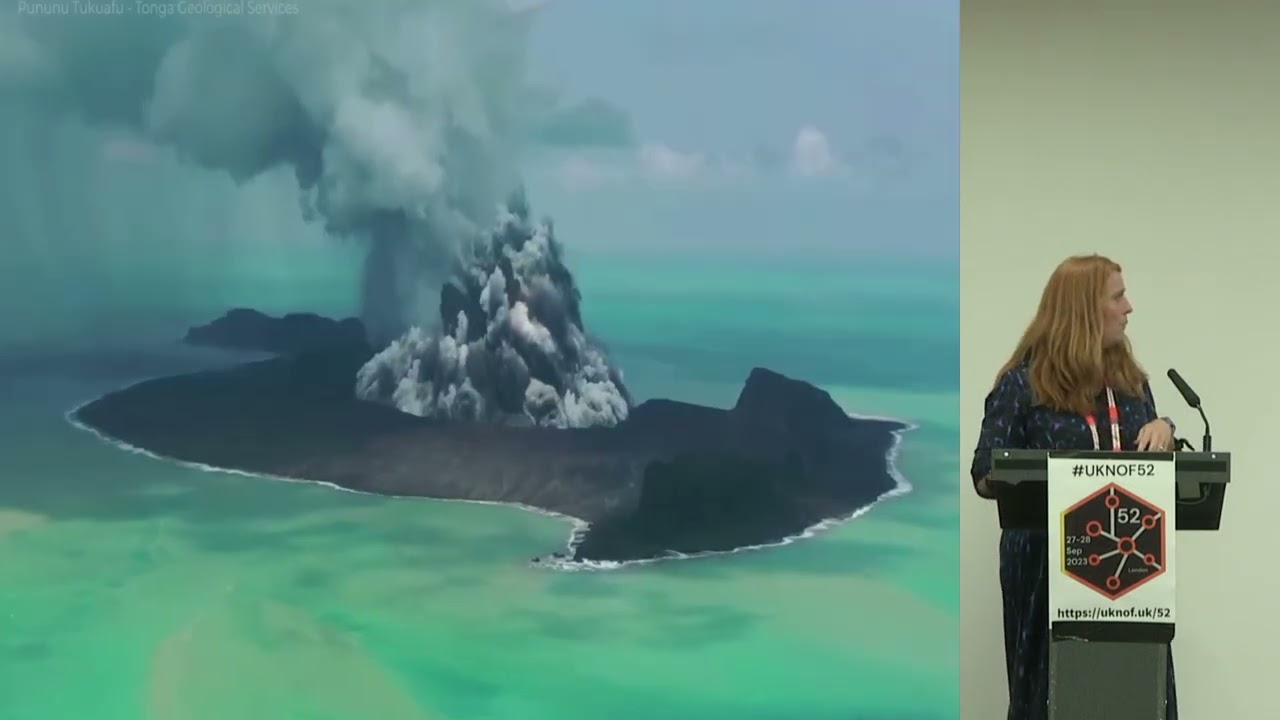
The January 2022 eruption of Hunga Volcano (also known as Hunga Tonga-Hunga Ha’apai), in The Kingdom of Tonga, was the most explosive volcanic event recorded by modern instrumentation. The eruption sent shockwaves multiple times around the world, generated devastating tsunamis that damaged coastal communities and infrastructure and severed the domestic and international subsea cables that connect the islands of Tonga to the rest of the world at a time critical for disaster response. While geological hazards only account for under 15% of subsea cable faults globally, where they occur, they can be particularly challenging to repair as they can affect very large areas of seafloor and damage multiple cable systems synchronously. Island nations, like Tonga, have fewer cable connections and therefore are more prone to major disruption in the event of subsea cable damage, and those that lie close to regions that experience geological events or extreme weather are particularly vulnerable. Two subsea cables connect to Tongatapu (the main island of Tonga), an international cable that runs towards the west and a domestic cable that runs north connecting island groups. Both of these cables were damaged during the 15th January eruption.
This event was exceptional not only because of the size of the eruption, but also because of the availability of high-resolution bathymetric data of the edifice before the eruption and the acquisition of a comparable dataset by a fast-response scientific expedition just four months after the eruption, which reveal the profound impact the volcanic eruption had on the seafloor. These data show that soon after the initial explosion the eruption column began to collapse directly into the ocean. The delivery of large quantities of volcanic rocks, ash and gas vertically into the water and then onto the steep (45%) slopes of the volcano generated extremely fast moving, long run-out flows that were responsible for the damage to the cables. Flow pathways were strongly controlled by the pre-existing topography, exploiting and deepening (sometimes by more than 100 m) pre-existing chutes on the volcano flanks, three of which funnelled flows directly towards the domestic cable, 15 km away from the eruption vent. Topographic steering continued to be important away from the volcano, deflecting flows to the north and south along the domestic cable and directing flows around the south of the volcano towards the international cable. As the flow transitioned to lower gradients (i.e. within the valley where the domestic cable lies), it deposited up to 22 m of volcanic material on top of the cables. Based on the time between the collapse of the eruptive column and the damage to the domestic cable and the identified flow pathways, we calculate an averaged velocity of 68 - 122 km/hour for these flows; the fastest velocity documented for any underwater density current.
While such events may be rare, there have historically been a few cable faults related to volcanic activity, which often affected volcanic islands in the Pacific and the Caribbean. This number is low primarily because of careful route planning, which has managed to avoid many of the hazards associated with these regions. However, as subsea telecommunications networks expand and there is a socioeconomic push to connect these areas, associated hazards cannot necessarily be fully avoided in future. Enhanced seafloor mapping and improved volcanic monitoring is required to improve our understanding of volcanic activity and associated hazards, while increased diversity of routes and landing points, backup stocks of cable for repairs, and complementary communication systems will increase resilience.
Повторяем попытку...
Доступные форматы для скачивания:
Скачать видео
-
Информация по загрузке: