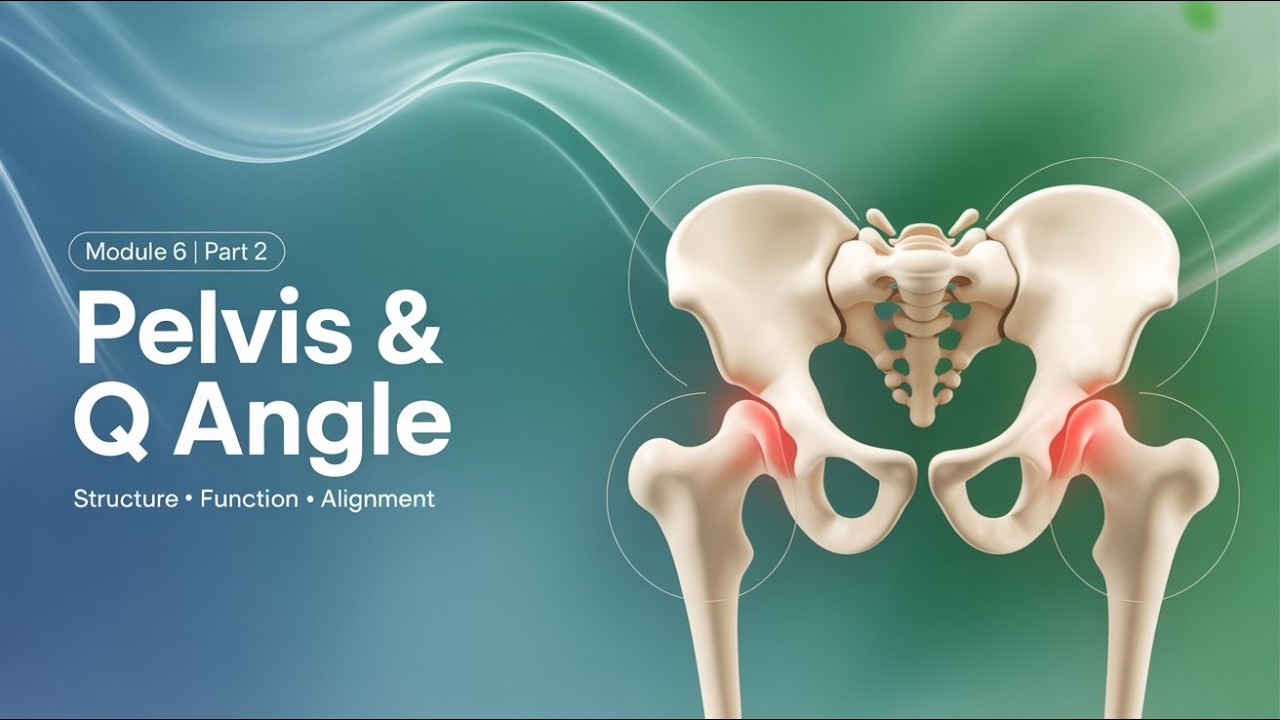
Module 6 — Part 2: Anatomy of the Hip | Pelvis Structure, Function & Q Angle
Автор: Kathryn Kuppan
Загружено: 2026-02-19
Просмотров: 57
Описание:
Module 6 — Part 2: Anatomy of the Hip | Pelvis Structure, Function & Q Angle
In this section, we explore the structure and function of the pelvis, how it supports movement, and why individual differences in pelvic shape matter in yoga and daily life.
🦴 What is the Pelvis?
The pelvis is an irregular, ring-like bony structure that:
Connects the spine to the femurs
Links the upper body to the lower body
Distributes weight and force throughout the body
⚙️ Functions of the Pelvis
The pelvis plays several essential roles:
✔️ Provides structure and stability
✔️ Forms the hip joint (ball-and-socket joint)
✔️ Transfers force between upper and lower body (walking, jumping, running)
✔️ Protects lower abdominal organs
👩⚕️ Male vs Female Pelvis (General Differences)
While every body is unique, structurally:
Male pelvis → deeper, narrower
Female pelvis → wider, flatter
💡 Why?
A wider pelvis supports childbirth, allowing a larger birth canal.
📐 Understanding the Q Angle (Quadriceps Angle)
The Q angle is formed by:
Line from ASIS (front hip point) → patella
Line from patella → tibial tuberosity
👉 Key Insight:
Wider pelvis = larger Q angle
Narrow pelvis = smaller Q angle
⚠️ Why Q Angle Matters
A larger Q angle can:
Increase stress on the knee joint
Create greater force distortion
Lead to higher risk of knee discomfort or injury
💡 Biomechanics Tip:
A smaller Q angle is generally more efficient for walking and running.
🏃 Movement & Structure Connection
People with narrower hips often have more efficient sagittal movement
This is why many runners naturally have narrower pelvis structures
⚖️ The Obstetrical Dilemma
This concept explains the balance between:
Efficient walking (requires narrower pelvis)
Childbirth (requires wider pelvis)
💡 Humans are born less developed because:
A wider pelvis for full development would make walking inefficient.
🧘 Yoga Application — Alignment Matters
In poses like Tadasana (Mountain Pose):
Feet together may not suit everyone
People with wider hips may experience internal rotation
✔️ Better approach:
Keep feet hip-distance apart for more natural alignment
Reduce stress on knees and hips
💡 Key Reminder:
There is no “one perfect alignment” —
Each body is different.
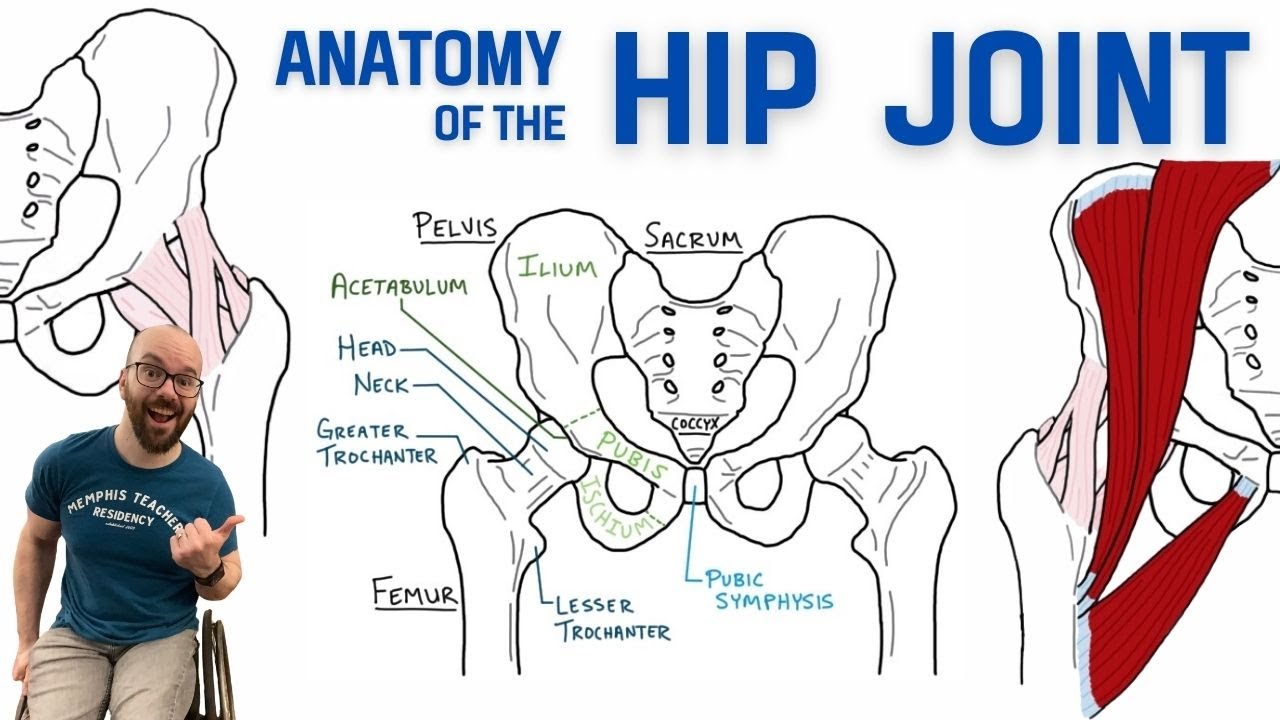
🦴 Bones of the Pelvis
The pelvis is made of three main bones:
Ilium
Ischium
Pubis
These bones meet to form the acetabulum (hip socket).
👉 The socket is deepened by the labrum, which helps:
Stabilize the joint
Hold the femur securely
💡 Fun Fact:
These bones are separate at birth and fuse in adulthood.
🔗 The Sacroiliac Joint (SI Joint)
The SI joint connects the sacrum to the ilium.
Functions:
Transfers weight from spine to legs
Provides stability (not much movement)
Types of stability:
✔️ Form Closure → bone structure fits like puzzle pieces
✔️ Force Closure → muscles and ligaments support the joint
💡 Important:
The SI joint must be stable but not rigid to allow natural walking.
🌱 Key Takeaways
The pelvis is central to movement and stability
Structural differences affect alignment and performance
Q angle influences knee health and biomechanics
Yoga alignment should adapt to individual anatomy
Stability and mobility must be balanced in the SI joint
Повторяем попытку...
Доступные форматы для скачивания:
Скачать видео
-
Информация по загрузке:










![Почему взрываются батарейки и аккумуляторы? [Veritasium]](https://imager.clipsaver.ru/a3-3R9zwyGY/max.jpg)